Congress leader Rahul Gandhi on Saturday berated RSS leader Ram Madhav over his recent “factually wrong” comments on Russian oil imports, calling them reflective of Sangh’s “true nature.”

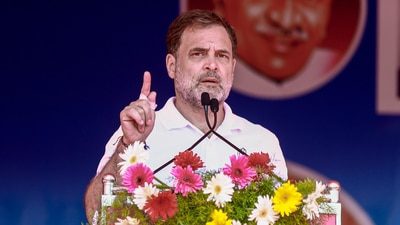
Gandhi accused the Sangh of being a “Surrender Sangh” and called the organisation “farzi”.
“Rashtriya Surrender Sangh. Farzi nationalism in Nagpur. Pure servility in USA. Ram Madhav has only revealed Sangh’s true nature,” he wrote in a post on X.
What led to Gandhi’s remark
Gandhi’s jibe comes a day after Madhav participated in a panel in the US, where he said that New Delhi had done enough to ensure good relations with the US. Citing instances, he said that India agreed to stop buying oil from Russia and Iran despite criticism from the opposition. He added that India agreed to 50 per cent US tariffs “without saying too much.”
He later clarified his remark and said India didn’t agree to stop importing oil from Moscow, adding that while trying to make a counterpoint to his panelists, he said some things which were factually wrong.
“What I said was wrong. India didn’t agree to stopping import of oil from Russia anytime. Also it vigorously protested 50 percent tariff imposition. I was trying to make a limited counterpoint to d other panelist. But factually incorrect. My apologies.”
US renews waiver on Russian oil import
To ease oil and gas prices across the world, which continue to remain high due to blockade in Strait of Hormuz, a crucial passage which constitutes roughly one-fifth (20%) of global petroleum consumption and nearly 25–30% of global LNG trade, Washington issued a 30-day general license allowing countries around the world, including India, to purchase energy from Russia without attracting US sanctions.
Also Read: US renews waiver that allowed India to buy Russian oil, two days after saying it won’t
A similar waiver was first issued in march and India was a key beneficiary of the waiver. According to reports citing government officials, India placed orders for roughly 30 million barrels of oil from Russia after the sanctions waiver was put into effect. Indian refiners like Reliance had previously wound down their purchases from Russian suppliers like Rosneft and Lukoil due to US sanctions against these energy majors.
Trade ties had come under strain after Washington imposed 50 per cent tariffs on Indian goods, including a 25 per cent punitive levy linked to Russian oil purchases. Following a series of diplomatic talks, US President Donald Trump announced a new trade deal with India featuring lower reciprocal tariffs and expanded market access, while claiming that New Delhi would halt purchases of Russian oil and sharply increase imports of American goods. India now faces a reduced rate of 18 percent.
-
-
-
-