This Is Not Bangladesh. But What Is It?
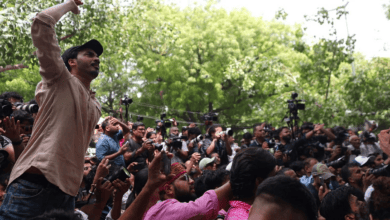
Almost immediately after the CJP began gathering momentum, journalists made the obvious regional comparison. First with Bangladesh, where a student-led uprising began as protests against a quota system for government jobs, and escalated, with extraordinary speed, into a movement that forced Prime Minister Sheikh Hasina to resign and flee the country. And second with Nepal, where youth-led street protests have periodically reshaped the political order.
Were we watching the subcontinent’s next domino?
Abhijeet Dipke answered this question with more force than he has applied to most questions. In a post addressed directly to the press, he wrote: “…Do not insult or underestimate the Gen-Z of India by making such comparisons. The youth of this country are far more mature, aware, and politically conscious than many give them credit for. They understand their constitutional rights and will express their dissent through peaceful and democratic means.”
The CJP’s official Instagram account amplified the message: “Gen-Z isn’t asking for chaos—they’re demanding accountability, awareness, and change through democracy.”
This statement deserves serious analysis.
Dipke is right. India is not Bangladesh. Its institutions are more complex: a federal democracy of 1.4 billion people, with a Supreme Court, a Constitution, a free press however beleaguered, and a tradition of electoral accountability that, for all its distortions, has removed governments at the state and national level within living memory.
But here is where Dipke’s argument falls short: Bangladesh’s youth did not overthrow Hasina because they were politically immature. They did it because the democratic means had been comprehensively captured. The courts rubber-stamped her government’s actions. The press was throttled. Elections were managed. The lesson of Bangladesh is not that street protest is primitive; it is that street protest becomes the instrument of last resort when institutions stop functioning.
-
-

-

-