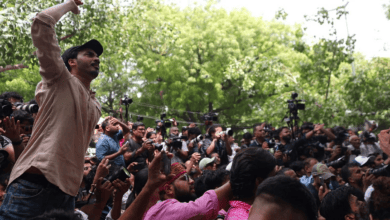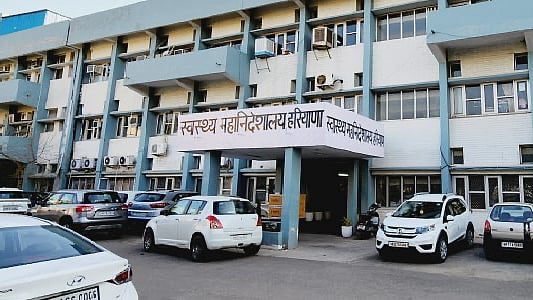
A woman in Faridabad was compelled to deliver her baby in the parking area of a government health facility after reportedly finding the hospital gates locked during the night. The incident occurred at the Government Primary Health Centre in Sector 3, Ballabhgarh, on the night of 15–16 May 2026. The family, unable to access immediate medical assistance, conducted the delivery under torchlight. Both the mother and newborn were later confirmed to be healthy by authorities.
According to The Indian Express, the Haryana Human Rights Commission (HHRC) took serious cognisance of the incident and described it as a “glaring pathetic situation.” The Commission, led by Chairperson Justice Lalit Batra, issued an order on 25 May 2026, seeking detailed reports from senior health officials by 12 August 2026 and asking the Civil Surgeon, Faridabad, to explain why compensation should not be recommended for the violation of human dignity and rights.
The Commission’s order highlighted that the woman’s experience raised concerns about the implementation of the Janani Shishu Suraksha Karyakram (JSSK), a government scheme intended to ensure free and cashless deliveries. Coverage revealed that the woman was denied institutional care at the hospital’s doorstep, prompting public outcry after images circulated of the delivery taking place under mobile phone flashlights.
The HHRC emphasised that the case involves fundamental rights under Article 21 of the Constitution, including the right to life, dignity, and emergency medical care. The Commission directed the Additional Chief Secretary (Health), Director General of Health Services, Civil Surgeon of Faridabad, and the PHC Incharge to submit responses regarding staff availability during night hours, emergency entry functionality, and obstetric protocol adherence. Reporting indicated that the Commission also instructed authorities to submit detailed reports at least one week before the next hearing, scheduled for 19 August 2026.
Following the incident, the Haryana Health Department initiated a high-level probe and revised night-access protocols at the facility. Officials responded by ordering that both the OPD and emergency gates remain open 24 hours, and an ambulance be stationed at the centre for emergency transfers. Assistant Registrar Dr Puneet Arora confirmed these measures were implemented to prevent recurrence of such lapses.
As noted in an article by Bar and Bench, Indian law recognises maternity benefits as essential protections linked to dignity, reproductive rights, and economic security. The Code on Social Security, 2020, consolidates and broadens maternity protections, framing them as rights rather than mere employment benefits, and mandates paid maternity leave and safeguards against dismissal during maternity leave.
Legal experts have observed that the constitutional understanding of maternity benefits has evolved to encompass not only biological motherhood but also adoptive and commissioning mothers. Analysis showed that the Supreme Court has interpreted maternity protection as a matter of social justice, extending these rights to daily wage workers and recognising reproductive autonomy as part of personal liberty under Article 21.
Implementation challenges persist, particularly in the informal sector, where women often lack formal employment protections and social security access. Further discussion has highlighted the need for stronger institutional support and workplace reforms to ensure effective maternity protection for all women.
-

-

-

-