New Delhi/Chandigarh: The resignation of seven out of 10 Rajya Sabha members has plunged the Aam Aadmi Party (AAP) into political turmoil just a year after it lost control of Delhi, ratcheted up the stakes for the upcoming assembly polls in Punjab, and raised existential questions about the functioning of the party and its chief, Arvind Kejriwal.
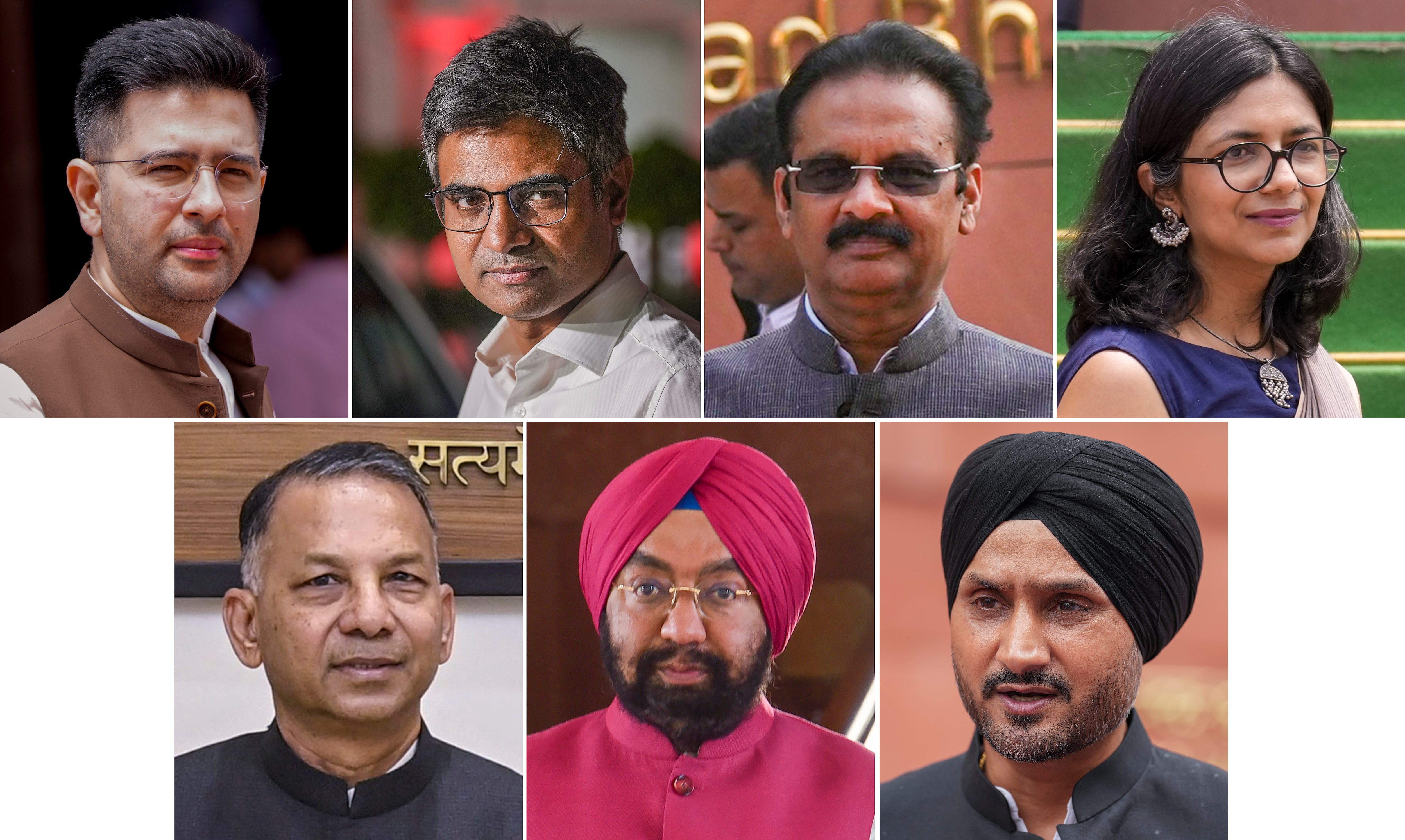
Led by Raghav Chadha, a founding member of the AAP and once a close associate of Kejriwal, the group of seven lawmakers includes six from Punjab – Chadha himself, Ashok Mittal, Sandeep Pathak, Rajinder Gupta, Vikram Sahney and Harbhajan Singh – and one from Delhi, disgruntled MP Swati Maliwal.
Born out of the churn of the 2011 anti-corruption movement, the AAP first tasted power as an insurgent force in 2013 in Delhi. It has since suffered many defections – prominently of MLA Kailash Gehlot in 2024 – but has never faced a rebellion at this scale, especially when the party is struggling to maintain its national footprint after the defeat in Delhi.
With elections in Punjab, a state where the AAP won a landslide victory four years ago, due in early 2027, the party now faces the possibility that it might be in power in no province – something that has not happened since 2015.
With Friday’s exits, AAP’s already modest national parliamentary presence – 10 Rajya Sabha MPs and three Lok Sabha MPs (all from Punjab) – stands sharply reduced. Moreover, it will have implications for the national Opposition – where the AAP will have a diminished presence – and the government’s legislative agenda as the National Democratic Alliance will be close to a two-thirds majority in the Upper House.
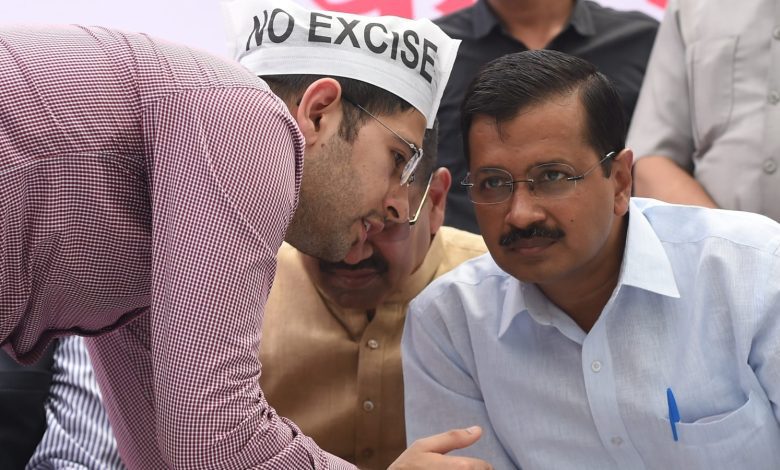
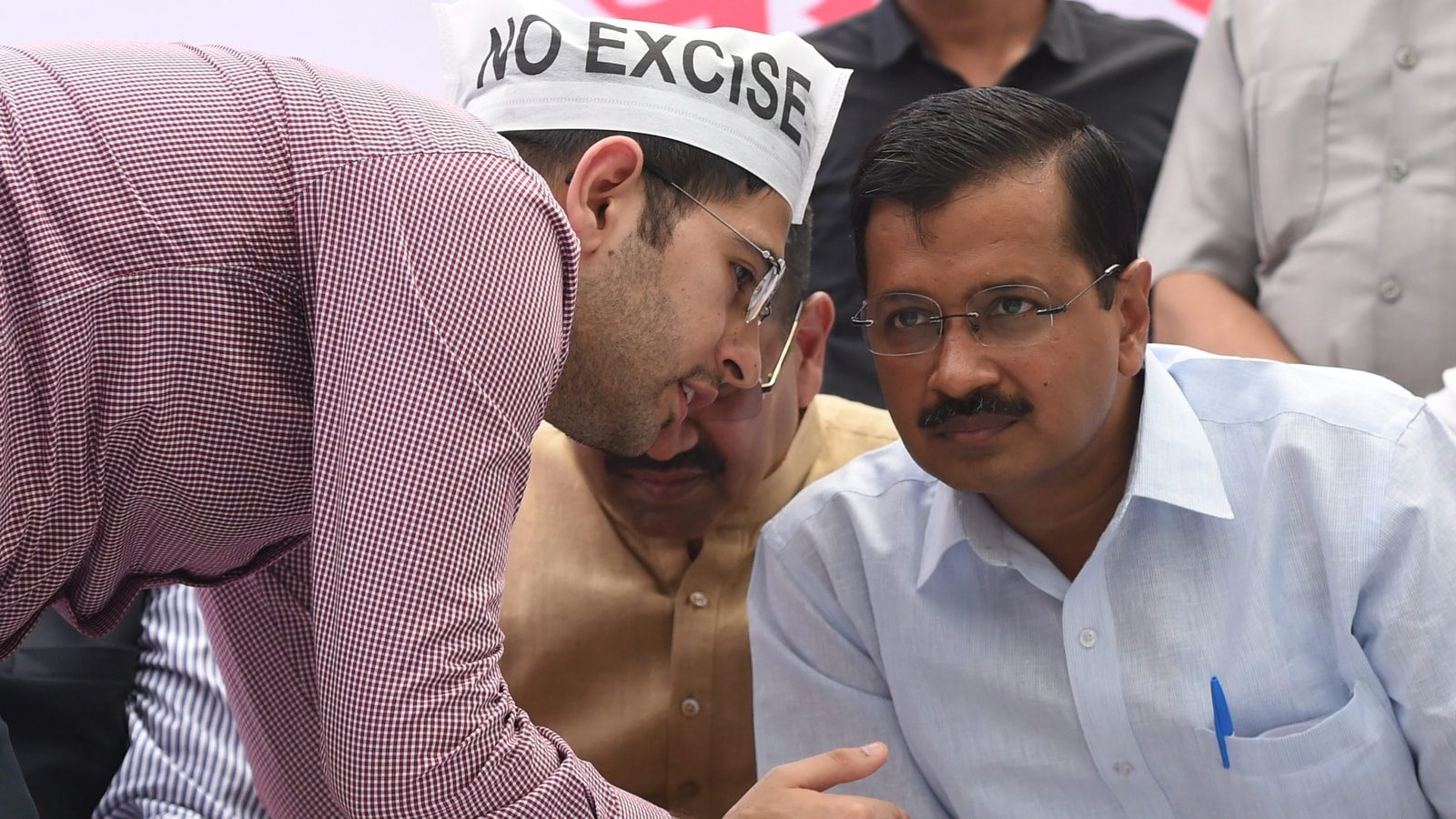
It was a personal setback for Kejriwal who attended Chadha’s wedding two years ago before ties soured during the former CM’s arrest in 2024, when Chadha was in London for an eye surgery. Kejriwal and his family were living in Mittal’s official residence in Delhi till Friday.
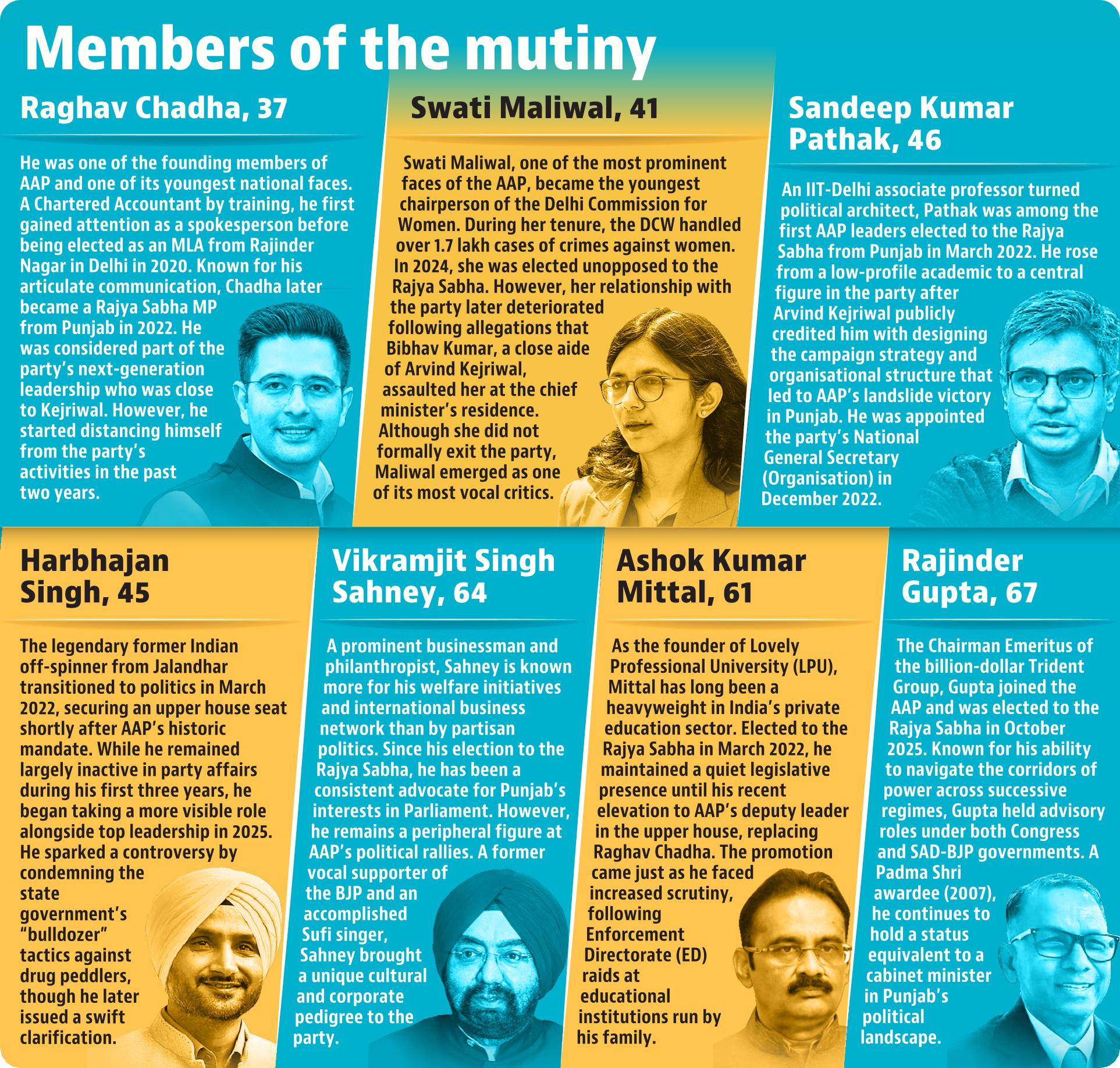
The biggest shocker, according to party insiders, was Pathak, who was the national general secretary (organisation) and the brain behind expanding the party nationally. His exit also dents the party at a time when it is eyeing a second term in Punjab, said an AAP functionary.
“The defection of Sandeep Pathak means that the BJP has an insider who is well aware of AAP’s strategy, key persons and civil society contacts,” said Sajjan Kumar Singh, political analyst, Policy Research and Center for Contemporary India Study (PRACCIS).
In Delhi, AAP’s political identity has rested on a strong centralised leadership model anchored by Kejriwal. The departure of a figure such as Chadha or Pathak, who played key roles in policy articulation and national outreach, weakens the party’s second line at a time when it is struggling to mount a comeback in the national capital.
At the same time, the party retains a strong grassroots network and governance record in sectors such as education, health and welfare schemes. Plus, party leaders noted, none of the deserters were mass leaders.
In Punjab, Chadha and Pathak were widely seen as the architects of the party’s spectacular showing in 2022 as state in-charge and co-in-charge, respectively. Kejriwal had praised the two young backroom strategists after the party won 92 out of 117 assembly seats, crediting them with crafting the election strategy and building the party organisation. They were rewarded with Rajya Sabha seats, days after Bhagwant Mann took the reins of the state.
Both are now out of the AAP with nine months remaining for the polls. Mann ruled out any challenge to the party from them, stating that the MPs were creations of the AAP rather than leaders in their own right. “The party is bigger than any individual. These 6-7 people who have left do not comprise Punjab,” he said.
AAP insiders were taken aback by the timing and scale of the rebellion. They felt the party leadership failed to assess the threat from the BJP and took Chadha too lightly.
“Though they are not mass leaders, Chadha and Pathak know our party’s strengths and weaknesses. They can be quite a handful for us in the upcoming elections,” a party leader admitted, requesting anonymity.
A former lawmaker from Delhi, Chadha was the most influential party leader in the new AAP government after 2022, and was involved in all key administrative decisions during the first two years. However, his influence gradually diminished and he was virtually sidelined after former Delhi deputy chief minister Manish Sisodia was appointed the party’s Punjab affairs in-charge in March 2025.
The rebellion is likely not only to shift the political narrative – from the state government’s welfare schemes such as the ₹10 lakh medical treatment scheme and monthly allowance for women as well as the strict anti-sacrilege law – to concerns over the AAP’s stability but also embolden disgruntled elements within the ruling party.
Jagrup Singh Sekhon, former head of the political science department at Guru Nanak Dev University, Amritsar, said the defections will hurt the ruling party. “This is a huge setback for them. Questions will now arise about the AAP’s political stability and survival,” he said.
Party leaders also blamed the AAP’s choice of Rajya Sabha members, saying that outsiders were given preference over dedicated workers. A ruling AAP leader admitted that the choice of candidates for the Upper House had caused disquiet in the party. Another AAP leader, requesting anonymity,complained that many of these MPs did not openly associate themselves with party activities. During the 2024 Lok Sabha elections, most of them remained conspicuous by their absence from the campaign.