


As Delhi sweltered through another day of extreme temperatures on Friday, thousands of workers across the city continued their shifts outdoors. By early afternoon, the pavement outside Dilli Haat began to simmer in the heat. A few visitors hurried past with scarves wrapped around their faces, but most stalls stood empty. Under a cloth canopy, 60-year-old Gomti adjusted the end of her sari over her head and waited for customers who rarely come before sunset in summer.
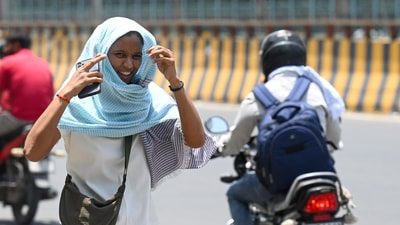
A plastic bottle filled with warm water sat beside her jewellery display. “When my head starts heating up too much, I use my sari to cover it as I cannot afford any new clothes,” she told HT.
On Friday, Delhi recorded a temperature of 45 degrees Celsius. Hot winds moved through the city at 13 kmph, while humidity stayed low at 13%. This made the afternoon air dry and harsh. The weather department has forecast even hotter conditions on Saturday and Sunday, with the maximum temperature likely to reach nearly 46 degrees Celsius.
For those who work indoors, the heat often means discomfort and higher electricity bills. But for thousands of people across Delhi whose jobs keep them outdoors or in poorly ventilated workplaces, the rising temperatures shape every part of the day. This is when they eat, how much water they can afford, how long they can rest, and whether they can continue working while sick.
At traffic lights, markets, Metro stations and factories, workers say the summer months bring exhaustion that they cannot escape because missing work means losing income.
Deliveries under the afternoon sun
Farman Ali, 29, begins most afternoons on a motorcycle with a delivery bag strapped to his back. A gig worker for the past four years, he says some of the hardest hours are between noon and 4 pm, when roads radiate heat and most people avoid stepping outside. Yet these are also the hours tied to delivery incentives.
“Some restaurants refill our water and let us sit while we wait, but most tell us to stand outside in the heat while the food is made,” Ali said. “When we reach customers, sometimes people offer us water, but many also abuse us for being even a little late.”
He says fevers and headaches caused by heat have become routine among delivery workers. “Working with a fever due to heat is a common experience,” he added.
Waiting for customers in an empty market
At Dilli Haat, Gomti says summer has reduced customer footfall sharply, but staying home is not an option. She reaches her stall by 11 am and spends nearly 12 hours there every day, earning ₹500 to ₹600 on average.
“Whether it be heat or cold, we have to work in both as we will not be able to earn our daily wages otherwise,” she said.
She avoids cold drinks because she believes they make her sick during summer. Instead, she keeps sipping water through the day. A nearby petrol pump lets her refill her bottle for free. “It heats up since I keep it in a plastic bottle and cannot afford a metal one,” she said.
During a recent afternoon visit by HT’s Aaditya Khatwani, Gomti was the only jewellery vendor sitting outside, even though eight or nine sellers usually occupy the stretch.
Spending earnings on water
Across the city, 21-year-old cobbler Karan Lal spends nearly 10 hours a day working on the roadside. He travels daily from Dwarka by Metro, a journey he says becomes draining during summer.
“I work for around 10 hours daily and earn around ₹300 to ₹300 to ₹400, but around ₹150 of that is spent on buying multiple water bottles,” Lal said.
He also alleged that workers like him are often denied access to free drinking water points. “People at spots that are supposed to offer free water, such as the machines in front of the Metro, turn me and other cobblers away without explanation… while allowing other people to drink from them,” he said.
His clothes, faded and worn from years of outdoor work, offer little relief from the heat. “I cannot afford new clothes,” he added.
Standing guard through the hottest hours
For security guard Jyoti Kumar, the harshest hours are between 10 am and 2 pm, when he has to stand outdoors before another guard replaces him. Kumar, who has worked as a guard for nearly two-and-a-half years, says heat advisories issued by companies do little to change actual working conditions.
“I have fallen sick due to the heat while working as a security guard before, and I am really worried that it will happen again,” he said.
His shift runs from 10 am to 6 pm, with nearly four hours spent outside without a fan or cooler. “A water bottle is not sufficient to keep hydrated,” he said. While the company-issued hat shields his eyes, he says the thick uniform traps heat and becomes uncomfortable within minutes.
“We feel that there is no point in complaining, as this is what the job is,” Kumar said.
Hot air inside the factory floor
Inside factories, conditions are often no easier. At a speaker manufacturing unit, 34-year-old worker Ashat Bhuja says the large ceiling fans on the shop floor merely circulate hot air during summer afternoons.
“I work from 9am to 6pm, and I face constant aches due to fatigue and heat,” he said. “When I go home, I make sure to rest for an hour so that I do not fall sick.”
Bhuja says headaches have become common enough for him to take painkillers almost every week. Taking leave is difficult because it leads to salary cuts. “We suffer pay cuts if we take off due to fevers, which keep recurring in summers,” he said.
Delhi’s air quality on Friday remained in the “moderate” category, with the AQI recorded at 100. Doctors have advised children, elderly people and those with respiratory illnesses to avoid prolonged outdoor exposure.