'Inaccurate, Dangerous': Environmentalists Slam CJI’s Remarks on Green Activists

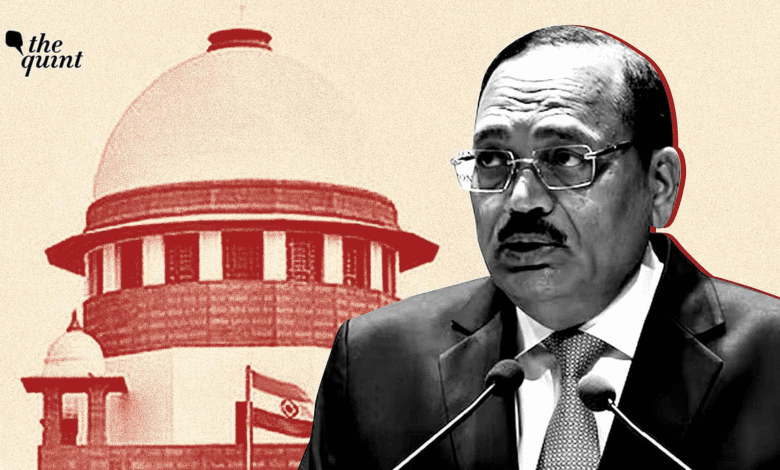
On 11 May, Chief Justice of India Surya Kant made remarks during a Supreme Court hearing questioning whether environmental activists ever welcomed development projects in India.
The comments, delivered in the context of a case concerning the expansion of Pipavav Port in Gujarat, have since drawn significant criticism from a broad coalition of organisations, environmentalists, lawyers, and former civil servants.
According to The Hindu, forty-nine organisations and 553 individuals, including environmentalists and academics, sent a letter to Chief Justice Surya Kant on 22 May.
The letter demanded withdrawal of the remarks, arguing that such statements could undermine the legitimacy of bona fide environmental public interest litigation and the constitutional role of citizens in enforcing environmental law.
As reported by Hindustan Times, a group of 72 lawyers, law students, faculty, and activists, along with several organisations and former civil servants, also addressed an open letter to the Chief Justice.
They described the remarks as “factually inaccurate, constitutionally troubling, and potentially dangerous,” warning that such views risk casting legitimate environmental scrutiny as reflexively anti-development.
In the letter, the signatories stated, “With utmost respect, it must be stated plainly: such framing is factually inaccurate, constitutionally troubling, and potentially dangerous. It risks portraying citizens who seek lawful scrutiny of environmental decision-making as a suspect constituency, rather than as participants in a constitutional democracy performing both a right and a duty.”
Further responses from various organisations and former civil servants echoed these concerns, emphasising that the comments could be interpreted as delegitimising environmental activism and public interest litigation.
They argued that such remarks may have a chilling effect on citizens and communities seeking judicial remedies for environmental issues.
Midway through the debate, legal professionals highlighted that the Supreme Court’s observations could signal a jurisprudential shift, moving from recognising environmental litigation as integral to constitutional governance to treating it as a suspect form of obstruction.
The letter urged reaffirmation of environmental legal principles and constitutional values, including the recognition of environmental PILs and National Green Tribunal appeals as legitimate enforcement measures.
In their statement, former civil servants noted at the end that the Chief Justice’s remarks, suggesting that activists obstruct development, reveal a bias that is concerning, given the judiciary’s mandate to approach every issue without pre-conceived notions. They called for the judiciary to treat citizens and local communities as rights-bearing participants in environmental decision-making, not as obstacles.
“We demand that the Hon’ble Supreme Court and all other courts in India treat local communities and citizens approaching the judiciary in public interest litigation matters as rights-bearing participants in environmental decision-making rather than as obstacles to it,” the letter stated.
Analysis showed that the signatories also referenced Article 51 of the Indian Constitution, which places a fundamental duty on every citizen to protect and improve the natural environment. They objected to the use of the term “environmentalist” as a delegitimising label, asserting that environmental activism is a constitutional obligation, not an act of obstruction.
At the end of the week, coverage revealed that the coalition’s demands included a call for the Supreme Court to ensure that legal remedies for environmental concerns remain available and effective, and for courts to avoid framing development and environmental protection as mutually exclusive choices.