


Hyderabad: In a first-of-its-kind move by a regional political party in India, the Telugu Desam Party (TDP) Tuesday announced that it would reserve 33 percent of its electoral seats for women candidates in the 2029 General Election.
The proposal was unveiled by TDP national working president Nara Lokesh on the opening day of the all-hands-on-deck party meeting, ‘Mahanadu’ 2026. The announcement comes over a month after National Democratic Alliance’s women’s quota and delimitation push failed in Parliament. TDP is a partner in the Bharatiya Janata Party-led alliance.
This year’s Mahanadu, marking the 44th anniversary of the party’s founding, was led by Lokesh after he assumed charge as the party’s national general secretary last month. Focused on the theme ‘Stree Shakti’, the event reflected the TDP’s attempt to centre its political messaging around women’s leadership and gender representation.
Senior TDP leaders told ThePrint that the party wanted to “lead by example”, instead of waiting for a broader political consensus on women’s representation.
In recent weeks, the party has also expanded women’s representation within its organisational structure. Nandyal MP Byreddy Shabari was appointed as the TDP’s first woman national general secretary, while Gantyada Sridevi was inducted into the party’s politburo as part of a wider organisational reshuffle.
Addressing party workers and leaders, Lokesh said, “I strongly believe that the next era of Indian politics must belong to women. With the NDA government already taking a historic step through the Women’s Reservation Bill, women should not remain mere beneficiaries of welfare schemes but become active decision-makers in governance and politics.”
He added that India needs more women lawmakers, policymakers and political leaders, and described the proposal as the TDP’s “resolve, responsibility and commitment” towards building a more inclusive political future.
TDP national president and Andhra Pradesh Chief Minister N. Chandrababu Naidu said the party had laid the foundation for “vision-oriented politics” in the country. He also said the party would work alongside the Modi-led NDA government to implement 33 per cent reservation for women across the country.
Both leaders used the platform to rally party cadres ahead of the 2029 elections and urged workers to strengthen the TDP-led NDA alliance in Andhra Pradesh.
“The honeymoon period of two years is over. People voted for us because we promised good governance. It is now time to deliver on the double-engine jodi of Naidu and Modi,” Lokesh said.
Outlining the party’s long-term vision, Naidu said the government’s policy framework was being shaped around the aspirations of the younger generation that would define Andhra Pradesh over the next two decades.
Referring to Gen Z voters during his address, Naidu said governance and development policies must align with the ambitions, career goals and evolving expectations of young people.
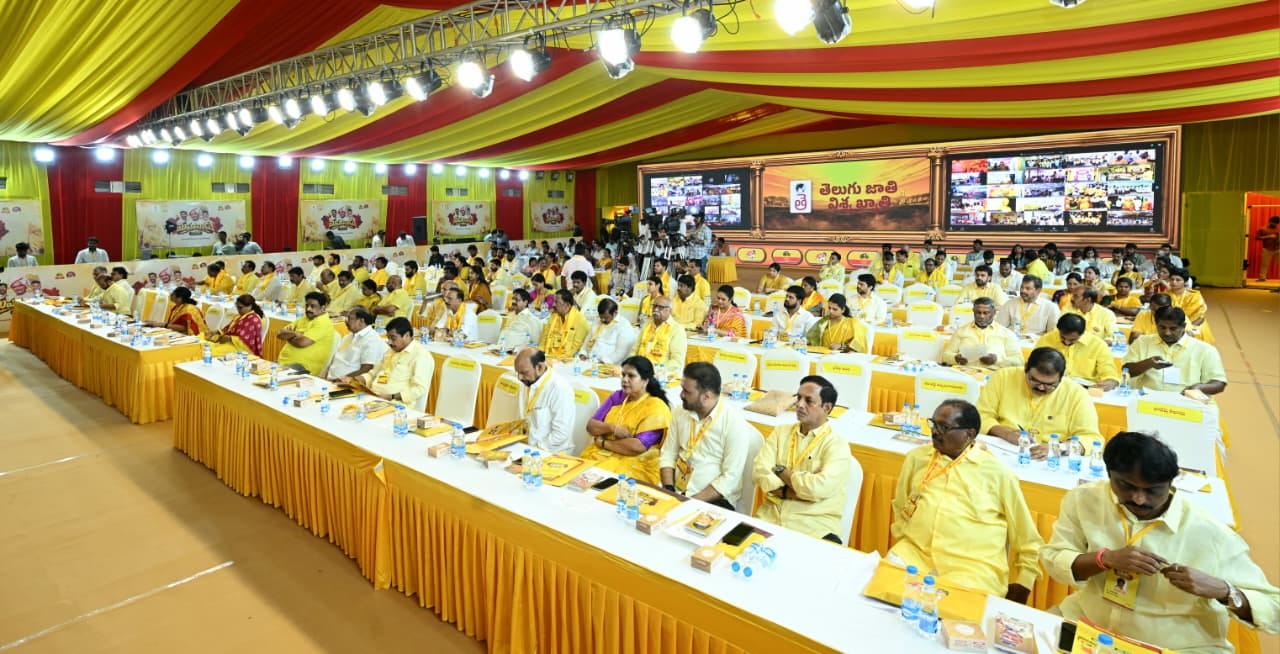
The two-day Mahanadu event, scheduled for 27 and 28 May, is being held at the party’s central office in Mangalagiri in a hybrid format. Members of the politburo, state committee and national committee are attending in person, while party cadres are participating virtually.
The event was originally planned as a large-scale gathering in Nellore with an expected attendance of nearly three lakh people. However, the party shifted to a hybrid format following Prime Minister Narendra Modi’s appeal for fuel conservation amid the ongoing West Asia conflict.
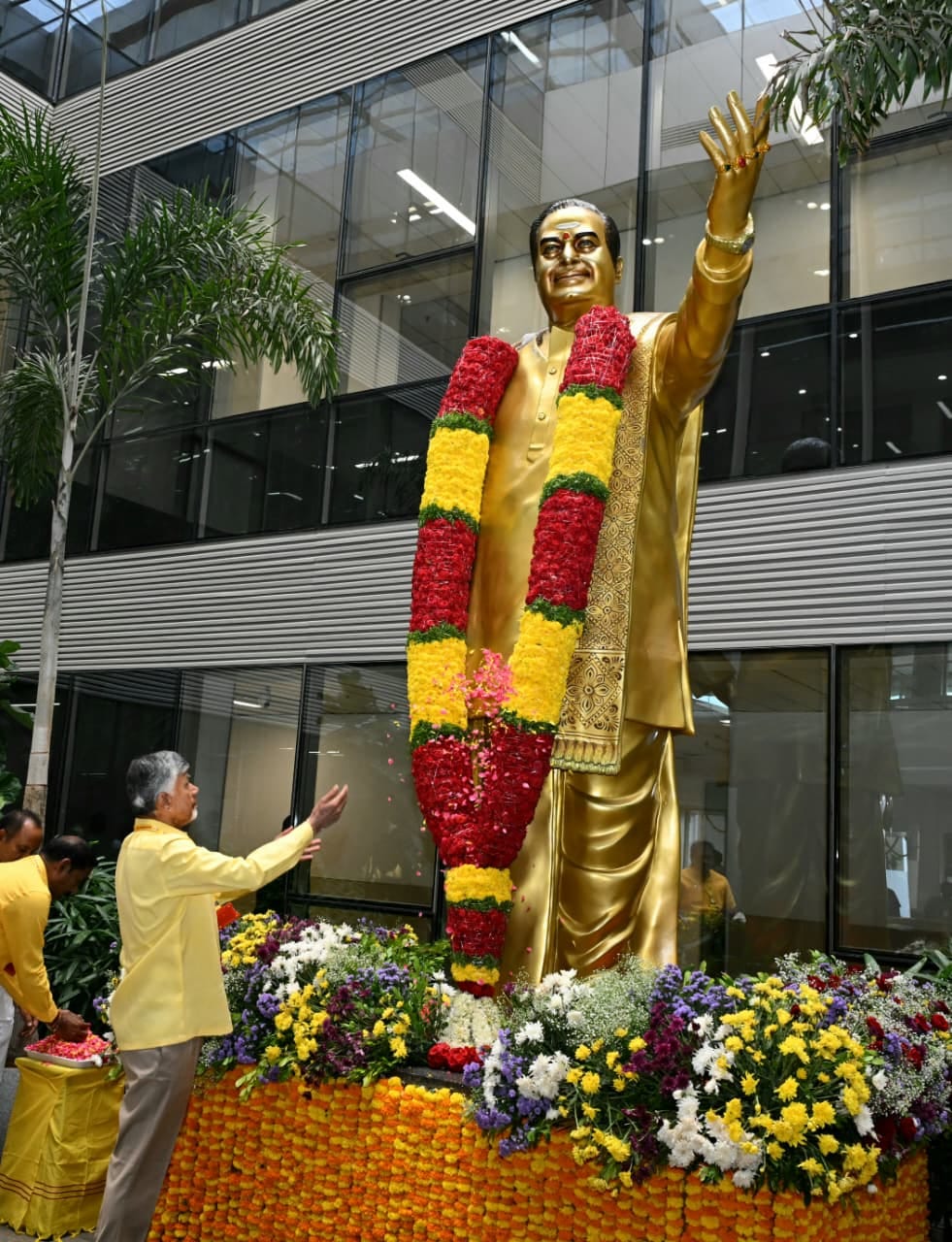
Held annually to mark the birth anniversary of TDP founder N.T. Rama Rao, Mahanadu is expected to adopt 20 resolutions covering issues related to Andhra Pradesh, Telangana and the Andaman and Nicobar Islands. According to a party statement, the conclave will also serve as a platform to define the party’s political strategy and roadmap for the upcoming elections.
The TDP’s renewed emphasis on Telangana is being viewed in the context of the upcoming municipal elections in the state. The party claims to have more than one crore active members across Andhra Pradesh, Telangana, Karnataka, Tamil Nadu, and the Andaman and Nicobar Islands.
(Edited by Harini TS)