Hurricane Helene disrupted a major source of intravenous fluids when flooding forced Baxter International to close its North Cove plant in North Carolina in late September 2024. U.S. hospitals began conserving supplies, while Canadian health systems monitored the risk without reporting a comparable shortage at the time.
Why one plant mattered
Baxter said the North Cove facility produced a large share of the intravenous and peritoneal-dialysis solutions used in the United States. Flooding damaged access and operations after Helene crossed the southeastern states.
The U.S. health department warned that the interruption would worsen existing constraints affecting normal saline, irrigation fluid, sterile water and five-per-cent dextrose. Concentration in a small number of plants meant a regional disaster could quickly become a national medical-supply problem.
What IV solutions do
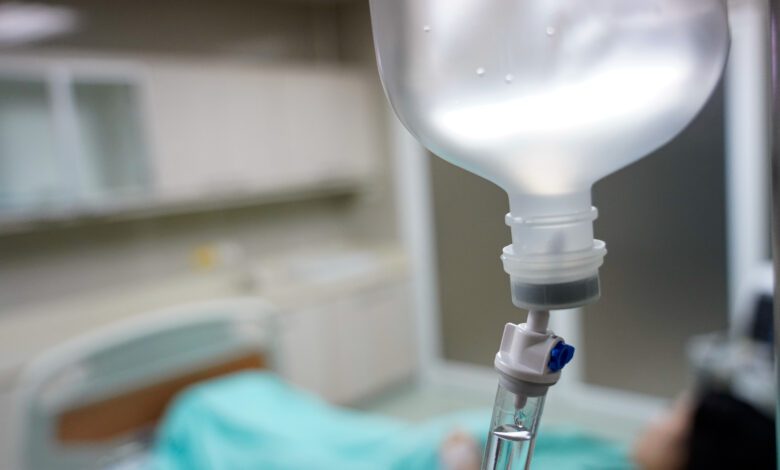
Intravenous fluids can restore hydration and circulation, carry medications, maintain access during surgery and support patients who cannot drink safely. Peritoneal-dialysis solutions enable a form of home treatment for kidney failure.
Products are not interchangeable simply because they are liquids in bags. Clinicians select composition, concentration, volume and delivery rate for the patient’s condition. Substitution requires medical and pharmacy review.
U.S. hospitals began conserving stock
Baxter temporarily allocated products rather than filling every order. It raised allocations for children’s hospitals and sought imports from other facilities while planning a safe restart at North Cove.
Some hospitals used oral hydration for suitable patients who might routinely have received an IV. Giving water or an electrolyte drink can be clinically appropriate in selected cases, but it is not a universal replacement for intravenous treatment and should not be attempted against medical advice.
Canada’s position in early October
Baxter also supplied Canadian facilities and operated a manufacturing site in Ontario. Nova Scotia Health said it had received no disruption notice and had not experienced an impact on its IV inventory when the issue was reported.
That did not make Canada immune. Shared suppliers, cross-border demand and emergency imports can transmit a shortage. Health Canada, provinces, hospitals and distributors needed to track inventories and prevent stockpiling from turning a manageable constraint into scarcity.
Conservation should remain clinical
Hospitals can review routine use, standardize bag sizes, preserve critical stock and use oral medication or hydration when medically equivalent. Decisions should be made by clinical teams with pharmacy and infection-control input, not by asking patients to ration care themselves.
Anyone receiving dialysis, cancer treatment, parenteral nutrition or another fluid-dependent therapy should continue the prescribed plan and contact the care team with supply questions. Patients should not purchase medical fluids online or improvise sterile products.
A supply-chain lesson
Essential products need resilience even when their unit price is low. Governments and health systems can map single points of failure, maintain transparent inventories, qualify alternate suppliers and plan transport routes that remain usable after floods.
Manufacturers also need climate-risk assessments, protected utilities, redundant communications and tested recovery plans. Diversification costs money, but emergency cancellations and delayed treatment impose larger human and financial costs.
Risk was real, not yet a Canadian shortage
The accurate October 2024 answer to “Is Canada next?” was conditional. A major supplier had been disrupted and preparedness was warranted, but Canadian hospitals cited in the reporting had not yet experienced the U.S. shortage.
That distinction prevents both complacency and panic. Helene exposed how quickly extreme weather can affect routine medical care far from the disaster zone; the appropriate response was coordinated conservation and supply diversification, not hoarding or assumptions that every patient could safely go without an IV.