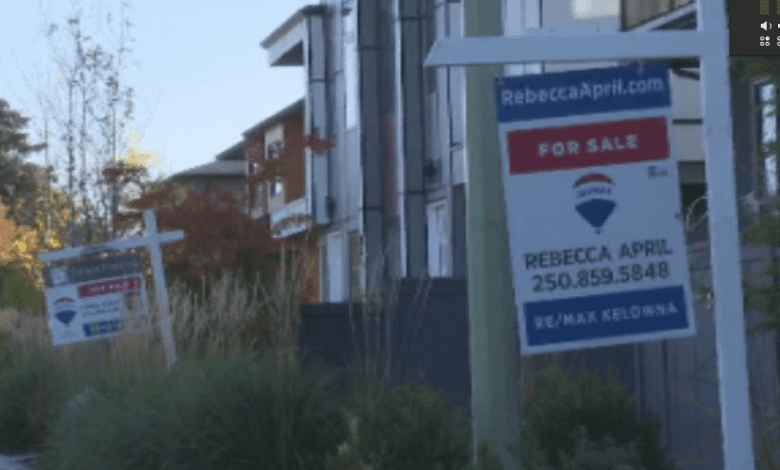
The Bank of Canada’s half-percentage-point interest-rate cut in October 2024 offered some relief to borrowers and could help the Central Okanagan housing market move gradually toward balance. Local professionals cautioned that the region still had about ten months of listings and that lower rates would not produce an immediate surge in sales.
The central bank decision
The Bank lowered its policy rate from 4.25 per cent to 3.75 per cent, its fourth consecutive reduction since June and its largest cut since the early pandemic. Governor Tiff Macklem said inflation had returned to two per cent and the bank wanted economic growth to strengthen.
The policy rate influences borrowing costs but is not the mortgage rate a particular buyer receives. Fixed rates depend heavily on bond markets, while variable rates generally respond more directly. Lenders also consider term, credit, down payment and property details.
Possible savings for borrowers
Mortgage broker Michelle Scheibel cited a Canada Mortgage and Housing Corporation figure of about $456,000 for the average British Columbia mortgage in the second quarter of 2024. She estimated the cut could represent close to $200 a month in interest savings for some borrowers.
That illustration is not a quote for every household. Renewals, amortization, fees and whether a loan has a fixed or variable rate determine the actual change. Borrowers should request calculations for their own contract.
Why buyers had been waiting
Higher rates had reduced the amount households could qualify to borrow and raised monthly payments. Scheibel said some pre-approved clients remained on the sidelines because they were uncertain about committing at the quoted cost.
A lower rate can improve affordability, but it can also bring more bidders into the market. Buyers should base a decision on stable income, emergency savings and total ownership costs rather than fear of missing a short-lived opportunity.
Ten months of inventory
Realtor Richard Deacon said the Central Okanagan had about ten months of inventory. That meant the available supply would take approximately ten months to sell at the recent sales pace if no new listings arrived, a simplified indicator of market conditions.
Inventory varies by neighbourhood, price and property type. A broad buyer’s market does not guarantee that every well-priced home will attract no competition.
Why balance would take time
Deacon said rate changes must work through financial institutions and then influence the choices of buyers and sellers. Existing listings also need to be sold before a supply-heavy market reaches conventional measures of balance.
The Bank signalled that additional cuts could follow if the economy evolved broadly as forecast. That conditional statement was not a promise about the December meeting or any later date.
Risks beyond the headline rate
Okanagan buyers need to consider insurance, wildfire exposure, strata finances, maintenance, property tax and commuting costs. Sellers need realistic comparable sales rather than assuming a national rate decision instantly restored an earlier price peak.
Anyone renewing a mortgage can compare lenders and terms, but penalties and qualification rules may affect a switch. Independent legal and financial advice is useful before waiving conditions or restructuring a large loan.
A measured interpretation
The October cut reduced one barrier to market activity and improved cash-flow prospects for some borrowers. It did not eliminate the region’s large listing inventory or make every purchase affordable.
The most accurate conclusion was gradual: lower borrowing costs could help the Okanagan take a step toward balance, while sales data over the following months would show the actual response. Buyers and sellers needed to treat the rate announcement as one input, not a command to transact.