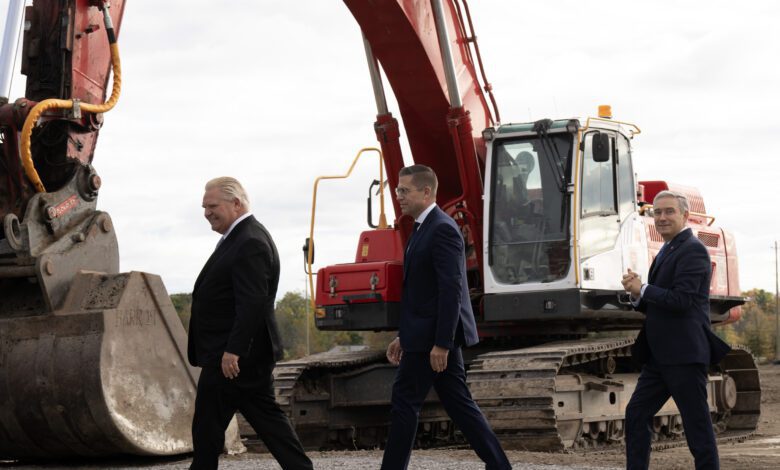
Delays at planned electric-vehicle facilities in Ontario raised questions in September 2024 about whether Canada could build the battery and vehicle supply chain promised by governments and manufacturers. Umicore paused spending on a battery-material plant in Loyalist Township as global EV growth slowed.
The Loyalist project had been ambitious
The Belgian materials company proposed a large cathode active-material and precursor facility near Kingston. Public announcements said its planned output could support batteries for up to one million electric vehicles annually and create hundreds of permanent jobs.
Federal and provincial governments offered substantial incentives tied to investment and production.
Umicore cited a worsening market
The company delayed construction spending and reviewed the project’s scope, pointing to slower EV demand and changes in customer expectations. A pause did not necessarily mean permanent cancellation, but it undermined local timelines and job assumptions.
Loyalist Township had planned around a major industrial arrival.
Ford also adjusted Oakville plans
Ford postponed the launch of EV production at its Oakville assembly complex from 2025 to 2027 and later revised what vehicles the plant would build. Such changes reflected product demand, manufacturing strategy and the cost of converting established plants.
They did not mean the entire Canadian auto sector had abandoned electrification.
Adoption was growing unevenly
EV sales continued to rise in many markets, but growth rates cooled and varied by price, charging access, incentives and model availability. High interest rates and expensive vehicles made buyers more cautious.
Short-term demand forecasts can move faster than factories requiring years to design and construct.
Canada sought an integrated chain
Policy aimed to connect critical-mineral extraction, refining, cathode and battery production, assembly and recycling. Proximity to United States automakers and clean electricity in several provinces offered advantages.
Missing links, permitting delays and dependence on foreign technology or customers remained risks.
Public subsidies required safeguards
Governments argued incentives were necessary to compete with the U.S. Inflation Reduction Act and attract mobile investment. Taxpayers needed conditions linking support to actual capital spending, Canadian jobs, production and repayment if commitments were not met.
Announced maximum subsidies should not be reported as money already paid.
Charging and affordability shaped factory demand
A sales mandate alone cannot make households buy vehicles they cannot afford or charge conveniently. Reliable public chargers, apartment access, grid planning, used-EV supply and clear battery warranties influence adoption.
Policy stability helps consumers and manufacturers plan beyond an election cycle.
A delay was a warning, not a verdict
The transition from combustion engines is a multi-decade industrial shift likely to include cancelled models, revised factories and periods of excess or scarce capacity. Canada could still gain durable manufacturing, but not every announced project would proceed exactly as unveiled.
Progress should be measured through completed plants, operating jobs, domestic value added, production volumes and emissions—not podium announcements. Communities also deserve early notice and support when plans change.
The Ontario pauses showed that ambition must survive market stress. A resilient strategy diversifies customers, conditions subsidies, builds infrastructure and trains workers while remaining realistic about demand. That is more credible than treating every delay as collapse or every investment promise as guaranteed success.