Europe’s New Defense Chief: ‘A King Without a Kingdom’?
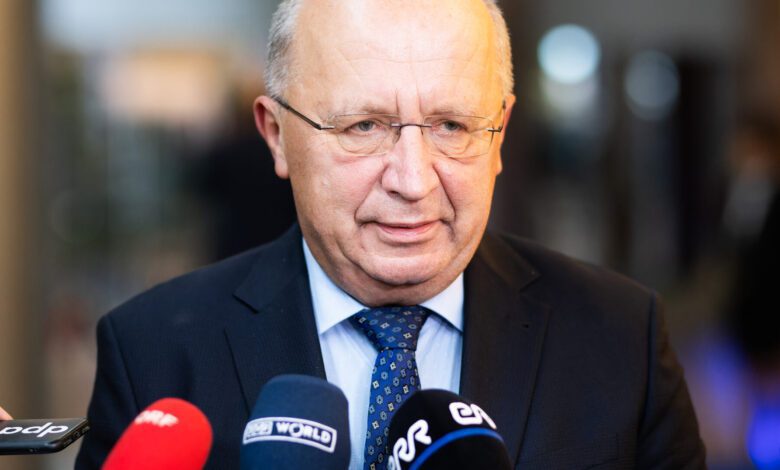
European Commission President Ursula von der Leyen nominated former Lithuanian prime minister Andrius Kubilius in September 2024 to become the EU’s first commissioner dedicated to defence industry and space. The new title signalled urgency, but the office did not command a European army or national defence budgets.
The portfolio emerged from a security crisis
Russia’s full-scale invasion of Ukraine exposed ammunition shortages, fragmented procurement and limited production capacity across Europe. Member states increased spending, yet orders remained divided among national requirements and suppliers.
A commissioner could coordinate industrial policy but could not erase different threat perceptions.
Kubilius brought Baltic experience
He served twice as Lithuania’s prime minister and later in the European Parliament. Lithuania’s proximity to Russia and strong support for Ukraine made his nomination a statement about the Commission’s strategic priorities.
He still needed parliamentary confirmation and would serve the whole Union, not one region.
His mandate centred on industry
Tasks included strengthening production, encouraging joint procurement, mapping readiness and developing a European defence-industrial strategy. Space responsibilities covered programmes important to navigation, observation and secure communications.
These are meaningful levers even without operational command of armed forces.
National governments retained military power
EU states decide force structure, deployments and most defence spending. NATO remained the principal collective-defence organization for most members, with the United States providing crucial capabilities.
The “king without a kingdom” description captured this gap between political expectations and formal authority.
Budgets were dispersed
The Commission controlled industrial and research funds, but they were small compared with combined national budgets. Larger common financing required agreement among governments and the European Parliament.
A new office could propose and coordinate; it could not create unlimited money.
Fragmentation created an opportunity
European forces operated many incompatible weapon types, which increased training, maintenance and supply costs. Shared specifications and longer contracts could give manufacturers demand certainty and improve interoperability.
Consolidation also risked favouring large states or firms unless competition and geographic balance were transparent.
Ukraine was both urgent and instructive
Supporting Kyiv required faster ammunition, air-defence and equipment production. Battlefield experience also showed the importance of drones, electronic warfare, repair and rapid innovation.
Industrial planning had to meet immediate deliveries without locking Europe into obsolete technology.
Authority would be measured by results
Kubilius later took office in December 2024. Useful indicators for the portfolio included joint orders, production lead times, stock replenishment, cross-border contracts and reduced duplication.
The commissioner was neither a defence minister nor an empty symbol. His power depended on persuading member states to align money and requirements with EU tools. The office could become consequential precisely through coordination, but only governments could give it the resources that the ambitious title implied.
Oversight mattered as spending grew. The Commission and Parliament needed procurement transparency, conflict controls and independent auditing, while national legislatures retained responsibility for their budgets. Europe could pursue speed without abandoning competition or democratic scrutiny. Whether the post gained a “kingdom” would be shown in common contracts and delivered capacity, not in the ceremonial weight of its name.