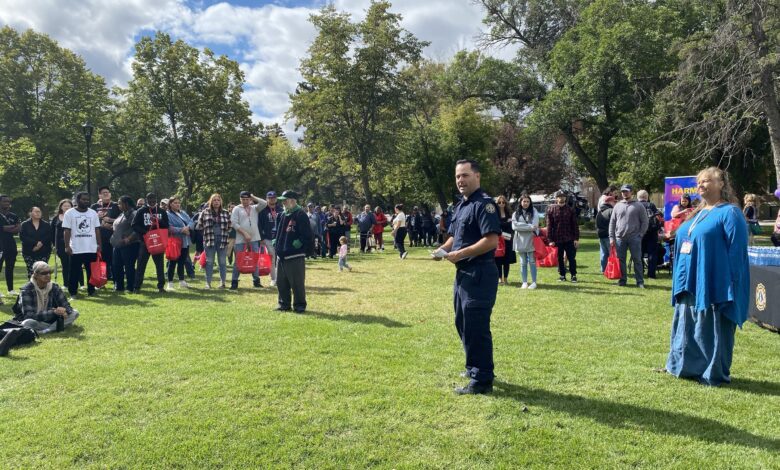
Regina’s Overdose Outreach Team showed how a small, consent-based service could connect people with care after a drug poisoning. Launched as a pilot in December 2022, the partnership paired health and fire-service expertise at the moment when a survivor faced an especially high risk of another overdose.
The team followed an emergency rather than replacing it
The service was designed for outreach after an overdose. It was not an emergency response unit, and anyone witnessing a suspected overdose still needed to call 911 and administer naloxone if trained and able.
Survival comes first; longer-term engagement begins after the immediate crisis.
Two professions worked together
The Regina team combined a Saskatchewan Health Authority mental-health and addictions counsellor with a primary-care paramedic from Regina Fire and Protective Services. One brought clinical and service-navigation knowledge, while the other brought experience meeting people during emergencies.
That combination could make follow-up feel more practical and less fragmented.
Participation required consent
Referrals could come from survivors, relatives, hospitals, first responders or community organizations, but the person receiving support had to agree. Consent matters because coercion can deepen distrust among people who have experienced stigma in health or justice systems.
The team’s role was to offer a route, not force one.
Short-term contact opened longer pathways
Staff could provide counselling, harm-reduction education, risk assessment and safety planning. They also connected clients with treatment and community organizations for needs extending beyond the team’s brief involvement.
A warm handoff is more useful than simply giving someone a telephone number.
Referrals grew substantially
Provincial health authorities reported that Regina referrals rose from 91 near the pilot’s start to 347 by April 2024, an increase of 281 percent. Saskatoon’s parallel program also recorded strong growth.
More referrals can indicate greater awareness and trust, not necessarily a decline in the underlying crisis.
Families remain part of prevention
The words “I loved him” reflect the grief behind overdose statistics. Families may carry trauma, guilt and unanswered questions after a death, while survivors may fear judgment or withdrawal.
Compassionate services recognize substance use as a health issue and treat every client as a person with relationships and goals.
Naloxone is essential but not sufficient
Naloxone can temporarily reverse an opioid overdose, buying time for emergency treatment. It does not address contamination of the drug supply, housing, pain, trauma, dependence or barriers to care.
Post-overdose outreach connects that lifesaving moment to options that may reduce future risk.
Pilot status created uncertainty
The Ministry of Health extended the Regina and Saskatoon teams for one year through March 2025. Supporters wanted the work to become permanent, but continuation should be guided by transparent evidence.
Useful measures include successful contact, voluntary engagement, repeat overdoses, treatment access and client experience—not referral totals alone.
Trust was the program’s working asset
People do not always accept help immediately. Multiple respectful contacts may be needed, and relapse does not erase progress. Staff need time, manageable caseloads and reliable services to which they can refer clients.
The Regina pilot’s promise lay in meeting people without moral judgment after a near-fatal event. Making that promise durable required stable funding, rigorous evaluation and a broader care system capable of receiving those who said yes.