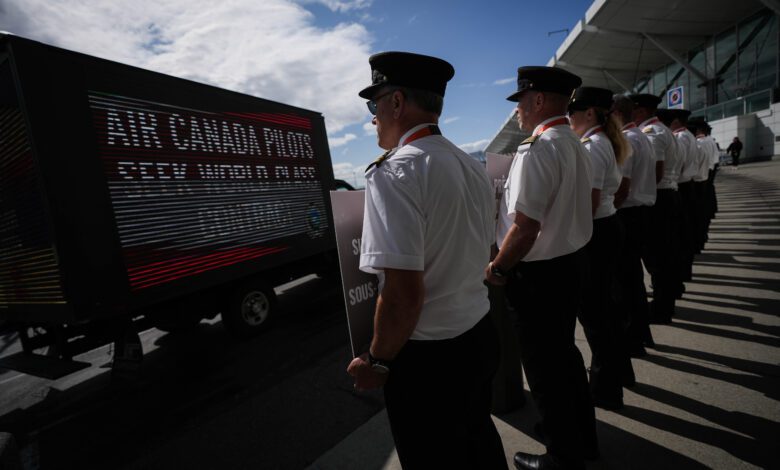
Conservative leader Pierre Poilievre urged Air Canada to negotiate in good faith and reach a fair agreement with its pilots in September 2024. More than 5,200 pilots represented by the Air Line Pilots Association were approaching a possible strike or lockout.
A legal deadline was approaching
After federal conciliation and a cooling-off period, either side could issue 72 hours’ notice beginning September 15. That notice would not ground the full network instantly, but it would trigger a planned operational wind-down.
Travellers faced uncertainty before any job action actually began.
The union sought changes to compensation
Pilots argued that wages, retirement provisions and scheduling had fallen behind comparable North American carriers. The company said its offer included substantial increases and that it was bargaining toward an agreement.
Precise comparisons depend on seniority, aircraft, currency and work rules.
Poilievre opposed pre-empting negotiations
He said pilots had a right to fight for fair wages and called on Air Canada to bargain in good faith. Political support did not itself determine what contract members would accept.
The parties retained responsibility for exchanging proposals at the table.
Air Canada prepared a gradual shutdown
The airline said Air Canada and Air Canada Rouge flights might be suspended over three days because aircraft and crews had to be positioned safely. Regional Air Canada Express services operated by other carriers were treated differently.
Restarting a global network could also take several days.
Passenger rights depended on circumstances
Customers whose flights were cancelled were entitled to rebooking or refunds under applicable rules, but compensation for inconvenience and expenses can differ when disruption is considered outside an airline’s control.
Travellers needed written notices and receipts rather than assumptions based on social media.
Government intervention was contested
Air Canada raised arbitration as a route to avoid disruption, while labour advocates defended free collective bargaining. Early intervention can protect the travelling public but may also reduce an employer’s incentive to reach a negotiated settlement.
Any federal action would require a stated legal basis.
The economic effects extended beyond passengers
A shutdown could interrupt cargo, business travel, tourism and connections in communities with limited alternatives. Those consequences increased pressure on both sides without proving that either bargaining position was correct.
Essential shipments needed contingency planning.
A tentative agreement ultimately avoided the strike
On September 15, Air Canada and ALPA announced a tentative four-year contract, keeping operations running while members considered the terms. The later resolution did not make the earlier risk imaginary.
Ratification remained the union members’ decision.
The “fair deal” test belonged to the process
Fairness involved compensation, working conditions, operational sustainability and a meaningful member vote. Political slogans could support bargaining rights but could not replace detailed contract scrutiny.
The episode showed why airlines, unions and regulators need early passenger communication alongside serious negotiation. A last-minute agreement protected travel, while the ability to strike remained an important source of bargaining power.
Future negotiations could reduce disruption by establishing contingency communication and bargaining milestones well before the legal deadline, without restricting either party’s lawful options.