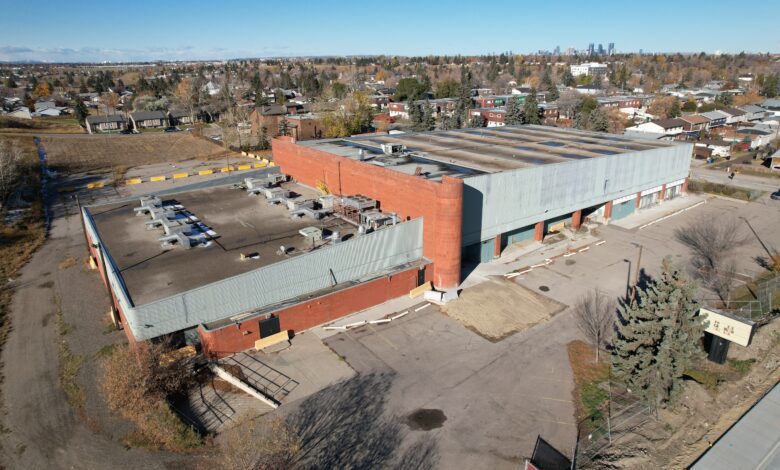
Calgary’s former Ogden Royal Canadian Legion and curling facility remained standing in October 2024, one year after the city ordered its demolition. Residents described vandalism, unauthorized entry and emergency-response risks around a large building that had been vacant since the Legion sold it in 2012.
A former community landmark
The building at 78 Avenue and Ogden Road S.E. had once served thousands of Legion members and supported busy curling rinks. Its deterioration was especially painful to residents who remembered its role in community and veterans’ life.
Community association representative Zev Klymochko said its condition felt disrespectful to veterans who built the facility. That view reflected local attachment; ownership and legal responsibility had changed after the sale.
Why the city issued an order
Residents reported theft, vandalism, squatters and other disorder. City officials said the owner did not have an adequate plan for the property, and a demolition order was issued in October 2023.
The Licence and Community Standards Appeal Board later upheld the order. Its decision described danger to unauthorized entrants, emergency responders and people in the surrounding area and set a demolition deadline in spring 2024.
Why demolition had not happened
The owner sought judicial review in Alberta’s Court of King’s Bench, placing the order on hold pending a hearing scheduled for December 2024. Judicial review allowed a court to examine the legality or reasonableness of the administrative process.
A delay caused by legal review is different from the city simply declining to enforce. Due process can frustrate neighbours, but it protects owners and the legitimacy of municipal action.
The risks of a vacant structure
Fire and police services reportedly had concerns about entering the interior, potentially limiting an emergency response. Broken access controls and structural deterioration can expose people seeking shelter, first responders and nearby properties to harm.
Calling a site an “eyesore” understates those concrete risks. Secure boarding, fencing, inspection and fire prevention may be necessary while litigation prevents final demolition.
Residents needed a clear process
The community association asked people to continue reporting new concerns to 311 and peace officers. A useful city response would consolidate complaints, provide lawful status updates and identify interim safety measures.
Reporting should not criminalize every unhoused person who enters an unsafe building for warmth. Preventing entry needs to be paired with accessible shelter and outreach, especially before winter.
Later resolution
The building was still standing when this article was published. In October 2025, a major fire prompted emergency demolition activity at the site, confirming that the 2024 account was not the final chapter.
The long delay illustrated the collision of property rights, appeal procedures and urgent neighbourhood safety. A demolition order alone did not make the danger disappear. Transparent interim enforcement and a timely court process were needed to protect residents while the owner exercised the right to challenge the city’s decision.
The later fire also showed why temporary controls needed active inspection rather than passive reliance on a disputed order. Once a vacant structure attracts repeated entry, delay carries risks for neighbours and responders even before a court resolves who must pay for demolition.