
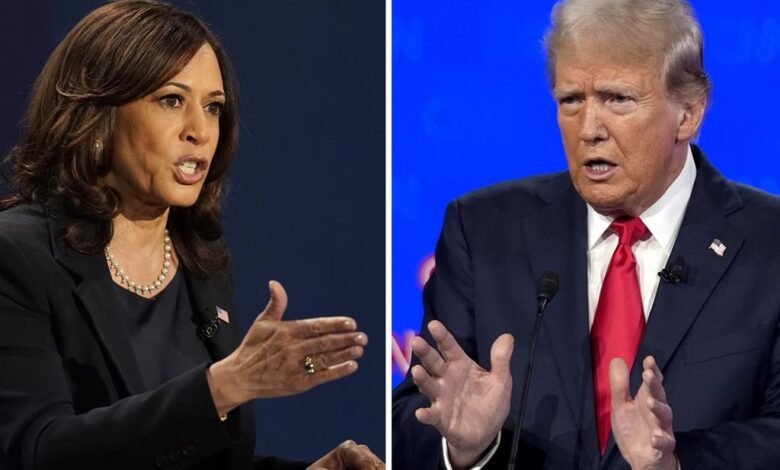
Kamala Harris and Donald Trump offered sharply different economic programmes during the 2024 U.S. election, with important consequences for Canada’s deeply integrated trade and investment relationship. Harris emphasized targeted household support and continuity with the Biden administration, while Trump made broad import tariffs central to his agenda.
Harris’s domestic proposals
Harris proposed expanded child and earned-income tax credits, assistance of up to US$25,000 for some first-time homebuyers and measures intended to support construction of three million homes and rental units. She also backed prescription-drug negotiations, paid leave and a higher federal minimum wage.
Her plan included higher taxes on some wealthy households and corporations. Many measures required Congress, so election results beyond the presidency would have determined how much could become law.
Trade continuity with limits
Analysts expected a Harris administration largely to continue Biden-era industrial incentives and “Buy American” preferences while maintaining alliances. That path could be more predictable for Canada but was not free trade in every sector.
Harris said she would approach the 2026 review of the Canada–United States–Mexico Agreement with attention to incentives that might move manufacturing across borders. Canadian officials would still need to defend supply chains and market access.
Trump’s tariff programme
Trump campaigned on a blanket tariff of 10 to 20 per cent on most imported goods and at least 60 per cent on goods from China, alongside deregulation, expanded energy production and extensions of his first-term tax changes.
Tariffs are collected from importers, who may pass costs to consumers or suppliers. They can protect selected producers while raising input prices for other businesses and provoking retaliation. The net result depends on scope, exemptions and responses.
Why Canada was exposed
More than $3.6 billion in goods and services crossed the Canada–U.S. border each day, according to the Canadian Chamber of Commerce figure cited at the time. Automotive, energy, agriculture and other supply chains often crossed the border more than once.
A Scotiabank scenario estimated that broad U.S. tariffs and retaliation could reduce Canadian GDP by 3.6 per cent over two years. This was a modelled scenario, not a prediction certain to occur, and results depended on policy details.
Taxes, deficits and inflation
Independent researchers expected both candidates’ programmes to add to U.S. federal deficits, with estimates generally larger for Trump’s combination of tax reductions and tariffs. Tariffs could also raise consumer prices, influencing interest rates and Canadian demand.
Harris’s targeted assistance could improve affordability for recipients but might increase demand in constrained markets unless supply expanded. Campaign costings needed scrutiny of phase-ins, eligibility and congressional approval.
How Canada could prepare
Canadian governments and businesses could map cross-border inputs, document U.S. employment supported by Canadian trade and prepare lawful responses to disputes. Diversifying markets can reduce risk but cannot rapidly replace the scale and geography of the U.S. relationship.
The election analysis was not an endorsement of either candidate. It identified different risk profiles: relative continuity and targeted domestic intervention under Harris, versus greater tariff and trade-agreement uncertainty under Trump. Canada’s task was to prepare for actual policy while testing campaign claims against enacted law and measurable effects.



