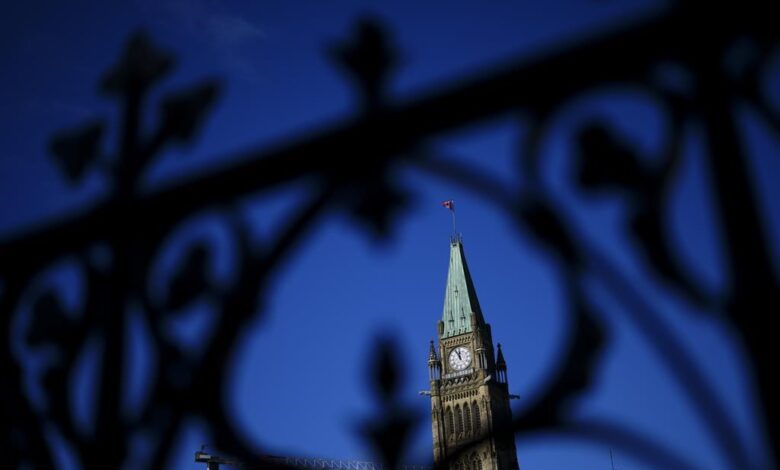
Federal court documents reported in November 2024 said two Ottawa teenagers were alleged to have planned an attack against Jewish people, possibly by detonating an explosive device at a pro-Israel rally on Parliament Hill. The youths faced terrorism-related charges, but the allegations had not been proven and Canadian law protected their identities.
Why the possible target emerged later
The specific Parliament Hill scenario was not set out in the public wording of the criminal charges. It appeared in a federal application under section 38 of the Canada Evidence Act, through which the government sought to protect information it said could harm international relations, national defence or national security if disclosed.
Justice Department lawyers wrote that the two were alleged to have formed a plan in the autumn of 2023 to attack Jewish people in Ottawa. Reporting must preserve the words “alleged” and “possibly”: a government filing describes the prosecution theory, not a completed judicial finding.
Arrests and charges
An RCMP-led national-security team arrested the first boy in December 2023, when he was 15. A second 15-year-old was arrested in February 2024 as an alleged co-conspirator. They were jointly accused of conspiring to commit murder for a terrorist group and facilitating terrorist activity through instructional material and propaganda.
The first youth also faced allegations involving instructions to attack Jewish people and possession of substances and ball bearings connected to an explosive device. The second faced an additional allegation of trying to obtain a firearm. Listing a charge explains the case; it must never be written as proof that the conduct occurred.
Privacy and fair-trial obligations
Canada’s youth-justice system generally bars publication of identifying information about minors accused of crimes. That protection is not a loophole or an invitation to crowdsource their names. It recognizes the special consequences of permanently linking a child to unproven allegations.
Bail proceedings may also be subject to publication bans. News outlets and social-media users should not repeat restricted evidence or speculate about families, schools and neighbourhoods in ways that identify the youths indirectly.
The community impact
The alleged target intensified concern about antisemitism and the safety of Jewish gatherings during a period of heightened tension over the Israel–Gaza war. Authorities and organizers have a duty to assess credible threats and protect lawful assembly. That does not justify treating Muslim communities or political protesters as collectively suspect.
Responsible prevention distinguishes evidence about an individual from identity-based assumptions. Community trust can help people report concerning conduct and makes security more effective than inflammatory generalization.
How to report a national-security prosecution
Use court documents, charge sheets and official statements, but describe what each source proves. An allegation in a filing can establish that the government made the allegation; it cannot establish guilt. Follow changes to charges, rulings and the eventual trial rather than freezing the case at its most alarming headline.
The seriousness of the accusations warrants clear reporting, not certainty beyond the evidence. As of the 2024 disclosures, two teenagers were accused of an ISIS-linked plot and the government identified a pro-Israel rally as a possible target. Their guilt and the complete facts remained for the court to determine under the protections of Canadian law.