Alberta projected in October 2024 that Indigenous tourism would contribute about $126 million to the provincial economy that year. The government promoted the estimate at Métis Crossing northeast of Edmonton while highlighting multi-year support for Indigenous Tourism Alberta.
The province committed $8.85 million
Alberta said its funding to Indigenous Tourism Alberta would total $8.85 million from 2021 through 2026. The organization works with Indigenous-owned operators on business development, marketing, training and visitor readiness.
A funding commitment and an economic-impact estimate measure different things. The first is public spending over several years; the second attempts to quantify activity generated by a sector during a particular period.
Métis Crossing demonstrated the model
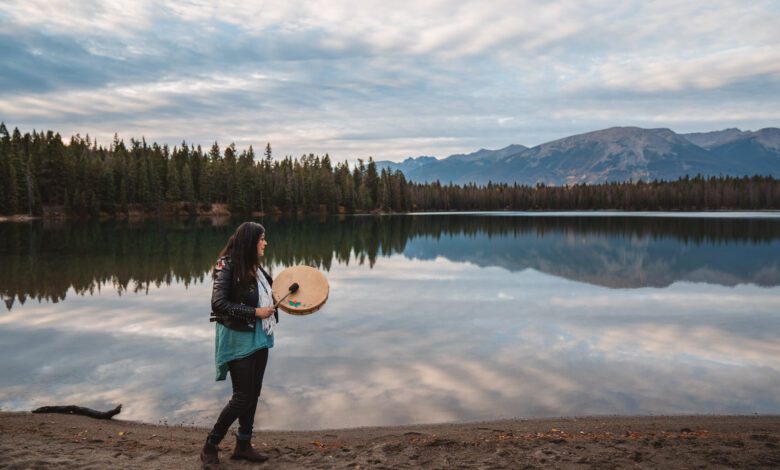
The announcement took place at Métis Crossing near Smoky Lake, a cultural destination where visitors can learn about Métis history through Indigenous-led interpretation, land-based activities, exhibits and accommodation.
Its significance is not simply that culture attracts customers. Indigenous ownership and authority allow a community to decide what knowledge may be shared, how it is presented and where revenue flows.
International visitors were seeking authentic experiences
The province said roughly one in three international travellers arriving in Alberta wanted an authentic Indigenous experience. Tourism Minister Joseph Schow described Indigenous cultures and histories as central to Alberta’s story.
“Authentic” should not be treated as a decorative marketing label. It requires that Indigenous people shape the experience, approve representations and receive material benefit rather than having their identity packaged by an outside operator.
Tourism can support community priorities
Sector growth can create employment, strengthen language and cultural programming, support artists and food producers, and diversify revenue in rural or remote communities. It can also give visitors a more accurate account of the land and the people who have lived on it.
Those benefits are possibilities, not automatic results. Seasonal demand, transport access, housing pressure and the cost of infrastructure can limit who participates and how much income remains locally.
The headline figure needs context
An economic contribution is not the same as $126 million in profit or government revenue. Depending on the methodology, it may refer to gross domestic product, direct spending or a broader model that includes supplier and employee activity.
The short announcement did not provide enough methodology to reproduce the exact forecast. Readers should therefore understand the number as the province’s sector estimate, not a precisely audited payment to communities.
Cultural reconciliation is not a transaction
Indigenous Relations Minister Rick Wilson said the sector could link economic and cultural reconciliation. Tourism can create respectful encounters, but a visitor purchase cannot substitute for treaty obligations, land rights, clean water, language support or accountability for colonial policy.
Operators may also choose not to share ceremonies, sacred places or community knowledge. Respect includes accepting those boundaries without treating access as something admission automatically buys.
Growth should be measured by who controls it
Visitor counts and spending are useful indicators, but ownership, wages, community revenue, cultural safeguards and long-term business survival show whether growth is genuinely Indigenous-led.
The 2024 forecast signalled meaningful economic scale and rising traveller interest. The stronger measure of success was whether public investment gave First Nations, Métis and Inuit entrepreneurs the resources and authority to develop experiences on their own terms while keeping benefits in their communities.