The Incumbent, the Marxist and the Heir: Sri Lanka’s Tight Race for President
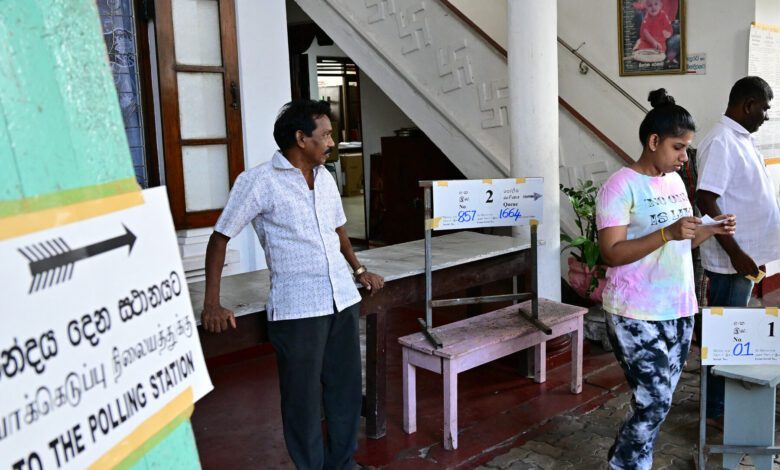
Sri Lankans voted on September 21, 2024, in their first presidential election after an economic collapse drove mass protests and forced President Gotabaya Rajapaksa from office. The leading field brought together incumbent Ranil Wickremesinghe, left-leaning challenger Anura Kumara Dissanayake and opposition leader Sajith Premadasa.
The economy dominated the choice
Sri Lanka defaulted on foreign debt in 2022 as foreign-exchange shortages left the country struggling to import fuel, medicine and other essentials. Inflation later fell and queues eased, but households continued to feel higher taxes, prices and reduced public spending.
Voters were deciding how to distribute the costs of recovery, not whether recovery was necessary.
Wickremesinghe defended stabilization
Parliament selected him president after Rajapaksa resigned. His government secured an International Monetary Fund programme and advanced debt restructuring, arguing that continuity was essential to restore confidence and access to finance.
Opponents said austerity protected an unpopular political establishment while burdening ordinary families.
Dissanayake offered an anti-establishment programme
The National People’s Power candidate led a coalition centred on the Janatha Vimukthi Peramuna, a Marxist-rooted party with a violent insurrectionary history that had moved into democratic politics. He campaigned against corruption and elite privilege.
His movement promised to renegotiate aspects of economic policy without abandoning fiscal stability altogether.
Premadasa represented the main parliamentary opposition
The Samagi Jana Balawegaya leader was the son of former president Ranasinghe Premadasa, making “heir” a reference to political lineage rather than a legal claim. He combined welfare promises and market-oriented policy with criticism of the government’s IMF implementation.
His position appealed to voters seeking change without Dissanayake’s party tradition.
No candidate won an outright first count
Dissanayake led with 5,634,915 first-preference votes, or 42.31 per cent. Premadasa received 4,363,035, or 32.76 per cent, while Wickremesinghe placed third with about 17.3 per cent.
Because nobody exceeded 50 per cent, election officials counted transferred preferences for the first time in Sri Lankan presidential history.
The preference count confirmed Dissanayake’s victory
After eligible second and third preferences were added, the Election Commission recorded 5,740,179 votes for Dissanayake and 4,530,902 for Premadasa. Dissanayake was declared elected and took office on September 23.
The final totals should not be confused with the first-preference percentages.
The mandate was strong but initially constrained
The presidency carried extensive executive authority, yet Dissanayake’s bloc held only a small number of seats in the existing parliament. He therefore dissolved parliament and called an election for November.
His coalition later won 159 of 225 seats, substantially expanding its ability to legislate.
Promises met hard fiscal limits
The new administration inherited debt negotiations, IMF benchmarks, weak public services and public demand for accountability. Any relief from taxes or austerity had to be reconciled with revenue, reserves and creditor agreements.
The election rejected much of the old political order, but it did not erase the economic arithmetic. Its importance lay in giving a former minor-party leader a national mandate while testing whether anti-corruption politics could deliver both social protection and a durable recovery.