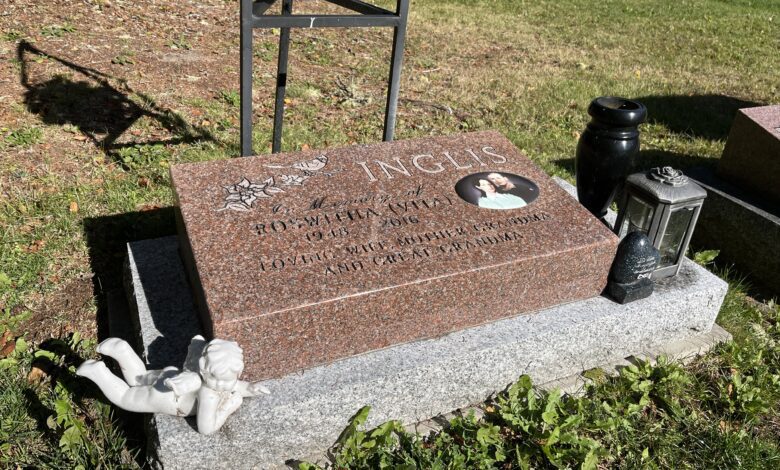
Paul Inglis appealed for the return of a handmade bench stolen from beside his late wife’s grave at Alderwood Cemetery in Riverview, New Brunswick. The 75-year-old said its carved details and years of family memories made it impossible to replace with an ordinary seat.
The bench disappeared in September
Inglis’s family said it was present during a September 15 visit but gone by September 28. They reported the theft to police and said other benches had also reportedly disappeared from the cemetery.
Those reports did not identify who removed the objects or why. Until an investigation established otherwise, it was important not to accuse cemetery staff, visitors or any named person.
A friend built it for the family
The wooden bench included carved blue jays and an edelweiss, a flower associated with devotion and with the family’s German connection. Tree stumps formed its base, and roughly two feet of wrought iron in the legs had been intended to secure it.
Inglis maintained the bench for about eight years, renewing its varnish so it would survive outdoors. That accumulated care was part of its value.
It marked a long marriage
Inglis met Roswitha, known as Vita, in Germany in the early 1970s while he was an 18-year-old Canadian Armed Forces member. He learned German as their relationship developed, and they married in 1972.
The couple later moved to Canada and raised two children, eventually becoming grandparents. Vita died from a brain tumour, a loss Inglis had not expected because he had believed his own health would make him die first.
The grave remained part of family life
Inglis visited several times a month to tend the site and speak to his wife. The bench gave him and other family members a place to sit, remember her and share updates about children, grandchildren and life after her death.
A memorial object can look like replaceable furniture to an outsider while functioning as part of a family’s mourning practice. Its importance came from use and association, not market price.
His current wife helped publicize the loss
Marianne Steeves contacted media hoping wider attention would lead someone to recognize the bench. She, too, had been widowed, and the couple supported one another in visiting their former partners’ graves.
Their relationship showed that a later marriage does not erase an earlier bond. Grief and renewed companionship can coexist without one diminishing the other.
The seat also had a practical purpose
Steeves said Inglis had become less steady on his feet. He had been diagnosed with Lewy body dementia, making a place to rest at the gravesite increasingly important.
A friend offered to build another bench, but Inglis said a replica would not carry the same history. He wanted the original returned while he could still use it.
The family offered forgiveness and a reward
Inglis offered $1,000 for its return and said he would forgive the person responsible if it was brought back to the cemetery. The appeal prioritized recovery over punishment.
No verified recovery was included in the available public record. The accurate ending therefore remains open: a distinctive memorial bench vanished between two visits, police were notified, and a family asked anyone with reliable information to help restore an irreplaceable place of remembrance.