What to Know About Austria’s General Election and the Far-Right Freedom Party
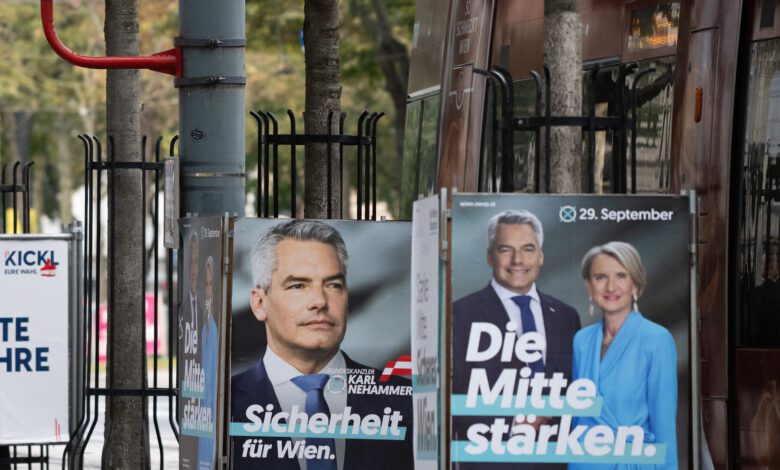
Austria voted on September 29, 2024 in a parliamentary election dominated by migration, the cost of living and dissatisfaction with the governing coalition. The far-right Freedom Party, or FPÖ, entered the contest leading many polls under Herbert Kickl, while Chancellor Karl Nehammer’s conservative People’s Party sought to limit its losses.
Voters elected the National Council
The ballot filled all 183 seats in Austria’s lower house. A party generally needed at least four per cent of the nationwide vote, or a direct regional mandate, to enter parliament.
Austria uses proportional representation, so finishing first does not by itself deliver control of government. A majority requires 92 seats and usually a coalition of two or more parties.
The Freedom Party achieved a historic first place
Final official results gave the FPÖ 28.8 per cent and 57 seats, its strongest national result. The People’s Party, or ÖVP, finished second with 26.3 per cent and 51 seats after losing substantial support from 2019.
The centre-left Social Democrats won 21.1 per cent and 41 seats. NEOS took 18 seats and the Greens 16, leaving five parties represented in the new chamber.
Kickl campaigned on a harder nationalist programme
The FPÖ advocated tighter asylum and border policies, restrictions on benefits for non-citizens and a concept it called “Fortress Austria.” It also opposed sanctions on Russia and criticized military assistance for Ukraine.
Supporters presented those positions as sovereignty and public-order measures. Opponents warned that the party’s language on migration and identity threatened minority rights and Austria’s European commitments.
Inflation weakened the governing parties
Austria experienced sharp price increases after the pandemic and Russia’s full-scale invasion of Ukraine. Housing, food and energy costs made household finances a central campaign concern.
The ÖVP and Greens had governed together since 2020. Their ideological differences, the pandemic response and investigations surrounding former chancellor Sebastian Kurz contributed to voter fatigue.
Climate and flooding remained important
Severe flooding shortly before election day returned climate adaptation and disaster protection to the debate. The Greens argued for continuing decarbonization, while other parties emphasized affordability and energy security.
The disaster did not erase the larger contest over migration and prices, but it illustrated how environmental risk and economic policy increasingly overlap.
The presidency mattered after the result
Austria’s president formally appoints the chancellor and traditionally asks a party leader to explore a viable majority. President Alexander Van der Bellen had previously expressed concern about some FPÖ positions.
Other parties also said before the vote that they would not serve under Kickl. Those decisions meant the largest party could still be excluded if rivals assembled a parliamentary majority.
A first-place finish was not a governing mandate
The result gave the FPÖ a strong claim to political influence, but coalition arithmetic and constitutional procedure determined who could actually govern. Negotiations therefore mattered as much as election-night rankings.
That distinction is essential when describing proportional systems: voters choose a legislature, and the government emerges from the alliances that can command its confidence.
The vote reshaped Austrian politics
The election confirmed that a party once treated as a coalition partner on the right had become the country’s largest electoral force. It also exposed the fragmentation of the traditional centre.
For Austria and the European Union, the lasting consequences depended on coalition agreements, rule-of-law safeguards and the policies enacted after the campaign. The numbers established political weight; they did not settle every institutional question.