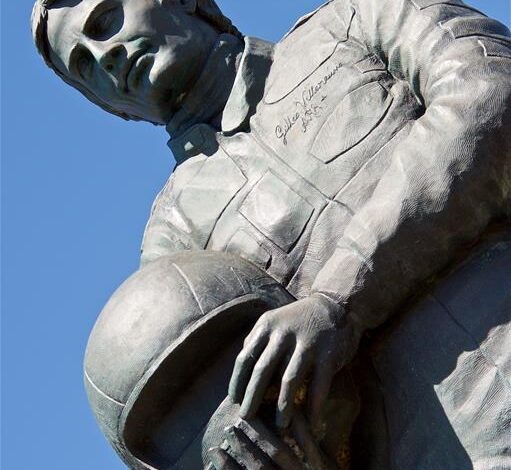
A five-foot-three-inch bronze statue of Canadian Formula One driver Gilles Villeneuve was cut from its pedestal outside his museum in Berthierville, Quebec, in late October 2024. Only the sculpture’s boots remained, and police and museum officials feared the work might be destroyed for the metal.
The theft
Museum general manager Alain Bellehumeur believed the statue was removed between Wednesday night and Thursday morning. He said cutting through the bronze legs would have required specialized equipment and that at least two people and a suitable vehicle were probably involved.
Quebec provincial police sought witnesses and reviewed whether nearby cameras captured useful evidence. Their statement that melting the sculpture was highly probable was an investigative assessment, not proof of the thieves’ plan.
A memorial tied to Berthierville
Sculptor Jules Lasalle created the work in 1984. It was installed outside the museum in 1994 in the community where Villeneuve grew up, about 70 kilometres northeast of Montreal. Visitors regularly posed beside it before entering the collection.
Bellehumeur said the statue cost $25,000 to construct in 1984. Its cultural importance could not be measured by the scrap price or original invoice: it had become a visible local landmark and a link between the town and an internationally known athlete.
Villeneuve’s racing career
Gilles Villeneuve competed in 67 Formula One races from 1977 to 1982 and won six. He died at age 32 after a crash during qualifying for the Belgian Grand Prix. His aggressive driving and success with Ferrari made him an enduring figure in Canadian and international motorsport.
His son Jacques later won the Formula One world championship in 1997. The Berthierville museum holds trophies, racing equipment and other material connected to the family’s sporting history.
Metal theft and heritage loss
Large outdoor bronze works can be vulnerable because thieves may assume the material can be sold after a sculpture is cut apart. Lasalle said the raw bronze was not particularly valuable compared with the severe loss caused by destroying the artwork.
Scrap dealers and foundries can help by checking suspicious objects, recording seller information as required and reporting recognizable fragments. Members of the public should send tips to police rather than confront a suspected seller.
Protecting public art
Museums and municipalities can document works with detailed photographs, measurements, ownership records and permanent markings. Lighting, cameras, tamper sensors and concealed reinforcement can raise the effort required for theft without turning a memorial into an inaccessible fortress.
Security planning should be proportional and regularly reviewed. Public art is meant to be encountered, but openness should not mean an irreplaceable object is left without detection or response measures.
A search for the intact work
Officials hoped the statue would be recovered before it was altered. A later reward and further public appeals underscored the urgency, but the original report did not establish an arrest or recovery.
The theft removed more than a tourist photograph. It severed an artwork from the place and history it represented. Even if insurance or fundraising could produce a replacement, the 1984 sculpture itself carried the artist’s work and decades of community memory that no scrap valuation could restore.