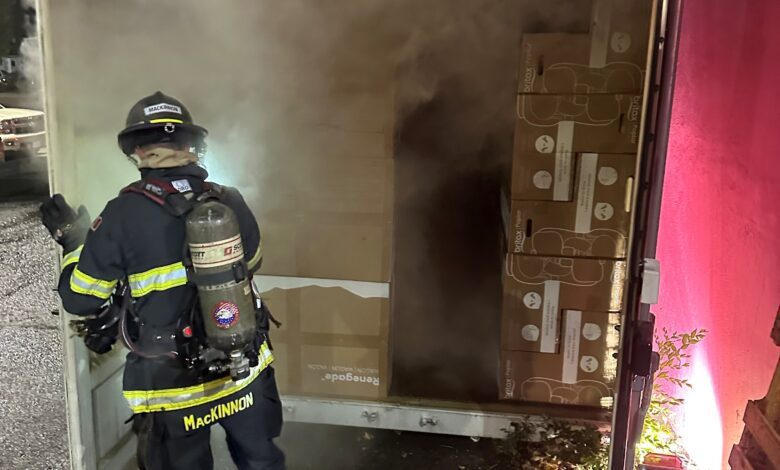
The owner of Baby & Me in Kelowna said his store was hit by three damaging incidents in one week in October 2024: a deliberately set fire behind the building and the removal of its electrical meter on two occasions. He believed the attacks were retaliation for measures intended to discourage overnight loitering, but police had not established that motive publicly.
Damage to a long-running retailer
Owner Don Blevens said smoke from the fire entered a storage area containing merchandise. He estimated the insurance loss could reach hundreds of thousands of dollars, although an insurer’s completed assessment—not an early estimate—would determine the amount.
Removing the power meter twice also forced the store to call the utility before it could operate normally. Interruption costs can include spoiled systems, staff time, repairs and lost customers even when the physical component is replaced quickly.
The owner’s theory
Blevens had installed speakers that played unpleasant sounds outside the store to deter loitering and repeated problems involving needles, garbage and human waste. He said the vandalism began after that measure and believed someone was seeking retribution.
Timing can raise a reasonable question, but it does not identify an offender or prove a motive. Security footage, witness accounts, forensic evidence and a police investigation are needed before assigning responsibility.
Safety concerns for staff and customers
The retailer serves pregnant customers and families with infants and young children. Blevens said employees felt unsafe and some customers had indicated they would not return.
Employers have a duty to assess workplace hazards, document incidents, train staff and provide a safe way to open, close and handle emergencies. Employees should not be expected to confront a person in crisis or clean dangerous waste without equipment and training.
Supportive housing nearby
Some businesses and residents linked worsening disorder to Stephen Village, a nearby supportive-housing complex. That association remained a community allegation and should not be used to blame all residents or imply that homelessness causes a particular crime.
Supportive housing can reduce harm when it has adequate staffing, health services, security and neighbourhood coordination. Problems outside a facility still require specific incident data and responses directed at behaviour rather than a person’s housing status.
The city’s response
Kelowna mayor Tom Dyas pointed to cameras, bylaw patrols and RCMP activity around the area. He also said municipal powers were limited and called for broader changes involving repeat offenders and bail.
Bail decisions are made under federal criminal law and constitutional principles, including the presumption of innocence. Reform proposals should be evidence-based and should not replace timely local investigation, mental-health care, addiction treatment and environmental design.
Measures that can reduce risk
Better lighting, protected utility hardware, monitored alarms, clear sightlines and coordinated reporting can make a property harder to damage. Businesses can retain photographs, repair invoices and incident numbers for insurance and police follow-up.
Outreach teams need a separate role from enforcement. Someone seeking shelter or treatment should be connected to services, while arson, threats and property destruction require a proportionate justice response.
Avoiding a false choice
Kelowna did not have to choose between commercial safety and humane treatment of vulnerable people. Residents, workers and people without stable housing all benefit when dangerous behaviour is addressed and supports are accessible.
The week of damage was real and serious. The claimed reason remained unproven. Keeping those two facts separate allows authorities to pursue the offender while the city addresses the wider conditions around the site without stigmatizing an entire group.