Fact-Check: Do These Images Show the Currency of Kurdistan? No!

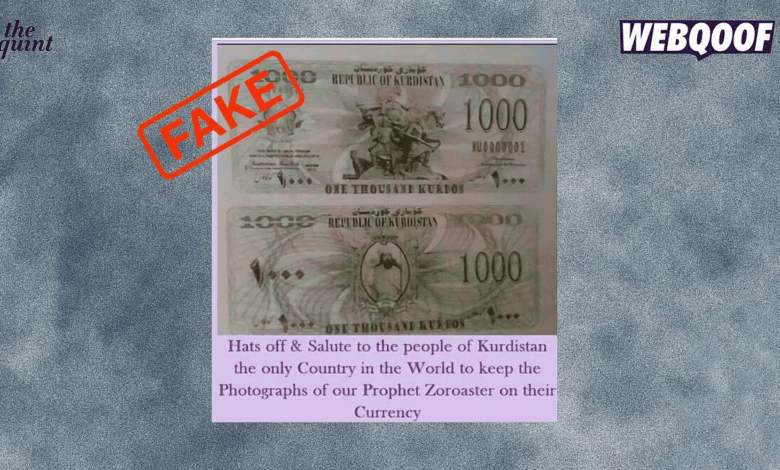
Images shared as a new “currency of Kurdistan” were not authentic banknotes. The pictured denomination used the invented name “Kurdos” and portrayed the religious figure Zoroaster, but no recognized central bank or monetary authority issues such a currency.
Why the geography matters
Kurdistan is a historical and cultural region spanning parts of several modern states; it is not a single internationally recognized sovereign country with one central bank. Kurdish communities therefore use the legal currencies of the jurisdictions in which they live.
The Kurdistan Region of Iraq uses the Iraqi dinar. Kurdish areas of Turkey use the Turkish lira, those in Iran use the Iranian rial and those in Syria use the Syrian pound. A regional government’s political institutions or cultural symbols do not automatically create an independent legal tender.
Checks performed on the viral images
A reverse-image search did not produce an official issuance notice, established banknote catalogue or credible news report documenting the notes. Searches for a recognized currency named “Kurdos” likewise produced no monetary authority behind the term.
Fact-checkers consulted counterparts familiar with Iraq, Iran, Turkey and Syria. They confirmed that the pictured notes did not match the official money used in those countries. Residents in Sulaymaniyah also said the supposed note was not in circulation in the Kurdistan Region of Iraq.
An automated image-analysis service reportedly assessed one picture as highly likely to have been AI-generated. That result is supporting evidence at most. AI detectors can make mistakes, and a percentage score should never substitute for checking whether the purported issuer, denomination and legal framework exist.
Zoroaster’s image is not proof
The appearance of a respected historical or religious figure can make fabricated money feel culturally plausible. Zoroaster is central to the Zoroastrian tradition and connected to the history of the wider region, but an image of him does not authenticate a note or establish who printed it.
Real banknotes normally identify an issuing authority, denomination and unit recognized in law. Their designs, security features and release dates are published by a central bank or government institution. Collectors’ fantasy notes, commemorative art and AI-generated concepts may imitate those conventions without becoming spendable currency.
How to verify a claimed new banknote
Start with the relevant central bank’s website and look for a formal release, specimen images and a date on which banks will issue it. Then check established currency references and reputable reporting. Search the exact words printed on the note and inspect whether the language, seal, serial numbers and denomination align with existing series.
Do not rely on visual polish. Generative tools can produce engraving-like portraits, elaborate borders and invented security strips within seconds. Conversely, an odd-looking image is not automatically fake because real notes can use unfamiliar scripts or designs.
The decisive problem here is institutional, not merely aesthetic: no official issuer recognizes the “Kurdos” note, and the territories described in the claim use four established national currencies. The images may be viewed as fantasy artwork, but they should not be presented as money issued by a country called Kurdistan.
source