Germany’s economy grew 0.3 per cent in the second quarter of 2026 compared with the previous quarter, a stronger result than the initial 0.2 per cent estimate. Exports drove the expansion, while equipment investment declined and consumer spending remained subdued.
The detailed figures released by the Federal Statistical Office on August 25 showed gross domestic product was also 1.0 per cent higher than a year earlier after adjustment for prices and calendar effects. The revision improves the near-term picture but does not establish a broad-based boom.
Exports lead the recovery
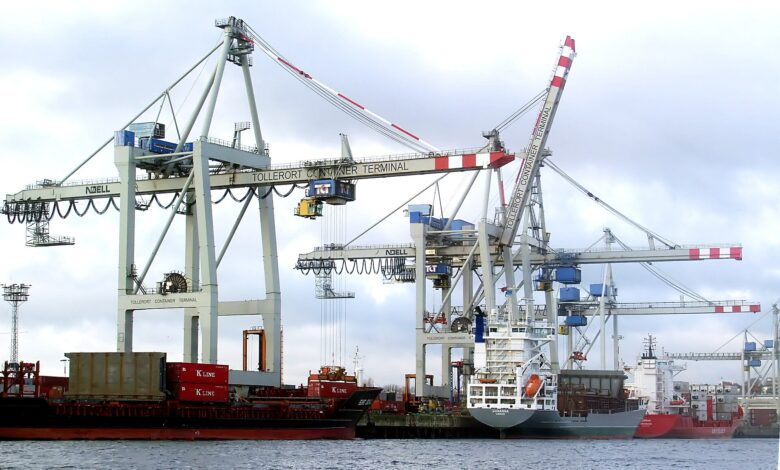
Exports of goods and services increased 2.0 per cent from the first quarter after price, seasonal and calendar adjustment. Goods exports rose 2.6 per cent, while service exports were unchanged. Imports increased 1.5 per cent, including a 2.1 per cent rise in goods and 0.3 per cent in services.
The export improvement reflects stronger June merchandise data than was available for the preliminary estimate. Germany’s manufacturing base remains closely connected to demand elsewhere in Europe, the United States and Asia, making global trade and energy costs central to domestic performance.
Manufacturing gross value added increased 0.9 per cent, with chemicals and electrical equipment among the stronger areas. That is encouraging for an economy that has struggled with high energy prices, weak industrial orders and competition from Chinese producers.
Investment remains the weak point
Gross fixed capital formation fell 0.2 per cent. Investment in machinery, equipment and vehicles dropped 1.4 per cent, while construction rose only 0.1 per cent after a weak start to the year affected partly by cold weather.
Equipment investment matters because it expands future productive capacity. Companies may delay projects when borrowing costs, geopolitical uncertainty or demand forecasts make returns difficult to judge. A recovery carried mainly by exports can therefore be vulnerable if trading partners slow or tariffs intensify.
Consumption expenditure increased just 0.1 per cent. Households may remain cautious despite nominal wage growth because prices, housing costs and economic uncertainty shape purchasing power and confidence.
Income and labour indicators
Average gross wages and salaries per employee were 4.4 per cent higher than a year earlier, while net wages and salaries rose 4.7 per cent. The household saving rate edged up to 9.6 per cent from 9.5 per cent, consistent with a cautious consumer response.
Total hours worked across the economy fell 0.5 per cent year on year because employment declined while average hours per worker were unchanged. That detail tempers the headline growth figure: production can increase even as the labour market loses some momentum.
Germany still trails the EU average
The European Union economy grew 0.5 per cent quarter on quarter, compared with Germany’s 0.3 per cent. Spain expanded 0.7 per cent, while France and Italy each grew 0.2 per cent. Germany’s year-on-year growth of 1.0 per cent was also below the EU’s 1.2 per cent.
International comparisons can be revised and economies have different structures, but the gap shows that Germany has not fully recovered its former role as Europe’s automatic growth engine.
What to watch next
The durability of the recovery will depend on whether export orders translate into investment and household demand. Industrial energy costs, low water levels affecting inland shipping, trade disputes and geopolitical shocks remain risks.
Policymakers face a balance between supporting near-term demand and improving long-term competitiveness through infrastructure, reliable energy, skilled labour and faster project approvals. Temporary export strength cannot substitute for productive investment indefinitely.
The revised figure is genuinely better than the initial estimate. Its composition is the more important message: Germany is growing, but the expansion is still dependent on external demand and has not yet produced a convincing revival in the investment needed for stronger future growth.