Flydubai Captain Smit Machchhar Stable After Cockpit Attack: What Is Confirmed

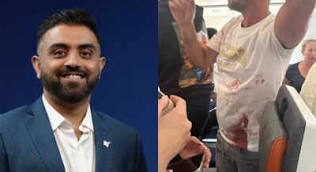
October 1, 2026. Captain Smit Machchhar is recovering in a hospital in Saudi Arabia after a violent confrontation aboard a flydubai flight from Dubai to Tel Aviv forced the aircraft to divert to Tabuk. The Indian Embassy in Riyadh said the captain was in stable condition late Wednesday and that its officials were in contact with his family and Saudi authorities. For the 174 people aboard, the most important confirmed outcome is simple: the aircraft landed safely. The full sequence of events in the cockpit, and the attacker’s motive, remain matters for investigators.
According to Associated Press reporting, Machchhar was stabbed by a fellow pilot while the Boeing 737 was in flight on Wednesday, September 30. Witnesses and Israeli authorities described a sharp descent before passengers and crew entered the cockpit and restrained the attacker. Israeli Prime Minister Benjamin Netanyahu said the injured captain fought back and opened the cockpit door, allowing others to help. Those details are attributed accounts, not the findings of a completed aviation investigation.
What is known about the diversion
The aircraft was headed to Israel from the United Arab Emirates but landed in Tabuk, in northwestern Saudi Arabia. The diversion put the flight on the ground and brought medical care for Machchhar. His condition was reported by the Indian diplomatic mission, which is a firmer basis for a health update than circulating social-media claims. The embassy did not release a detailed medical bulletin, so reports of specific operations or long-term prognosis should be treated cautiously unless a hospital, the family or officials confirm them.
Netanyahu identified the suspect as an Omani national and said Saudi authorities had arrested him. AP reported that the motive was not immediately clear. A violent act inside a flight deck invites theories about ideology, intent and how security procedures worked, but none of those questions can responsibly be resolved from the early accounts alone. It is also important not to equate the nationality of a suspect with any wider community. The investigation must establish exactly what happened and whether there were warning signs or procedural failures.
Passengers and crew appear to have played a crucial part in regaining control, yet the public accounts are still incomplete. Early descriptions of an emergency often conflict on timing, altitude, who moved first and how a crew coordinated under extreme stress. Flight data, cockpit recordings, crew statements and Saudi investigative findings will matter more than viral reconstructions. A safe landing establishes the outcome; it does not validate every dramatic claim now attached to the story.
Why the captain’s actions drew attention in India
Machchhar is from Mumbai and has worked for flydubai for roughly four years, according to AP’s account of his professional profile. Before that he spent about 11 years with SpiceJet, where he served as a senior commander and training captain. AP also reported that he logged more than 9,750 flying hours. These career details help explain the attention his actions have received, but they should not be mistaken for a substitute for an official incident report. Piloting experience may shape a response under pressure; precisely how it did so here is still being examined.
Prime Minister Narendra Modi called the captain a hero on Thursday, praising his resolve despite serious injury. SpiceJet also publicly commended its former pilot. Recognition from political leaders and an employer reflects the scale of the apparent danger, but it can also race ahead of the evidence. The clearest supportable account is that Machchhar was injured, others helped restrain a suspected attacker, the aircraft diverted, and the Indian Embassy reported him stable. Further claims need to be attributed to the people making them.
The episode also raises a practical aviation question beyond the individual act: how can a flight crew retain or recover control when the threat originates inside the cockpit? Flight-deck security was designed primarily to prevent intrusion from the cabin. An attack by someone already authorised to be there presents a different problem. Investigators will need to distinguish what security rules existed, whether they were followed and what emergency procedures enabled people outside the cockpit to intervene. It would be premature to recommend a particular rule change before those facts are known.
For travellers, the incident does not by itself show that a particular route or airline is broadly unsafe. Rare events can be alarming precisely because they are rare. The immediate questions are about the captain’s recovery, the suspect’s legal status, the aircraft’s condition and what an independent inquiry finds. Until authorities publish that record, the responsible story is one of a successfully diverted flight and a wounded captain whose colleagues, passengers and officials say helped prevent a much worse outcome.
Sources: Associated Press, October 1; The National, October 1. Health and arrest details are attributed above to the Indian Embassy and Israeli prime minister as reported by those outlets.