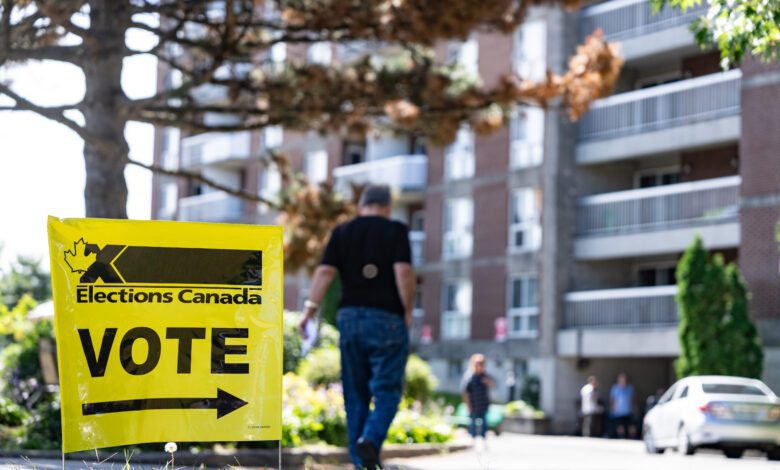
Federal voters in Winnipeg and Montreal cast ballots in two closely watched byelections on September 16, 2024. The NDP defended Elmwood—Transcona, while the Bloc Québécois captured LaSalle—Émard—Verdun from the Liberals in a result that intensified pressure on Prime Minister Justin Trudeau.
Both vacancies followed resignations
New Democrat Daniel Blaikie left the Winnipeg seat, which his family and party had represented for much of two decades. Former Liberal justice minister David Lametti resigned from the Montreal riding after leaving cabinet.
Those histories made each contest a test of a presumed stronghold.
Leila Dance retained Elmwood—Transcona
The NDP candidate defeated Conservative Colin Reynolds by roughly 1,100 votes. The result preserved the seat but with a narrower margin than Blaikie’s 2021 victory.
Conservative gains showed competition in a working-class urban riding even without winning it.
Liberals collapsed in the Winnipeg race
Liberal candidate Ian MacIntyre received fewer than five per cent of valid votes, an unusually weak performance for the party in Winnipeg. Low byelection turnout and local dynamics limit direct national projection.
Even with that caution, the result signalled organizational and political weakness.
Montreal produced a three-way contest
Bloc candidate Louis-Philippe Sauvé won LaSalle—Émard—Verdun by 269 votes over Liberal Laura Palestini. New Democrat Craig Sauvé followed close behind, leaving all three leading candidates near the high twenties in vote share.
The outcome represented fragmentation, not a sweeping Bloc majority.
The ballot had 91 candidates
An electoral-reform protest coordinated dozens of independent candidates to demonstrate problems with first-past-the-post voting. The resulting long ballot complicated administration and attracted national attention.
Protest candidacies collectively received votes, but analysts cannot assume where those electors would otherwise have gone.
Candidate selection mattered in Montreal
Liberals appointed Palestini rather than holding an open local nomination, prompting complaints from would-be contestants. National dissatisfaction, affordability and Quebec politics also shaped the result.
No single factor can be isolated from the official count.
The NDP received a mixed message
Holding Winnipeg protected a key seat shortly after Jagmeet Singh ended his parliamentary agreement with the Liberals. A strong third in Montreal showed growth but fell short of the breakthrough the party sought.
Each result could support both optimism and warning for the NDP.
The Bloc gained leverage
The Montreal victory added an MP to Yves-François Blanchet’s caucus as the Liberal minority sought support on confidence votes. It also demonstrated Bloc competitiveness in a diverse urban constituency.
One seat altered parliamentary arithmetic only incrementally.
Byelections are evidence, not forecasts
They usually involve lower turnout, concentrated volunteers and little risk of changing the government. A general election presents national leaders and strategic voting across every riding.
Still, the September votes carried a clear warning. Liberals lost a historically favourable Montreal seat and became marginal in the Winnipeg contest; Conservatives advanced without taking Elmwood—Transcona; and the NDP and Bloc proved that strong local campaigns could convert dissatisfaction into seats. Official results, rather than early election-night estimates, provide the proper baseline for those conclusions.
The two vacancies were filled, but the political questions they exposed remained open.