Read Putin’s Warning to NATO on Ukraine’s Use of Long-Range Weapons
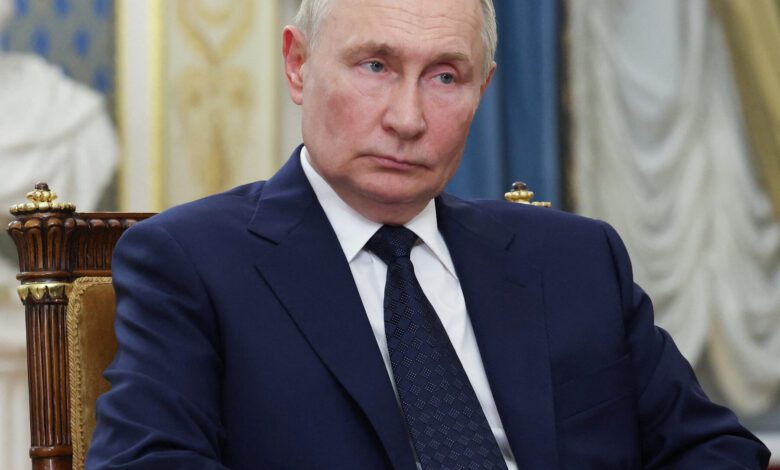
Russian President Vladimir Putin warned on September 12, 2024 that allowing Ukraine to use Western-supplied long-range weapons deep inside Russia would amount to direct participation by NATO countries in the war. The statement came before British Prime Minister Keir Starmer met United States President Joe Biden in Washington.
Putin focused on targeting support
He argued that Ukraine could not independently program certain precision weapons and that NATO personnel and satellite intelligence would be required. On that basis, he framed supplier permission as a change in who was fighting, not merely how Ukraine used donated equipment.
The claim was a political and legal position advanced by Russia, not an agreed international determination.
Ukraine sought access to military targets
Kyiv said Russian aircraft, depots and command sites beyond the border supported continuing attacks. It argued that limiting range protected the infrastructure of aggression and weakened Ukraine’s right to defend itself.
Ukraine’s request concerned military targets, though every individual strike would still require legal assessment.
Western restrictions had already evolved
Some partners had permitted limited strikes into Russian border regions when weapons were used against imminent attacks, while retaining restrictions on deeper operations. Different weapons and donor states had different conditions.
That patchwork made claims of a single NATO decision inaccurate.
Russia’s warning invoked escalation
Putin said Moscow would make decisions in response to the threats created. He did not announce a specific military step in the statement.
The ambiguity was itself deterrent language, intended to make Western leaders consider consequences without binding Russia to one response.
NATO governments rejected automatic belligerency
States supporting Ukraine maintained that providing weapons and intelligence for self-defence did not mean NATO was at war with Russia. They also noted that Russia received weapons and assistance from partners without treating every supplier as a formal combatant.
International-law classifications depend on conduct and control, not one leader’s declaration alone.
The threat could not be dismissed casually
Russia and the United States possess large nuclear arsenals, making escalation management a serious responsibility. Officials had to consider miscalculation, retaliation against supply routes and pressure for further steps.
Caution, however, also carried costs if it allowed continued strikes on Ukrainian civilians and infrastructure.
Putin’s framing omitted Russia’s initiating role
Russia launched the full-scale invasion in February 2022 and occupied internationally recognized Ukrainian territory. The long-range debate arose because Ukraine was responding to forces and logistics supporting that invasion.
Describing NATO policy as the sole driver of escalation erased that context.
The Biden-Starmer meeting produced no immediate change
The leaders reaffirmed support for Ukraine on September 13 but did not publicly lift the restrictions. Their silence showed that the warning had not created a simple public confrontation or instant approval.
Consultations continued behind the broader language of allied strategy.
Reading the warning required precision
Putin did not say that a NATO attack had already occurred. He set out what Russia would claim if allies authorized deeper strikes and supplied the required targeting support.
The statement was consequential because it established Moscow’s public red line, but it was also advocacy by a belligerent government. A reliable account should quote its substance, explain the military question and retain the central context: Ukraine sought to strike assets used in a war Russia began, while allies weighed self-defence against the danger of a broader conflict.