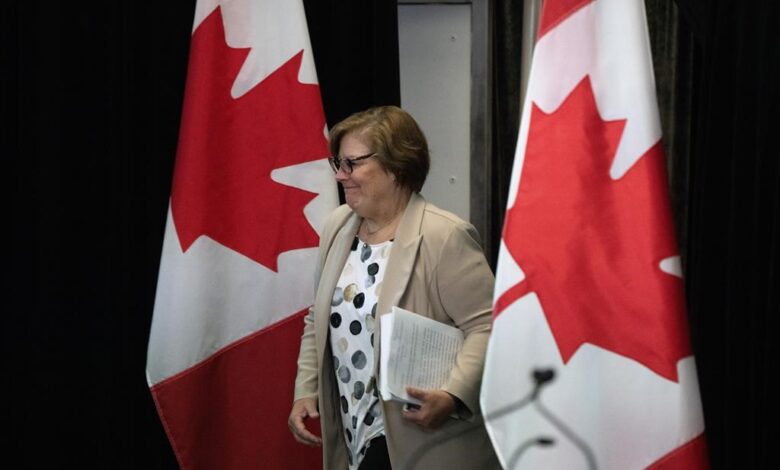
Canada’s Public Inquiry into Foreign Interference opened the second stage of its factual hearings on September 16, 2024. After examining the 2019 and 2021 federal elections, Commissioner Marie-Josée Hogue turned to the capacity of Canadian institutions to detect, deter and counter evolving interference.
The first stage studied two elections
Earlier hearings considered alleged foreign-state activity during the 2019 and 2021 campaigns, the flow of intelligence to senior officials and whether interference affected electoral integrity. An initial report was issued in May.
The inquiry did not find that foreign activity determined which party formed government.
Stage two had a broader institutional focus
The new hearings examined departments, intelligence agencies, law enforcement, Parliament, Elections Canada, political parties and governance processes. The question was how the system responds before, during and between elections.
That shift looked toward present vulnerabilities and future resilience.
Diaspora experiences remained central
Foreign interference can include threats, harassment, surveillance and pressure against relatives abroad. Members of Chinese, Iranian, Indian, Russian and other diaspora communities had described transnational repression and frustration obtaining help.
Protecting democratic institutions requires protecting the people targeted within them.
Parliamentarians were scheduled to testify
MPs Garnett Genuis, John McKay, Michael Chong and Jenny Kwan, along with former Conservative leader Erin O’Toole, appeared early in the schedule. Several had publicly discussed being targets or receiving delayed intelligence warnings.
Their testimony could illuminate whether information reached elected officials in usable form.
Agencies faced questions about coordination
CSIS, the RCMP, Communications Security Establishment, Global Affairs Canada and the Privy Council Office all held different authorities. Gaps can arise when intelligence is too sensitive to share, evidence is insufficient for prosecution or responsibility is unclear.
More information is not useful unless somebody can act on it lawfully.
Political parties were part of the system
Nomination contests, leadership races, campaign data and community outreach can be attractive targets. Parties are private organizations performing essential democratic functions and historically have not followed every security standard applied to government.
Stronger safeguards must respect open political participation.
Online influence posed attribution challenges
Covert accounts, manipulated media and coordinated amplification can exploit genuine social divisions. Investigators must distinguish foreign direction from domestic opinion and avoid labelling lawful dissent as disinformation.
Transparent evidence and proportional responses protect both security and expression.
Secrecy complicated public accountability
National-security information may expose sources or methods if released, yet excessive secrecy prevents affected people from defending themselves and weakens trust. The inquiry used summaries, closed sessions and document review to navigate that tension.
No procedural device can remove it entirely.
Recommendations would follow evidence
The factual hearings ran into October before a policy phase gathered expert proposals. Possible reforms involved intelligence sharing, party security, law-enforcement capacity and assistance to targeted communities.
The inquiry’s value depended on precise distinctions: interference is not the same as ordinary diplomacy; intelligence is not automatically courtroom proof; and an unsuccessful operation can still damage trust. By examining current capacity rather than only past controversy, stage two sought practical ways to strengthen democracy without turning national security into a partisan weapon.