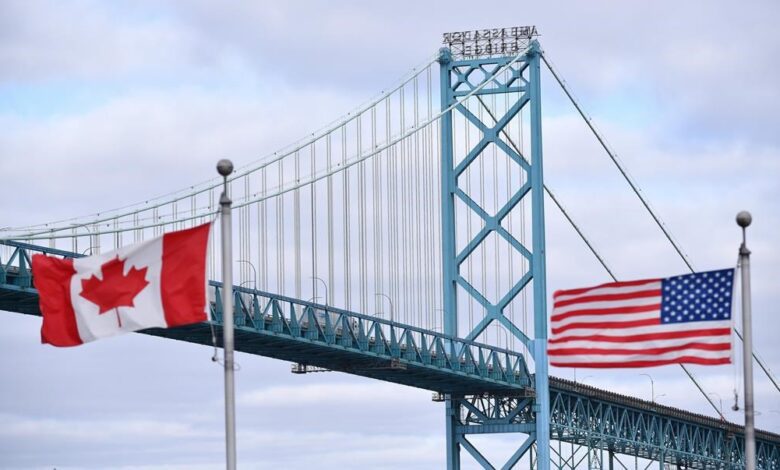
Canadian officials said they had a plan to protect border integrity after U.S. president-elect Donald Trump promised mass deportations of people without legal status. Experts warned that fear of removal could push some residents of the United States to seek asylum in Canada, potentially increasing pressure at crossings and on provincial services.
What Ottawa said
Then deputy prime minister Chrystia Freeland said controlling who enters Canada was a fundamental national responsibility and assured Canadians that the government had prepared. She did not disclose a detailed operational plan in the remarks reported immediately after the election.
Housing Minister Sean Fraser, a former immigration minister, said officials were concerned about border integrity while also protecting the open trading relationship with the United States. Security and commerce are not opposing absolutes: the same border handles lawful travel, asylum claims and enormous daily trade.
The experience at Roxham Road
During Trump’s first term, changes affecting temporary protected status for Haitians in the United States contributed to increased irregular crossings at Roxham Road in Quebec. People used that route to make refugee claims between official ports of entry under the then-existing operation of the Safe Third Country Agreement.
Canada and the United States later expanded the agreement so that its restrictions generally applied across the land border, not only at official crossings. That change altered the legal environment for any future movement and meant the earlier pattern could not simply be projected forward.
An asylum claim is not automatic admission
People have a right to seek protection, but eligibility and the merits of a claim are assessed under Canadian and international law. A person leaving the United States is not automatically a refugee, and irregular entry is not the same as evading all legal process once in Canada.
Officials need enough personnel, interpreters, accommodation and case-processing capacity to make lawful decisions promptly. Delay harms applicants with valid claims, burdens communities and leaves people who will not qualify in prolonged uncertainty.
Planning without inflaming fear
A credible plan should use scenarios rather than assert that millions of people will head north. Most people affected by U.S. enforcement have family, work and community ties there, and Canada’s geography and legal rules constrain movement. Alarmist language can encourage dangerous routes and fuel hostility toward migrants.
Federal agencies should coordinate with Quebec and other provinces, border communities, police and service providers. Preparation includes winter rescue, anti-smuggling work, temporary shelter, legal information and transparent public data.
Rights and enforcement together
Canada can enforce entry rules while complying with the Refugee Convention, the Charter and procedural fairness. Border security should target threats and organized exploitation, not treat every asylum seeker as a security danger. Communities also deserve support when federal decisions create local housing and service costs.
Ottawa’s assurance was useful but incomplete without staffing levels, triggers and lines of responsibility. Parliament and the public could reasonably ask what had changed since Roxham Road, how vulnerable people would be protected and how claims would be processed without overwhelming reception systems.
Trump’s promise created a plausible risk, not a certain migration wave. The correct response was contingency planning grounded in law and evidence: secure the border, preserve access to protection, communicate clearly and adjust resources to observed arrivals rather than political speculation.