‘Sad they have not learnt lesson’: Supreme Court on NTA after 2026 NEET paper leak


The Supreme Court expressed concern on May 25 over the cancellation of NEET-UG 2026 following an alleged question-paper leak and asked the National Testing Agency to explain what it had done to implement reforms recommended after the 2024 controversy.
A bench of Justices P.S. Narasimha and Alok Aradhe issued notice on petitions filed by doctors and medical students. The bench directed that the matters be served on the Union government and other respondents and sought an affidavit concerning compliance with the earlier expert committee’s recommendations.
What the court said—and what it did not decide
The observation that it was “sad” lessons had not been learned was an oral remark during a preliminary hearing. Issuing notice means the court considered the petitions suitable for a response; it is not a final finding that every allegation is proved or that the NTA must be abolished.
The petitions sought restructuring or replacement of the agency and proposed an interim monitoring mechanism. Those were remedies requested by the petitioners, not orders already granted. The Centre, NTA and investigating agency were entitled to place their responses and records before the court.
Background to the case
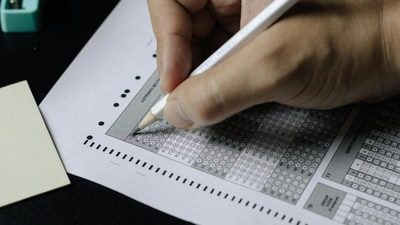
NTA conducted the original examination on May 3 for more than 22 lakh registered candidates. It cancelled that sitting on May 12 amid the leak investigation and scheduled a re-examination for June 21. The Central Bureau of Investigation was examining the alleged conspiracy and any unauthorised access to question material.
The court’s reference to 2024 concerned a high-powered committee led by former ISRO chair K. Radhakrishnan. The key institutional question was not only whether individuals could be prosecuted, but whether accepted recommendations on question-setting, custody, technology and monitoring had actually been implemented.
Subsequent re-examination update
NTA later reported that more than 20 lakh candidates sat the June 21 re-examination at 5,440 centres in India and 14 centres abroad. The test was administered in 13 languages. NTA’s post-exam account said security included biometric and face authentication, CCTV monitoring, jammers, two-layer frisking and command centres at national, state and district levels.
Those operational claims describe the re-test; they do not resolve the Supreme Court petitions or establish that every systemic weakness has been corrected. The legal review and the criminal investigation have different purposes from administering a replacement examination.
Why procedural language matters
Reporting on an active case should distinguish allegations, oral observations, interim directions and final judgments. It should also avoid treating an arrest or charge sheet as proof of guilt. For candidates, the immediate issue was a fair re-test; for the court, the broader issue was whether a national examination system had implemented safeguards it previously accepted.
A later hearing can narrow, combine or dispose of the petitions after the respondents file evidence. Readers checking the case after publication should look for a written order and subsequent docket developments rather than assume that the bench’s preliminary questions were the final outcome.
Sources: Supreme Court hearing reports; NTA re-examination FAQ; NTA June 21 operational account.