
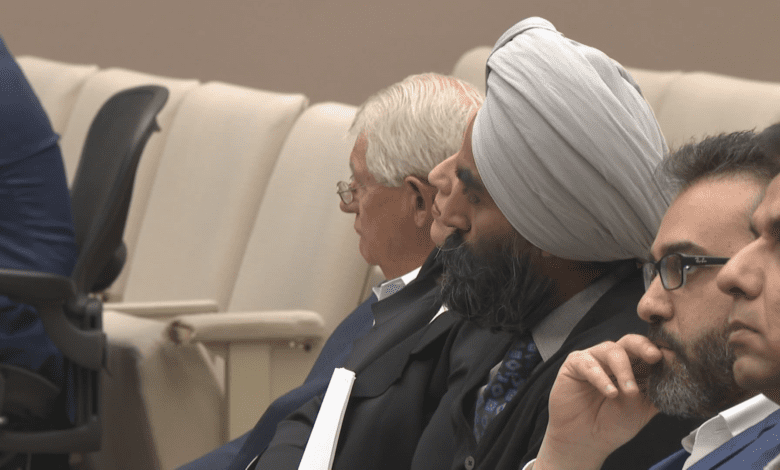
Darshpreet Bhatti stepped down in October 2024 after three years as chief executive of Calgary’s Green Line programme, as the city wound down its approved version of the multi-billion-dollar light-rail project. His departure came amid a change in governance and unresolved negotiations over a replacement alignment.
Why the approved project was halted
Calgary council had approved a shortened first phase with a budget that had risen to $6.2 billion. The Alberta government then withdrew its planned $1.53-billion contribution, rejecting the city’s approach and commissioning engineering firm AECOM to examine an alternative southeast line that would run at grade or above ground downtown.
Council voted in September to begin winding down the city’s project. A wind-down did not mean every purchase and design disappeared; it required determining which commitments could be closed, transferred or preserved.
Some work was salvaged
After discussions, the city and province agreed to preserve provincial funding and several contracts connected to the southeast portion, including design work from Victoria Park to Shepard and the purchase of light-rail vehicles.
Keeping useful contracts could reduce future delay and cancellation costs, but it also risked committing money before the final route and governance model were settled. Public reporting needed to identify which obligations remained and who controlled them.
The estimated wind-down cost
Green Line officials told council that 53 per cent of agreements had been closed. Those agreements represented only about one per cent of the estimated $850 million in potential wind-down costs, showing why a contract count alone could mislead.
The estimate was not necessarily a final bill. Termination clauses, completed work, asset reuse and negotiations with suppliers could change the amount. Council and taxpayers needed a reconciled statement rather than treating the worst-case figure as money already spent.
Leadership and oversight changed
Bhatti thanked council and residents and said Calgary needed major infrastructure. On the same day, council voted to dissolve the Green Line Board, whose mandate had been tied to the alignment approved in 2020.
Administration planned to create a city department overseen by the chief administrative officer. Mayor Jyoti Gondek said there was not yet a defined new project for the former board to supervise.
Accountability during transition
Dissolving a special board can clarify that an old mandate has ended, but it can also concentrate decisions inside administration. Council should publish delegated authority, procurement controls, risk registers and regular financial updates while a new plan is developed.
The city and province formed a working group, and an AECOM report on the province’s preferred alignment was expected by year-end. Technical alternatives needed comparable ridership, travel-time, construction-risk, land and lifecycle-cost analysis.
What the resignation meant
Bhatti’s departure was a consequence of institutional transition, not evidence by itself of wrongdoing or project failure attributable to one person. The Green Line’s difficulties involved decisions by multiple governments, changing scope, inflation, engineering and political disagreement.
For Calgarians, the essential questions remained whether a useful southeast transit line would be delivered, what sunk and cancellation costs would be retained, and which government would be accountable. Leadership changed in October 2024; the need for transparent long-term transit planning did not.



