
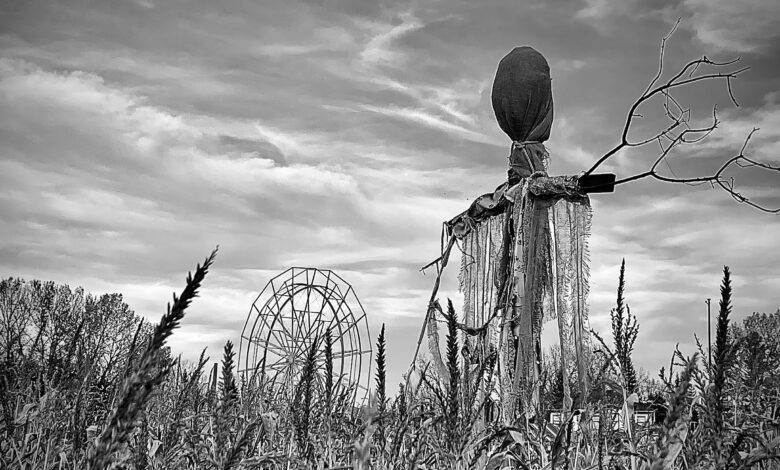
Edmonton’s ghost stories attach mystery to cemeteries, a former firehall and historic homes, but they belong to folklore rather than verified evidence of paranormal activity. Around Halloween 2024, local history podcaster Craig Baird revisited several legends and the real places that keep them alive.
Mount Pleasant Cemetery
Visitors and paranormal enthusiasts have reported shadow-like figures, hazy lights and glowing orbs at Mount Pleasant Cemetery on Edmonton’s south side. Some have said camera batteries suddenly failed or unexplained sounds appeared on recordings.
None of those experiences proves a supernatural cause. Low light, moisture, insects, reflections, battery temperature and expectation can affect photographs and perception. The reports are culturally interesting because people continue to tell them, not because repetition establishes them as fact.
The Walterdale Theatre’s “Walt”
The Walterdale Theatre in Old Strathcona occupies a building that once served as a firehall. A well-known legend describes a friendly ghost called Walt, said to have been a volunteer firefighter who died in the upstairs bunkhouse, now used as a makeup room.
Stories attribute footsteps and moved costumes or wigs to Walt. Historical research can test names, dates and building uses, while personal experiences inside the theatre remain anecdotes. The legend adds character without defining the work of the artists and volunteers who use the venue today.
Firkins House
Firkins House at Fort Edmonton Park is associated with tales of a child and a teenager in 1950s clothing. Renovation workers were said to have misplaced tools under strange circumstances.
Baird recalled seeing one barrier chain shake while others remained still on the upper floor. He said he could not explain it. “Unexplained” is an accurate description of limited information; it does not mean the cause must be paranormal.
Why haunted history persists
Ghost stories give people an emotional route into architecture and local history. A familiar building becomes memorable when a tale supplies character, conflict and atmosphere. Tours can support museums and heritage conservation.
The same storytelling can distort history if a tragic death, Indigenous tradition or former resident is invented for entertainment. Guides should distinguish archival fact, community legend and theatrical embellishment.
Visiting respectfully
Cemeteries are active places of burial and mourning. Visitors should observe opening hours, stay on permitted routes, avoid touching monuments and never disturb a grave in pursuit of evidence or content.
Historic sites may restrict photography or access for preservation and safety. Paranormal investigators should obtain permission and avoid publishing the names or personal details of living people without consent.
History with room for wonder
Scepticism does not require dismissing the enjoyment or social meaning of a legend. People can share a strange experience while acknowledging ordinary explanations and the absence of controlled evidence.
Edmonton’s haunted places are compelling because real buildings, changing neighbourhoods and remembered lives give the stories a setting. The strongest and most honest version of the tour makes its labels clear: documented history where records exist, folklore where a tale has been passed down, and personal testimony where someone encountered something they could not explain.



