Content note: This report discusses allegations of childhood racial and sexual abuse.
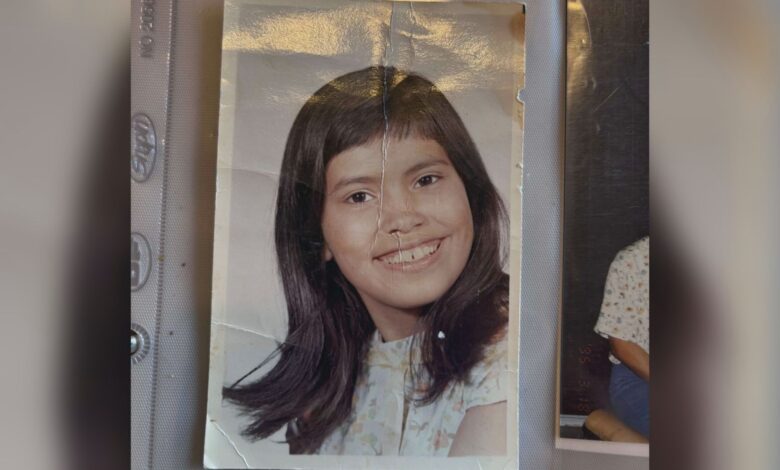
Syilx Okanagan woman Laurie Wilson filed a civil claim in the B.C. Supreme Court in October 2024 alleging abuse while she attended St. James Parish School in Vernon during the 1960s. The allegations had not been proven in court when the action was reported.
The claim
Wilson attended the Catholic elementary school from 1963 to 1970. The institution enrolled Indigenous and non-Indigenous children. Her lawsuit named the federal government and the Roman Catholic Diocese of Kamloops as defendants.
The statement of claim alleged that Indigenous children were demeaned and separated from culture. It included allegations that Wilson was subjected to racial insults and that other children were permitted to use slurs against her.
Allegations of sexual harm
The filing also described alleged sexual touching by a monsignor on at least two occasions. These details were allegations contained in a civil pleading, not findings of liability or criminal guilt.
Responsible reporting should include enough information to explain the nature of the claim without repeating graphic material for shock value. It should also avoid implying that one survivor’s account represents every student’s experience.
Why the case was described as unusual
Wilson pursued an individual civil action rather than joining a class proceeding. Her lawyer, Sandra Kovacs, said historic claims can be vigorously defended but that some dioceses had become more interested in reconciliation and resolution before trial.
An individual action can allow a person’s specific evidence and requested remedy to be heard. It can also require substantial time, disclosure and emotional labour. Courts determine issues from admissible evidence and applicable law, not from the age or public profile of an allegation alone.
Responses from the defendants
The Diocese of Kamloops said it was committed to responding fairly and compassionately to claims of historic abuse. Indigenous Services Canada said the federal government would review the statement of claim after receiving it.
Those statements acknowledged the proceeding but were not admissions. Each defendant retained the right to answer the allegations, and the plaintiff retained the burden and rights established by civil procedure.
Public interest beyond one lawsuit
Wilson said the school experience dehumanized Indigenous children. Her account contributes to wider examination of education systems that pressured children to abandon language, identity and community.
Institutional accountability can include preserving records, independent investigation, survivor support, fair compensation processes and safeguards for current students. A private settlement may resolve litigation while public learning still requires transparency that respects the survivor’s choices.
Listening without prejudging
Taking an allegation seriously is compatible with reporting that it remains unproven. Trauma-informed coverage avoids questioning why a person waited decades to speak, while legal accuracy avoids declaring disputed claims settled before a court or agreement does so.
Wilson’s action placed a deeply personal account before B.C.’s superior trial court after roughly six decades. Its historic importance rested not on predicting the eventual outcome, but on giving the allegations a formal route for evidence, response and potential remedy.