The chair of the Brant Haldimand Norfolk Catholic District School Board said in October 2024 that prospective donors were interested in covering $100,000 spent on religious artwork purchased during a controversial trip to Italy. The possibility of private repayment did not end questions about how trustees approved and supervised public spending.
The trip and artwork
Four trustees travelled to Italy for about a week in July 2024. Reporting placed travel costs near $45,000 and the commissioned artwork at approximately $100,000. The pieces included life-sized, hand-painted wooden statues of St. Padre Pio and the Virgin Mary for a new Catholic high school in Brantford.
The art came from South Tyrol, a region with a long tradition of religious carving. Artistic or religious value was not the only issue; the central public question was whether the procurement and travel were necessary, authorized and transparent.
The chair’s proposed remedy
Board chair Rick Petrella said the trustees involved would take personal steps to address the expenses and that several Catholic donors had shown strong interest in paying for the statues. He said the goal was a net-zero cost to the board and ratepayers.
Interest from potential donors is not the same as money received. Any donation also needs transparent documentation, conflict-of-interest review and confirmation that it does not buy influence over a public school or board decision.
Where the money came from
The artwork was reportedly funded from the board’s $33-million surplus, while the trip used a general allocation for trustee travel and expenses. Petrella argued that separate board approval was not required because the amounts sat within the larger annual budget and were small relative to the roughly $46-million school project.
A lawful budget allocation does not automatically make every expense prudent. Strong governance sets thresholds, competitive purchasing rules, documentation requirements and a clear public-purpose test before money is committed.
Government scrutiny
Ontario Education Minister Jill Dunlop ordered an investigation and criticized the board’s fiscal judgment. Petrella apologized, acknowledged mistakes and said the board would revise trustee-expense rules and cooperate with the review.
An investigation should establish facts and responsibility rather than serve only as a political rebuke. Its value depends on published findings, implementable recommendations and follow-up.
What later reviews found
By April 2025, a third-party review described the trip as evidence of deeper governance problems. The province directed the board to recover artwork costs and travel amounts and to report on implementation of recommendations. The controversy also generated additional legal and administrative expense.
Later disputes over individual repayment plans showed why an early promise to make taxpayers whole should not be reported as a completed resolution. Recovery needs receipts, deadlines and public accounting.
Public art and public trust
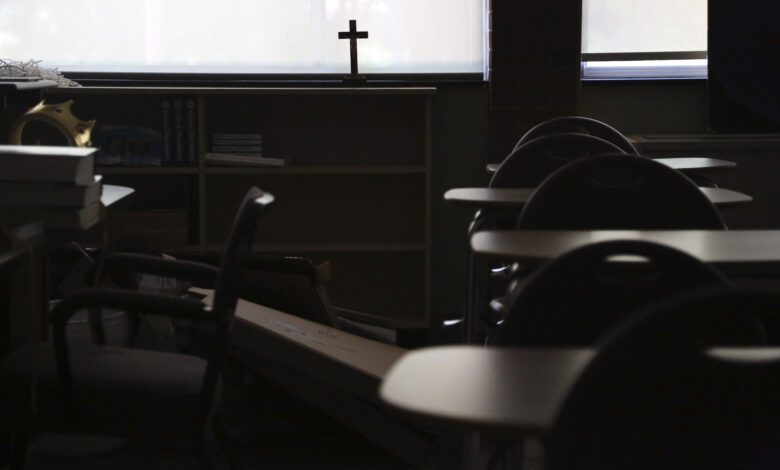
Religious art can be a legitimate part of a Catholic school. The controversy did not require judging the faith or craftsmanship of the pieces. It required examining procurement, travel, opportunity cost and stewardship.
A board could avoid similar problems by approving major commissions in open session where lawful, obtaining multiple proposals, separating travel decisions from vendor selection and publishing expenses promptly. Donations should be governed by an acceptance policy that protects educational independence.
The offered donor solution might have reduced the direct cost, but it could not by itself repair the process. Restoring trust required verification that funds were recovered and structural reforms that would prevent trustees from relying on apologies after controversial spending had already occurred.