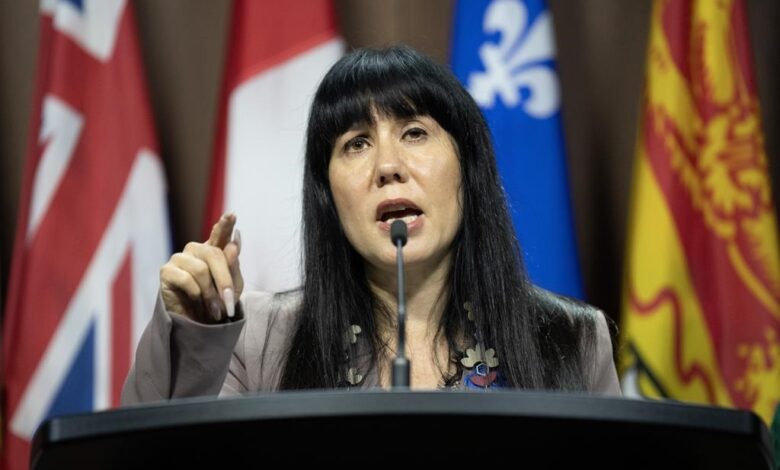
Winnipeg Centre MP Leah Gazan introduced Bill C-413 on September 26, 2024 to add the wilful promotion of hatred against Indigenous peoples through residential-school denialism to Canada’s Criminal Code. The proposal sought to protect survivors while reopening a difficult debate about hate speech, historical falsehoods and freedom of expression.
The bill targeted promotion of hatred
The text covered public statements that condoned, denied, downplayed or justified the Indian residential-school system, or misrepresented related facts, when those statements wilfully promoted hatred against Indigenous peoples.
It did not simply make every factual error or private disagreement a crime. The proposed offence included an intention threshold and excluded private conversations.
Existing hate-speech principles provided the model
Canada already criminalizes the wilful promotion of hatred against identifiable groups and separately addresses Holocaust denial in that context. Gazan’s proposal adapted that structure to Indigenous peoples and residential schools.
Criminal offences require proof beyond a reasonable doubt. Courts also interpret hate narrowly because expression is protected by the Charter.
Supporters pointed to harm against survivors
Survivors and Indigenous communities have faced online harassment, unauthorized entry at search sites and claims that documented abuse or child deaths were invented. Gazan argued that this conduct obstructed healing and encouraged anti-Indigenous hatred.
The residential-school system itself is extensively documented through government and church records, survivor testimony and the Truth and Reconciliation Commission. Precision about individual burial searches does not undermine that established history.
Critics raised civil-liberties concerns
Opponents warned that an unclear definition of downplaying or misrepresentation could chill historical research, journalism and legitimate questions about particular evidence. Criminal law is a severe tool, with consequences beyond correcting a false statement.
Those concerns deserve serious drafting analysis rather than being labelled denialism automatically. A law intended to protect truth must leave room for good-faith evidence-based inquiry.
Not every offensive statement meets the legal threshold
A claim can be hurtful, ignorant or false without wilfully promoting hatred. Civil education, professional standards, platform moderation and direct correction may be more proportionate in many cases.
Conversely, coordinated falsehoods aimed at portraying Indigenous people as fraudulent or dangerous can become more than a historical dispute. Context, intent, audience and likely meaning matter.
The first bill did not become law
Bill C-413 received first reading but did not complete the parliamentary process before the 2025 federal election. Like other unfinished bills, it died when Parliament was dissolved.
Gazan reintroduced a related proposal in the next Parliament as Bill C-254 in October 2025. Reintroduction began a new legislative process rather than reviving the earlier bill automatically.
Parliament needed Indigenous and legal evidence
Detailed committee study would allow survivors, First Nations, Inuit and Métis representatives, historians, free-expression experts and prosecutors to test the wording. Their input could identify both enforcement gaps and unintended effects.
Any offence should define prohibited conduct clearly, preserve recognized defences and ensure that police resources focus on serious hate rather than political disagreement.
Truth is broader than criminal prohibition
A narrowly constitutional law might address the most harmful conduct, but it cannot release missing records, fund searches, support survivors or implement the commission’s Calls to Action.
The bill’s introduction made a real problem visible: denial campaigns can retraumatize families and fuel hatred. The sound response combines accurate education and institutional accountability with a careful debate over whether, and exactly when, criminal punishment is justified.