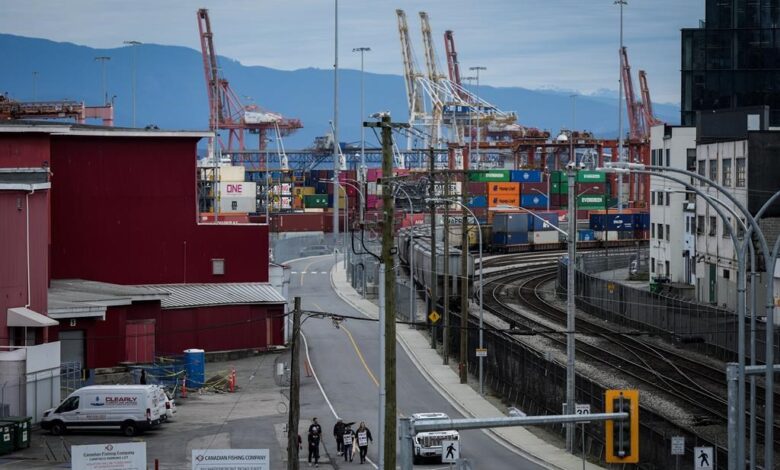
A lockout halted container operations at British Columbia ports in November 2024 while the International Longshore and Warehouse Union Ship and Dock Foremen Local 514 and the BC Maritime Employers Association traded accusations over failed mediation. The union said employers ended talks almost immediately; the association said the federal mediator concluded that no progress was possible.
The union’s account
Local 514 president Frank Morena said negotiators arrived prepared to continue through the evening and weekend. According to the union, the employers met with the mediator for only 12 minutes, refused meaningful bargaining and demanded concessions it considered inflammatory and unacceptable.
Morena argued that the association was using confrontation to force federal intervention. Workers had been without a collective agreement since March 2023, giving the dispute a long history before the shutdown.
The employers’ response
The BCMEA rejected the claim that it had cut the meeting short. It said both sides met separately with the Federal Mediation and Conciliation Service and that the senior mediator ended the session after determining there had been no progress. No further meetings were scheduled at that point.
These were conflicting accounts from parties with direct interests. A report should attribute them and avoid declaring one motive proven without the mediator’s record or an agreed chronology.
Why supervisors and automation were central
Local 514 represents ship and dock foremen. Negotiations concerned wages and working conditions as well as the use of automation and staffing. Employers sought flexibility and predictability; the union argued that proposed changes threatened jobs and negotiated protections.
Automation disputes are not only about whether a machine exists. They concern who decides implementation, how safety and productivity are measured, what retraining or severance is provided and whether technology transfers decision-making outside the bargaining unit.
Effects beyond the bargaining table
British Columbia’s ports connect imported consumer goods and industrial inputs with Canadian rail and road networks and carry exports to global markets. A shutdown can delay factories and retailers far from the coast. Estimates of daily “goods affected” describe trade flows, not necessarily permanent economic loss; some cargo moves later or is rerouted.
Companies and workers outside the dispute can still incur storage, scheduling and lost-production costs. Those consequences create public pressure but do not remove collective-bargaining rights.
Federal intervention and the unresolved issue
The federal government soon directed the Canada Industrial Relations Board to order operations resumed and move the dispute toward binding arbitration. That restored movement but did not represent a freely negotiated agreement. Governments that intervene must explain the legal basis, urgency and effect on bargaining incentives.
Both sides had an obligation to provide specific proposals rather than rely on public blame. Durable port labour relations require a process for technological change, enforceable safety rules and a credible way to resolve impasses before national supply chains stop.
The November breakdown was accurately described as an accusation and denial, not a settled fact about who walked away. The larger lesson is that late-stage emergency intervention cannot substitute indefinitely for transparent bargaining over how a changing port shares risk, productivity and employment.