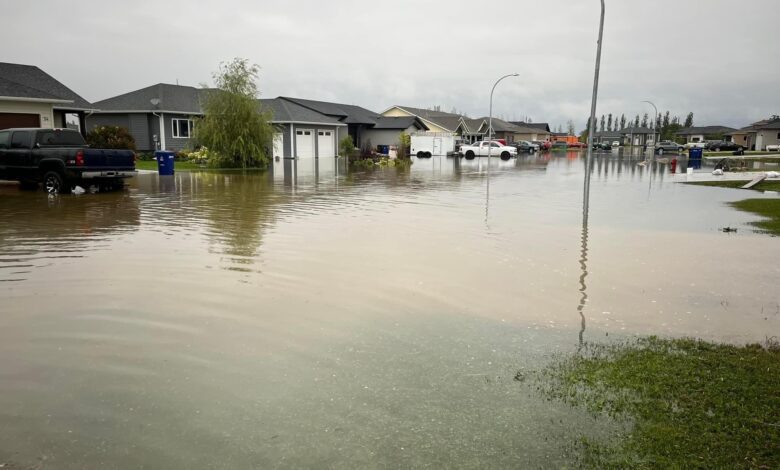
A severe September 2024 downpour flooded homes in Kleefeld, Manitoba, leaving one resident unable to remain in her house after water filled and damaged the basement. Her experience illustrated how an intense local storm can create major losses even when a community-wide disaster receives limited national attention.
Rain overwhelmed local drainage
Heavy water accumulated quickly during the Tuesday storm, entering basements and low areas. Saturated ground, grading, ditch capacity and the intensity of rainfall can combine to push runoff toward buildings faster than pumps or drains can remove it.
A property-level loss does not by itself establish which public or private system failed.
The house became uninhabitable
The affected homeowner described extensive basement damage and uncertainty about where she would live. Floodwater can destroy furnaces, electrical systems, insulation, drywall, furniture and stored belongings even when the main structure remains standing.
Electrical and gas hazards should be assessed before anyone re-enters a badly flooded area.
Contamination can increase the harm
Water that mixes with sewage, fuel or chemicals requires protective equipment and professional cleanup. Wet materials can also develop mould if drying is delayed, creating additional health and reconstruction costs.
Photographs and an inventory should be made when it is safe, before damaged property is removed.
Insurance coverage is not automatic
Standard home policies may distinguish sewer backup, overland flooding and groundwater, with separate endorsements, limits and deductibles. Residents should notify insurers promptly and ask what emergency measures and receipts must be documented.
Coverage depends on the individual contract, so general assumptions can create false reassurance.
Municipal reporting supports the response
Residents can report blocked culverts, washed roads and repeated drainage problems to local authorities. Consolidated damage information helps officials decide whether to inspect infrastructure, request assistance or adjust future mitigation.
Public investigation should use rainfall and engineering data rather than attributing fault from one account.
Neighbours often provide the first help
Temporary accommodation, pumps, cleanup labour and secure storage can reduce immediate pressure on a displaced household. Volunteers should avoid contaminated water and unstable structures and should not connect pumps or generators in ways that create electrical or carbon-monoxide risks.
Professional emergency services remain necessary where safety is uncertain.
Prevention has household and community layers
Backwater valves, sump pumps with backup power, maintained eavestroughs and appropriate grading can reduce some risks. Ditches, culverts, retention areas and updated rainfall standards require municipal or regional investment.
No measure guarantees protection against every extreme event, especially as heavy precipitation patterns change.
Recovery continues after water recedes
Displacement, insurance disputes and the loss of personal items can be emotionally exhausting. Clear information about safe cleanup, emergency benefits and reputable contractors helps residents avoid secondary harm or fraud.
The Kleefeld flooding was not only a dramatic image of a basement full of water. It was a housing emergency for an individual household and a reminder that storm resilience depends on preparation, infrastructure, accurate coverage and coordinated support long before the next cloudburst.
Recovery agencies should communicate eligibility, required evidence, available appeals and deadlines in plain language.