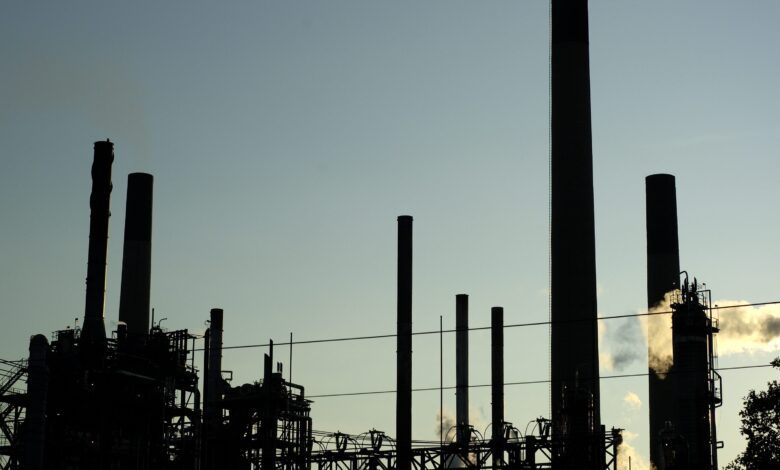
Imperial Oil was ordered to pay $1.125 million after a 2021 slop-oil spill at its Sarnia, Ontario, refinery caused adverse effects for nearby workers and residents. The total combined a $900,000 court fine with a $225,000 victim-fine surcharge.
The spill began with a leaking steam line
Imperial employees identified a steam-tracer leak beside an elevated slop-oil pipeline in January 2021. Steam tracer tubes keep pipelines warm during freezing weather, and the refinery scheduled the repair for warmer conditions.
Before the planned work was completed, escaping steam bored a hole in the neighbouring pipe. On April 15, approximately 1,150 litres of slop oil escaped onto the ground.
Slop oil contains multiple waste materials
The material is generally a mixture of crude oil, water and waste solids. Depending on its composition, it can contain contaminants including hydrogen sulphide and produce strong odours or irritation.
A resident contacted Ontario’s Spills Action Centre that afternoon about an odour and headache. People at two nearby businesses and residents of Aamjiwnaang First Nation reported eye, nose or throat irritation, headaches and nausea, along with restrictions on normal movement and activity.
Later monitoring did not erase reported effects
Air monitoring by Imperial and the provincial environment ministry did not detect elevated hydrogen sulphide, volatile organic compounds or gas vapour after the leak was discovered. That finding describes measurements at particular times and locations.
It does not mean no release occurred or that reported symptoms were invented. The conviction concerned discharging a contaminant that caused or was likely to cause an adverse effect, and the court record included the impact on people and property.
The company was convicted under provincial law
The Ontario Court of Justice recorded one violation of the Environmental Protection Act, with conviction dated September 16, 2024. Imperial received 90 days to pay the fine and surcharge.
The surcharge goes to Ontario’s Victims’ Justice Fund. It is part of the penalty but legally distinct from the $900,000 fine, so describing the entire amount simply as a fine obscures how it was assessed.
Maintenance priorities changed after the incident
Imperial said it accepted the court’s penalty and regretted the event. The company revised its method for prioritizing steam-leak repairs so that possible community impacts would place a repair in the highest-priority category.
Under that revised approach, the January leak would have received the top priority. The change is relevant because accountability should include prevention, not only payment after harm occurs.
Aamjiwnaang is surrounded by industrial activity
The First Nation lies roughly one kilometre from the refinery in the Sarnia area often called Chemical Valley. Residents have long raised concerns about cumulative exposure from many facilities, rather than any single incident in isolation.
The Imperial spill should not be confused with separate benzene concerns involving another plant. Each event has its own operator, evidence and regulatory response, even when the same community bears overlapping risk.
The public record supports a precise conclusion
The verified sequence is clear: a known steam-tracer leak remained unrepaired, steam damaged a slop-oil line, about 1,150 litres spilled, people reported adverse effects and Imperial was convicted. The record also states that later monitoring did not find elevated concentrations of the tested substances.
Including both sides of that evidence is not equivalence; it is accuracy. The penalty was substantial, but its lasting value depends on whether revised maintenance rules, transparent reporting and regulatory oversight prevent another community exposure.