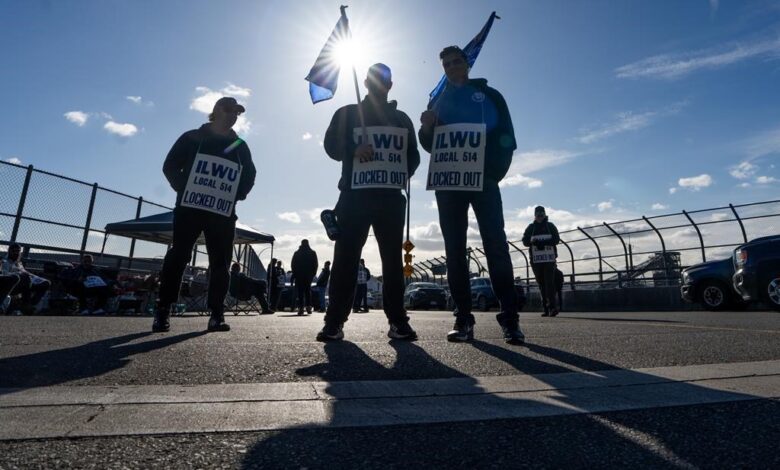
Federal Labour Minister Steven MacKinnon criticized what he called a “concerning lack of urgency” in contract disputes disrupting ports in British Columbia and Montreal in November 2024. His intervention reflected the national economic stakes, while the unions and employers remained responsible for bargaining agreements governing their workplaces.
Two disputes, not one negotiation
In British Columbia, more than 700 ship and dock foremen represented by International Longshore and Warehouse Union Local 514 were locked out by the BC Maritime Employers Association. The dispute had shut container operations across the province and included disagreements about wages, staffing and technological change.
Montreal’s negotiations involved a different union, employer association and set of proposals. Reporting both ports together explained the combined supply-chain risk but should not imply the workers were covered by one contract or responsible for the same bargaining decisions.
Pressure to return to the table
MacKinnon said talks in both regions were moving too slowly and urged the parties to reach agreements. The B.C. union said it had been directed back to mediated talks for that weekend. A later statement from the minister’s office clarified that he had spoken with leaders and asked them to return; it did not describe the request as a forced bargaining order under the Canada Labour Code.
Local 514 also filed a complaint with the Canada Industrial Relations Board accusing the employers of bad-faith bargaining, threats and interference. Those were union allegations awaiting adjudication, not established facts.
Why businesses were alarmed
Retail, manufacturing and agriculture depend on ports for imported inputs and exported products. Delays can produce storage charges, missed production schedules and seasonal inventory shortages. Businesses outside the dispute argued they absorbed costs without a seat at the bargaining table.
Estimates of goods moving through a port each day show exposure, not necessarily permanent economic loss. Cargo may be delayed, rerouted or moved later. A sound impact assessment measures additional costs and cancelled production rather than equating the full value of all affected shipments with damage.
Collective bargaining and public interest
Ports are critical infrastructure, but workers retain collective-bargaining rights. Economic inconvenience alone cannot determine whether government should end a lawful dispute. Employers also have obligations to bargain and cannot frame every operational demand as an emergency.
Federal involvement should therefore be transparent about legal authority, evidence of urgency and the consequences for future bargaining. Mediation can help parties find an agreement; binding arbitration restores operations but transfers the final decision to a third party.
What happened next
Talks did not produce a timely settlement. On November 12, MacKinnon directed the Canada Industrial Relations Board to resume port operations and impose final and binding arbitration in the B.C. and Montreal disputes. At least one union announced a legal challenge.
That later intervention gave the minister’s warning historical context. It ended work stoppages but did not prove either side had caused the impasse. A compelled settlement can resolve immediate disruption while leaving trust, automation and workplace governance unsettled.
The “lack of urgency” remark was political pressure at a critical moment, not a neutral finding about bargaining conduct. A complete account records the two distinct disputes, each side’s claims, the effects on other industries and the eventual federal order. That allows readers to evaluate both the need for reliable trade infrastructure and the rights of people whose labour keeps it operating.