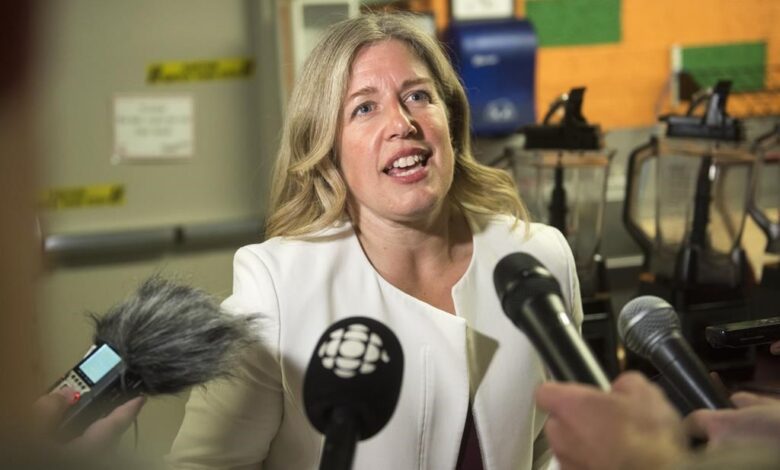
New Brunswick Premier Susan Holt said on November 12, 2024, that her newly elected Liberal government would prepare a provincial carbon-pricing plan and submit it to the federal government for approval.
The statement followed Holt’s first meeting as premier with then-prime minister Justin Trudeau. It came less than two weeks after she formed a majority government and became New Brunswick’s first woman premier.
Why federal approval mattered
At the time, Canada’s Greenhouse Gas Pollution Pricing Act established minimum national stringency requirements. Provinces could design their own systems, but a proposal had to meet the federal benchmark or the applicable federal system could operate instead. New Brunswick already had a provincial output-based system for large industrial emitters, while the federal fuel charge had applied to consumer fuels in the province since July 2023.
A provincial plan therefore had to distinguish consumer fuel pricing from the industrial system. Industrial output-based pricing sets emissions-performance limits for covered facilities, requiring compensation above a limit while awarding credits below it. It is designed to preserve an incentive to reduce emissions while limiting the risk that production simply moves to a jurisdiction with weaker rules.
The cost-of-carbon adjuster debate
During the provincial campaign, Holt promised affordability measures including removing the cost-of-carbon adjuster from the formula used to set regulated fuel prices. The adjuster and the federal carbon charge were related to climate policy but were not interchangeable labels. Removing one provincial pricing component did not automatically repeal a federal charge.
The government’s stated challenge was to reduce visible pressure at the pump while retaining a climate policy capable of meeting federal requirements. Critics could question the emissions effect or fiscal design, while supporters could argue that a different structure would be more transparent. Those are policy judgments, not facts established by announcing that a plan would be drafted.
Later federal policy changed the setting
The federal government subsequently set the consumer fuel charge to zero across the listed provinces effective April 1, 2025 and removed the requirement for a consumer-facing carbon price. Industrial carbon-pricing systems continued. That later decision materially changed the framework in which the November 2024 provincial proposal had been discussed.
The headline must therefore be read as an archived statement of intent, not a description of the carbon-price rules currently paid by a New Brunswick household. Current readers should consult provincial fuel-price rules and federal industrial-pricing guidance rather than rely on a 2024 campaign-era article.
What a complete plan should disclose
A credible carbon-pricing proposal should identify which emissions and facilities it covers, the price or performance standard, treatment of electricity and trade-exposed industries, use of proceeds, verification rules and expected emissions effect. Affordability claims should explain who receives relief and how it is funded.
Submitting a design to Ottawa would begin a benchmark assessment; it would not guarantee approval. Transparent publication of the proposal, federal response and later regulations would allow New Brunswickers to compare the political promise with the policy ultimately implemented.
Sources: New Brunswick government records on Premier Holt and the 2024 throne speech; federal carbon-pricing benchmark guidance; federal notice ending the consumer fuel charge.