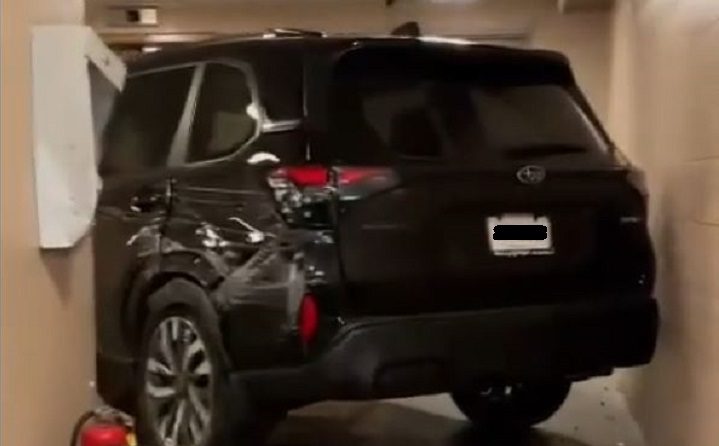
A sport utility vehicle ended up inside an elevator lobby at the River Rock Casino Resort parkade in Richmond, British Columbia, on September 26, 2024. Police said the unusual crash appeared to result from driver error and that neither alcohol nor excessive speed was believed to be a factor.
The vehicle entered a pedestrian area
Transit police and Richmond RCMP found a black SUV wedged in the hallway near the elevators shortly before 3 p.m. Images circulated online because the vehicle appeared where casino visitors would normally leave the parkade on foot.
The visual invited jokes about parking, but an unexpected vehicle in a confined lobby can create a serious risk to pedestrians, building systems and emergency access.
Investigators did not identify impairment
Police said their preliminary information pointed to human error. They did not consider alcohol or speed to be contributing factors in the collision.
“Human error” is a broad description, not a detailed technical finding. It can include selecting the wrong gear or pedal, misunderstanding a ramp or doorway, or losing control during a low-speed manoeuvre.
No serious injuries were publicly reported
The early reports focused on damage and the remarkable location of the SUV rather than casualties. The apparent absence of severe injury was fortunate given the shared space.
That outcome should not be used to identify or ridicule a driver. Unless police release charges or verified personal details, online speculation can convert a traffic incident into unjustified harassment.
Parkades combine several design challenges
Drivers navigate tight turns, changes in light, concrete columns, signs, ramps and people walking between vehicles and elevators. Hotel and entertainment complexes may also have unfamiliar traffic patterns.
Clear physical separation between a driving lane and pedestrian lobby can reduce the consequences of a mistake. Bollards, kerbs, barriers, markings and lighting each address a different part of that risk.
Viral video rarely explains the full event
A short clip shows the final position but may not show the path, driver input, visibility or activity immediately before impact. Viewers can mistake confidence in an amusing caption for evidence.
Police observations, building video, vehicle inspection and witness accounts provide a firmer basis. Even then, not every minor collision results in a public investigative report.
Property managers still need a safety review
After an incident, operators can examine whether doors, walls, fire routes, elevators or electrical systems were affected. Temporary barriers may be needed while damage is assessed.
A near miss can also reveal a design vulnerability. If an ordinary low-speed mistake allowed a vehicle to reach a lobby, the property can consider whether passive protection should be strengthened.
Drivers can reduce low-speed control errors
Stopping completely when uncertain, checking the selected gear and moving one control at a time are simple safeguards. Drivers should avoid phone use and give pedestrians priority in areas where paths cross.
If acceleration occurs unexpectedly, firmly applying the brake and shifting to neutral can prevent continued propulsion. Specific action depends on the vehicle and circumstances, so drivers should understand their owner’s manual.
The light headline should not obscure the lesson
The “you can’t park there” reaction captured the absurd appearance of the scene, and no major injury was reported. The verified account remained straightforward: an SUV entered the elevator-lobby area, and police initially attributed it to error rather than impairment or speed.
The useful response is not to invent a dramatic cause. It is to treat the incident as a reminder that low-speed environments still require attentive driving and physical protection for pedestrians.