Starmer, Meeting Biden, Hints at Ukraine Weapons Decision Soon
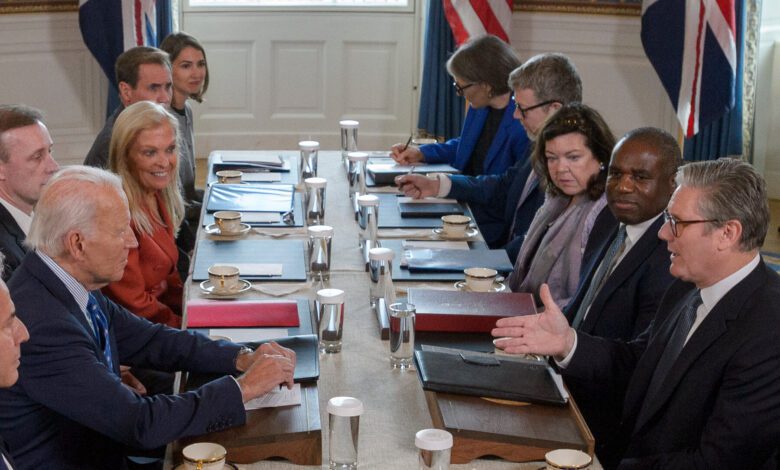
British Prime Minister Keir Starmer left a September 13, 2024 meeting with United States President Joe Biden saying discussions over Ukraine’s use of long-range Western weapons would continue. Despite intense speculation, neither government announced that restrictions on strikes deeper inside Russia had been lifted.
The White House meeting covered more than missiles
Starmer and Biden discussed continued military, economic and diplomatic support for Ukraine, as well as the war in Gaza and wider security concerns. Their official accounts reaffirmed support for Kyiv but did not publish a new weapons policy.
The absence of an announcement was important because pre-meeting headlines had suggested a decision might be imminent.
Ukraine wanted greater freedom to strike
Kyiv argued that bases, ammunition depots and aircraft inside Russia supported attacks on Ukrainian cities and troops. It sought permission to use donated systems against more distant military targets rather than limiting them to occupied Ukraine or narrowly defined border areas.
Ukraine said restrictions allowed Russia to operate from protected rear positions.
Storm Shadow and ATACMS involved different governments
Britain and France supplied Storm Shadow or SCALP cruise missiles, while the United States supplied Army Tactical Missile Systems. Permissions, technical support and component arrangements were not identical, making a single public “yes” or “no” misleading.
Operational security also limited what officials were willing to disclose.
Washington weighed escalation and military value
Supporters of expanded use said Ukraine should be able to defend itself against legitimate military targets. Skeptics questioned whether limited missile stocks could change the battlefield and warned about escalation between nuclear-armed Russia and NATO states.
Those concerns concerned policy choices, not Ukraine’s underlying right of self-defence.
Putin issued a direct warning
Russian President Vladimir Putin said approval would amount to direct NATO participation because Western personnel and intelligence would be needed for targeting. Western governments rejected Russia’s claim that supplying weapons automatically made them parties to the war.
Moscow’s warning nevertheless shaped the diplomatic atmosphere around the meeting.
Starmer resisted a public timetable
After the talks, the prime minister emphasized strategy rather than a single capability and indicated that allied discussions would continue. He did not confirm a decision or specify when one would be made.
That caution avoided giving Russia an operational preview but also frustrated Ukrainians seeking urgent clarity.
A weapons permission would still carry limits
Any change could restrict targets, geography, systems or required approval. International humanitarian law would continue to require distinction, proportionality and feasible precautions around civilian harm.
Permission from a supplier would not make every possible strike lawful or strategically wise.
Headlines had to separate expectation from outcome
The meeting was significant because two leading allies reviewed a contested restriction at the highest level. It did not produce the public authorization many observers anticipated.
Reporting that a decision was “soon” therefore described political expectation, not a completed act.
The strategic question remained unresolved
Ukraine wanted to impose costs farther behind Russian lines; allies wanted to support defence without losing control of escalation; Russia sought to deter them through threats. Each position contained risks.
The verified outcome on September 13 was narrower than the surrounding speculation: Biden and Starmer reaffirmed long-term support, reviewed the issue and kept consulting. A responsible account could explain the potential consequences while resisting the temptation to turn private deliberations into an announced policy.