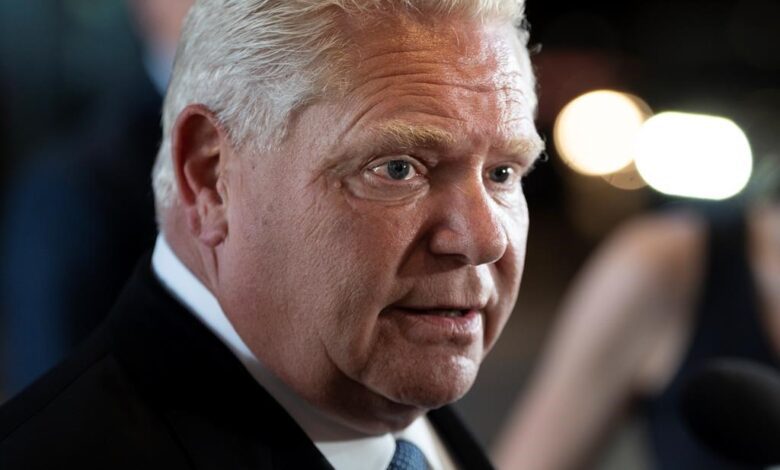
Ontario Premier Doug Ford said in October 2024 that his government was willing to examine both buying back the privately operated Highway 407 ETR and studying an expressway tunnel beneath Highway 401. The ideas addressed the same congestion problem through very different costs and mechanisms.
Highway 407 is not one ownership arrangement
The original 407 ETR across the Greater Toronto Area is operated under a 99-year concession granted in 1999 for approximately $3.1 billion. The province separately owns eastern extensions, where toll and policy arrangements differ.
A “buyback” would therefore mean negotiating for the concession company or its rights, not purchasing an ordinary road that Ontario no longer owns at all.
Control could change toll policy
Private operation allows tolls to manage demand and generate revenue under the concession agreement. Provincial control could enable lower tolls, targeted truck incentives or integration with broader transport pricing.
Lowering tolls could divert some traffic from Highway 401, but it could also fill spare 407 capacity and encourage additional driving. The traffic result depends on price, time of day, trip origin and available transit.
A purchase would require valuation
The 407 business has decades of future toll revenue. Its market and negotiated value is therefore far above the 1999 concession proceeds, and the government could not responsibly announce a buyback without independent financial and legal analysis.
The public would need to know whether tolls would remain, how debt would be financed and whether expected congestion benefits justified the acquisition price.
The tunnel concept proposed new capacity
Ford had asked for a feasibility study of a tunnel beneath the Highway 401 corridor, potentially carrying cars and transit. He argued that continued population growth would eventually overwhelm both the 401 and 407.
No final alignment, length, number of lanes, construction method or cost had been established. Calling it a project at that stage would have overstated what was still a study proposal.
Underground construction carries major risk
A long urban tunnel must manage geology, groundwater, ventilation, fire evacuation, hazardous goods, interchanges and utility conflicts. Portals themselves require land and can move congestion onto local roads.
Cost and schedule estimates at the concept stage have wide uncertainty. Comparisons should include decades of operation, maintenance and rehabilitation, not only excavation.
More road space can induce demand
New capacity may reduce travel time initially, then attract trips from other routes, times or modes and encourage development patterns dependent on driving. Congestion can return even after a costly expansion.
That does not mean capacity never has value. It means models should disclose how they account for changed travel behaviour rather than assuming every new lane remains free-flowing.
Transit and pricing were part of the alternative
Regional rail, bus priority, freight scheduling, carpooling and congestion pricing can move people or manage peak demand without the same construction footprint. They also require funding and can impose uneven burdens if service alternatives are poor.
A fair assessment should compare a portfolio of measures with both headline proposals using the same population, emissions and travel-time assumptions.
“Both options” did not commit Ontario to either
Ford’s comment widened the policy discussion but did not create an offer to 407 owners or authorize a 401 tunnel. Each path would require legislative, contractual, environmental and budget scrutiny.
The buyback could change use of an existing asset but would not physically add a new corridor. A tunnel could add capacity at extraordinary engineering and fiscal risk. Before taxpayers fund either, Ontario should publish the business cases, model toll and traffic scenarios and explain why less costly combinations cannot meet the same goal.