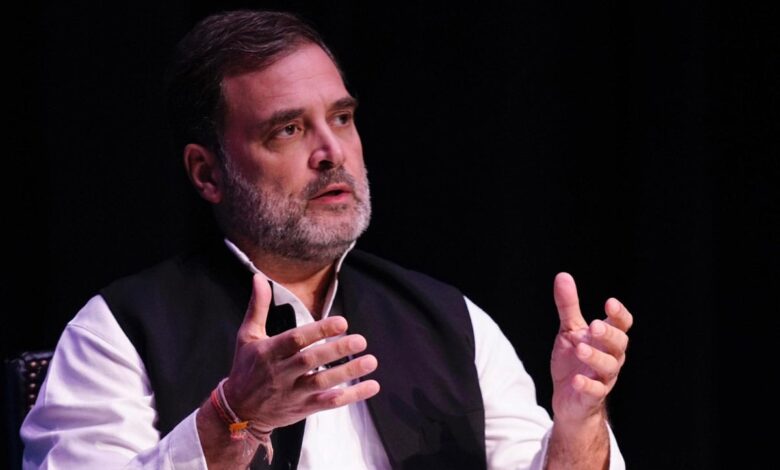
Congress leader Rahul Gandhi said in September 2024 that a future government led by his party would remove the 50-percent ceiling on reservations after conducting a caste census. He later said his remarks had been misrepresented and reiterated that participation in institutions was the central issue.
The comment was made in the United States
Speaking at the National Press Club, Gandhi said India had a deep problem of representation and that reservations should be increased beyond the existing limit. The statement was a political commitment, not an amendment to law.
Opponents and supporters interpreted its implications differently.
India’s ceiling has a legal history
The Supreme Court’s Indra Sawhney judgment generally treated 50 percent as a limit, while recognizing exceptional circumstances. Several states have enacted higher quotas, but their laws have faced constitutional challenges and different judicial treatment.
A national change would require legislation and withstand review.
A caste census would supply new data
Gandhi linked the proposal to counting communities and measuring their representation in public institutions, education and employment. India conducts a decennial population census, but the last completed census did not publish a full contemporary caste breakdown.
Administrative data and a population survey are not interchangeable.
Reservation is not the same as representation
Reserved seats can improve entry for historically excluded groups, yet representation also depends on recruitment, promotion, school access, income and discrimination. A quota percentage alone cannot show whether institutions are equitable.
Policies need outcomes that can be measured beyond headline numbers.
Supporters described structural exclusion
Gandhi argued that Dalit, Adivasi and Other Backward Class communities remain underrepresented in power and decision-making. Supporters said proportional data could justify a broader affirmative-action framework.
Those claims should be tested with transparent, independently collected statistics.
Critics raised merit and administrative concerns
Critics argued that expanding quotas could reduce opportunities outside reserved categories or complicate admissions and hiring. Those concerns are political and constitutional arguments, not evidence that any community lacks merit.
Selection standards and support measures can be debated separately from discrimination.
Private-sector policy was a separate question
The National Press Club exchange concerned the ceiling on public reservations. It did not itself create a private-sector quota, alter university rules or promise a particular percentage for every group.
Coverage should not turn a broad statement into a detailed policy that Gandhi did not announce.
Implementation would face federal complexity
Education, state employment and central recruitment follow different laws and institutions. Any reform would need definitions, eligibility rules, review procedures and protection against fraudulent certificates.
States could also resist a uniform formula if local demographics differ.
The clarification narrowed the claim’s meaning
Gandhi said he had repeatedly supported removing the cap and addressing the participation gap. He did not say that every reservation should automatically rise or that a census alone would settle the design.
The political debate therefore concerned data, constitutional limits and the goals of affirmative action. A responsible account distinguished his proposal from existing law and left the outcome to voters, Parliament and the courts. Until those institutions act, the 50-percent framework remains the legal reference point in most national discussions.