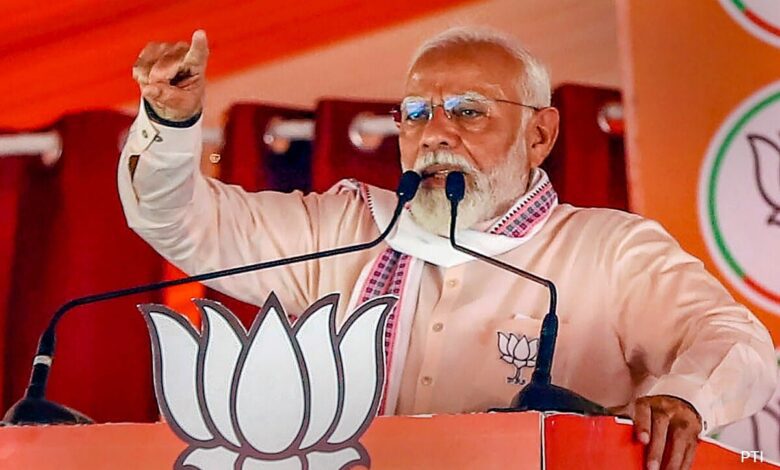
Ministers in India’s National Democratic Alliance presented a report card on September 17, 2024 marking the first 100 days of Prime Minister Narendra Modi’s third term. The government highlighted approvals and initiatives worth ₹15 lakh crore, while critics questioned implementation and the coalition’s reform record.
The third term began with a different mandate
Modi took office in June after the Bharatiya Janata Party lost its single-party majority. The NDA retained a Lok Sabha majority through allies, requiring more consultation with parties led by figures such as N. Chandrababu Naidu and Nitish Kumar.
Continuity in leadership therefore came with tighter parliamentary constraints.
Infrastructure dominated the government’s claims
Home Minister Amit Shah said roughly ₹3 lakh crore in infrastructure projects had been approved within the broader ₹15-lakh-crore total. Announcements covered roads, railways, ports, airports and industrial development.
Approved, initiated, tendered and completed are different stages and should not be combined as delivered construction.
Housing and farmer payments featured prominently
The government pointed to a decision to support three crore additional homes under the Pradhan Mantri Awas Yojana and release of a PM-KISAN instalment worth about ₹20,000 crore to roughly 9.3 crore farmers.
Coverage should examine beneficiary records and completed outcomes, not only allocated totals.
A youth employment package was announced
Budget measures proposed incentives connected to first jobs, apprenticeships and employer hiring. The government described a package worth ₹2 lakh crore for youth.
Actual job creation would depend on scheme rules, employer participation, economic demand and the quality and duration of work.
Foreign policy was presented as activism
The report highlighted Modi’s visits to Russia, Ukraine, Poland, Brunei and Singapore and India’s outreach to the Global South. Diplomacy can create relationships and agreements, but travel itself is an input rather than an outcome.
India’s positions on Russia’s invasion and regional security continued to attract debate.
Opposition parties identified unresolved crises
Critics pointed to violence in Manipur, unemployment, inflation, examination irregularities and pressure on institutions. They argued that official publicity omitted setbacks and recycled older projects.
A balanced review tests both the government’s list and opposition claims against measurable evidence.
Coalition limits altered major proposals
The government referred a controversial Waqf amendment bill to a parliamentary committee and withdrew a proposal for lateral-entry recruitment after criticism over reservations. These changes could represent compromise or political weakness depending on perspective.
Either way, they demonstrated that Modi’s third term could not operate exactly like the previous majority governments.
One hundred days is a communications milestone
The period can reveal priorities but is too short to judge infrastructure completion, employment effects or durable social outcomes. Ministers control the categories in an official report card, so independent benchmarks are necessary.
The most useful later evaluation would track money actually spent, houses completed, jobs retained, farm income, project delays and distribution across states and communities. It should also examine civil liberties and parliamentary scrutiny, which expenditure totals cannot measure.
Modi 3.0 used its first 100 days to signal continuity and scale. Whether that became effective, inclusive government depended on delivery and coalition accountability long after the anniversary events ended.