Kenya Haiti peacekeeping
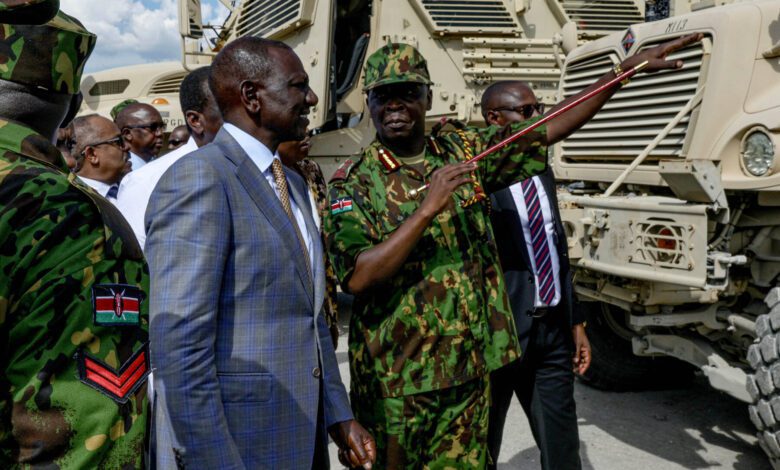
Kenyan President William Ruto visited Port-au-Prince on September 21, 2024, to meet police officers leading the Multinational Security Support mission in Haiti. He praised their work and said security had improved in some areas, while Haitian communities and outside observers continued to report powerful gangs and severe humanitarian need.
The force was not a conventional UN peacekeeping mission
The Security Council authorized the Kenya-led mission under Resolution 2699 in October 2023, but it operated outside the UN’s blue-helmet peacekeeping structure. Participating countries supplied personnel, while international donors funded equipment and logistics.
That structure affected financing, oversight and the support available in the field.
The first contingent arrived in June
Kenya sent 200 officers on June 25, followed by another group in July. By Ruto’s visit, roughly 380 Kenyan personnel were deployed alongside the Haitian National Police.
The planned mission was much larger and also anticipated contributions from Caribbean and other countries.
Gangs retained extensive territorial power
Armed groups controlled major roads and large parts of Port-au-Prince, attacked police facilities, extorted residents and disrupted ports, hospitals and schools. Killings, kidnappings and sexual violence forced families from their homes.
Improvements around selected facilities could not be generalized to the entire capital without data.
Ruto met Haiti’s transitional leadership
His programme included the Transitional Presidential Council and government officials. Haiti had recently created a provisional electoral council intended to prepare the country’s first general election since 2016.
Elections required security, functioning institutions and public trust rather than a timetable alone.
Kenya promised additional officers
Ruto later said another 600 officers were in pre-deployment training. Haiti and Kenya also urged partners to provide promised funds, vehicles, communications and other capabilities before existing resources ran short.
A pledge should be distinguished from personnel trained, transported and operational.
Human-rights safeguards were indispensable
Kenyan police had faced allegations of excessive force at home, and previous foreign interventions in Haiti left a legacy of abuse, disease and mistrust. The mission needed clear rules, independent complaints, casualty reporting and accountability in both countries.
Fighting gangs cannot justify collective punishment or mistreatment of residents.
Police support was only one part of recovery
Officers could help reopen routes and protect public infrastructure, but Haiti also needed courts, prisons that meet legal standards, humanitarian aid, jobs and legitimate political institutions. Operations that clear an area without sustained public services may only displace armed groups.
Haitian police and communities had to shape priorities.
Claims of progress required transparent measures
Useful indicators included homicide and kidnapping trends, access to hospitals and markets, reopened schools, police casualties and complaints against mission personnel. Publicly available benchmarks would help donors and Haitians judge results.
Ruto’s visit demonstrated political commitment, but the force remained understrength and underfunded. Its legitimacy depended not on the label “peacekeeping” but on whether it lawfully improved daily safety while supporting Haitian civilian authority. Long-term stability could not be imported by police alone.
Regular public reports from the mission, Haitian authorities and independent monitors would let residents compare promises with neighbourhood conditions. International partners also needed to deliver funding predictably instead of leaving deployed officers and Haitian institutions to absorb the consequences of delayed pledges.