Ottawa warned New Brunswick and Nova Scotia in September 2024 that C$325 million earmarked for protecting the Chignecto Isthmus could be redirected unless the provinces agreed to share project costs. The dispute delayed work on a nationally important corridor vulnerable to storm surge and sea-level rise.
The isthmus connects Nova Scotia by land
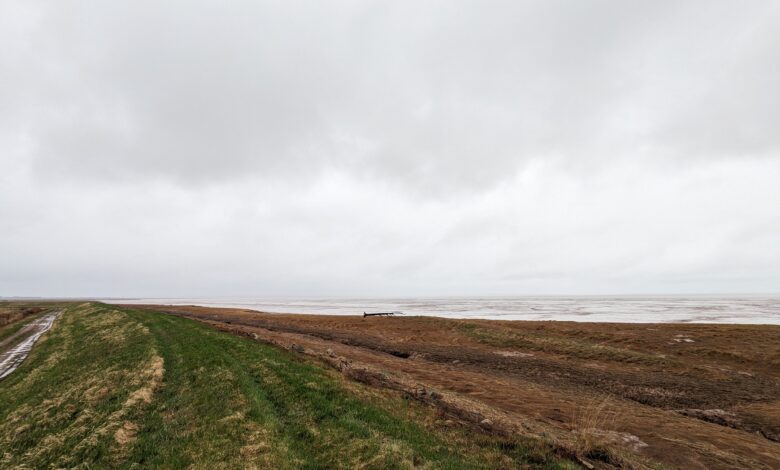
The narrow low-lying area between the Bay of Fundy and Northumberland Strait carries the Trans-Canada Highway, a Canadian National rail line, electricity and telecommunications. Flooding could isolate Nova Scotia from New Brunswick and interrupt freight across Atlantic Canada.
Acadian dikes and later infrastructure have protected the corridor for generations.
Climate risk was increasing
Parts of the route sit only modestly above high water. Sea-level rise, land subsidence and stronger storm surge increase the chance that an extreme event overtops or breaches aging dikes.
Consequences would extend beyond nearby communities to supply chains and emergency access.
Governments agreed on need, not responsibility
Engineering studies considered raising and reinforcing dikes among adaptation options. The argument concerned who should pay a project estimated in the hundreds of millions of dollars.
The federal government offered half through its Disaster Mitigation and Adaptation Fund and expected the two provinces to provide the remainder.
Premiers said Ottawa should cover the full cost
Nova Scotia Premier Tim Houston and New Brunswick Premier Blaine Higgs argued that the corridor served interprovincial transportation and trade and therefore was a federal responsibility. Nova Scotia also pursued the constitutional question in court.
Submitting an application as a placeholder did not mean the province accepted the cost-sharing principle.
Federal ministers imposed urgency
Housing and Infrastructure Minister Sean Fraser and Public Safety Minister Dominic LeBlanc publicly pressed the provinces to partner before money was moved to other projects. They argued that litigation should not prevent immediate protection.
A funding deadline created leverage but also risked further delay if negotiations hardened.
The dispute crossed jurisdictional categories
Dikes protect provincial communities and land, while the road, railway and national trade corridor engage federal interests. Climate adaptation often spans constitutional and ownership boundaries that do not align neatly with physical risk.
A durable agreement needed roles for construction, maintenance, overruns and future upgrades—not only a headline split.
Delay itself had a cost
Construction prices could rise while another storm season passed. If a catastrophic flood occurred during argument, economic loss and emergency repair could exceed the planned investment.
Governments could preserve legal positions while funding urgent work without prejudice to the court case.
Public accountability required a complete plan
Residents and businesses deserved timelines, chosen design, environmental assessment, Indigenous and Acadian consultation, maintenance commitments and transparent risk assumptions. A larger dike can also shift water or affect wetlands, so protection should be assessed across the system.
The C$325-million warning made the intergovernmental conflict visible, but the central fact was physical: critical infrastructure occupied a vulnerable landscape. Assigning blame would not hold back the Bay of Fundy.
The responsible course was a binding partnership that began work promptly, allocated long-term responsibility and remained robust under future climate conditions. Later funding agreements should be measured against that outcome, not simply celebrated as an end to the argument.