Election in Montreal Poses a Test for Trudeau
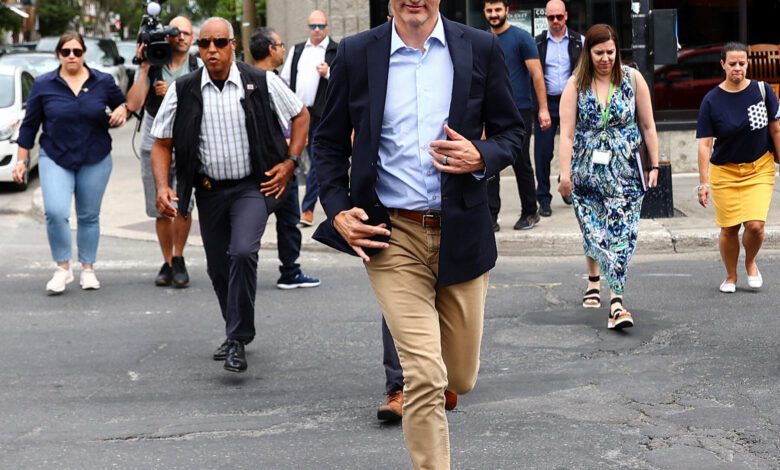
The September 16, 2024 federal byelection in LaSalle—Émard—Verdun became a high-stakes test for Prime Minister Justin Trudeau because the southwest Montreal riding had been a Liberal stronghold for decades. A close three-party contest meant a local vacancy carried implications for the national government’s credibility and leadership debate.
The seat opened after David Lametti resigned
Lametti, a former federal justice minister, left politics after being dropped from cabinet in 2023. His departure created a vacancy in an area Liberals had generally treated as safe.
Byelections often produce lower turnout and unusual protest votes, limiting national extrapolation.
Laura Palestini represented the Liberals
Palestini was a lifelong LaSalle resident and municipal councillor with 19 years of experience. She campaigned on personal recognition and local services, repeatedly emphasizing that her own name—not Trudeau’s—appeared on the ballot.
That message sought to separate a local candidate from an unpopular national brand.
The Bloc and NDP mounted serious campaigns
The Bloc Québécois nominated party staffer Louis-Philippe Sauvé. The New Democratic Party chose Montreal councillor Craig Sauvé, who was not related to the Bloc candidate.
Both parties deployed leaders and volunteers, turning the race into a genuine three-way contest.
National context increased the stakes
Liberals had lost Toronto—St. Paul’s to the Conservatives in June, shocking a party that had held that seat for years. National polls showed the Conservatives leading, and some Liberal supporters were publicly questioning Trudeau’s future.
A second stronghold loss would provide concrete evidence that discontent extended beyond one city.
The Conservatives were not the main challengers
Although Pierre Poilievre’s party led nationally, Quebec’s political landscape differed. Conservative candidate Louis Ialenti campaigned actively but was not expected to win.
The government’s vulnerability came from the Bloc and NDP, illustrating why national polling alone cannot predict a constituency.
A record 91 names appeared on the ballot
Most candidates were associated with the Longest Ballot Committee, a protest against the first-past-the-post system. The nearly metre-long paper created logistical challenges and made ballot position a practical campaign issue.
The protest was lawful, but it complicated voting and counting.
Analysts warned against certainty
Limited polling suggested the Bloc could lead, yet all three principal candidates remained close. Turnout organization, advance voting and neighbourhood differences could decide the result.
A byelection with little reliable polling calls for ranges and uncertainty, not confident forecasts.
The Bloc ultimately won by 269 votes
Official Elections Canada results gave Louis-Philippe Sauvé 8,925 votes, or 28.2 per cent. Palestini received 8,656 votes, or 27.3 per cent, and Craig Sauvé took 8,272, or 26.1 per cent.
The Conservative candidate finished a distant fourth.
The result was a warning, not a national verdict
Losing a historically favourable riding intensified questions about Trudeau’s leadership and Liberal organization. The Bloc gained a seat in Quebec, while the NDP demonstrated competitive local support without winning.
Yet roughly seven in ten voters chose someone other than the victor, and the margin was narrower than many school populations. The result showed serious Liberal vulnerability, not a mandate for one national alternative. Its clearest lesson was that personal local strength could not fully insulate Palestini from the government’s reputation in a fragmented, low-margin contest.