Several British Columbia Conservative candidates missed local all-candidates meetings in the final days of the 2024 provincial campaign. Party leader John Rustad defended them by saying candidates were instead meeting voters directly, while critics argued that joint forums provide a form of comparison that door-to-door campaigning cannot replace.
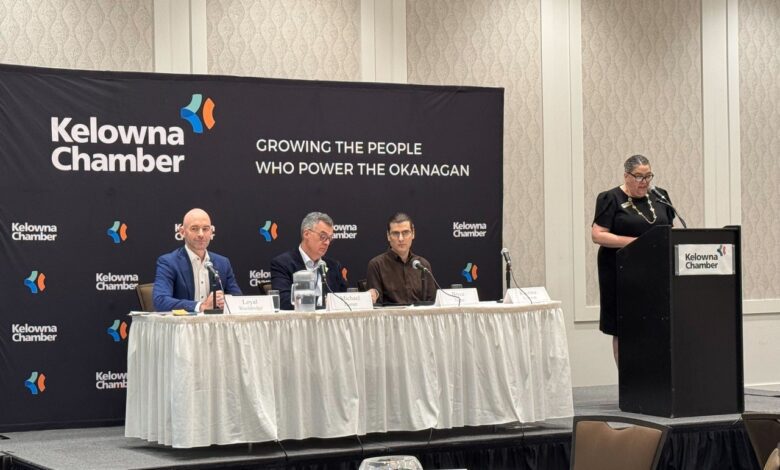
Absences in the Central Okanagan
Kristina Loewen, the Conservative candidate in Kelowna Centre, and Tara Armstrong, running in Kelowna–Lake Country–Coldstream, were among those absent from debates. Reporters approached them at a University of British Columbia Okanagan event to ask about the pattern.
Not every missed invitation proves a coordinated strategy. Candidates can face overlapping events, family obligations or disagreement over a forum’s format. Repeated absence across multiple districts reasonably prompted questions for the party.
The party’s explanation
Rustad said Conservative candidates had opportunities to engage face to face with people in their ridings and would continue doing so until election day on October 19. Direct conversations can reveal neighbourhood concerns and allow detailed individual questions.
They occur largely on the campaign’s terms, however. A doorstep exchange is not visible to the wider electorate and does not require a candidate to hear rivals challenge the same answer.
Why local debates matter
University of the Fraser Valley political scientist Hamish Telford described all-candidates debates as a foundation of Canadian democracy and useful preparation for the legislative work candidates hope to perform.
Forums let voters compare communication, policy knowledge and temperament in one place. They also give smaller parties and independent candidates exposure that advertising budgets may not provide.
Telford’s interpretation
Telford said he believed the pattern might be centrally organized because the growing party had recruited inexperienced candidates and could fear an avoidable controversy. That was his analysis, not documented proof of a provincewide instruction.
The party could have resolved the question by publishing its guidance, candidate schedules and reasons for declining each event. Transparency is more persuasive than asking voters to infer strategy.
Forums have responsibilities too
Organizers should issue invitations early, apply neutral participation criteria, provide accessible venues and disclose moderation rules. A debate designed around one group’s preferred assumptions may not earn universal participation.
When someone declines, organizers should leave a clearly labelled empty place or read a short response rather than substitute their own argument. The audience should know which candidates were invited and what reason, if any, each gave.
No legal requirement
Running for office does not usually compel attendance at community debates or private-media interviews. The consequence is political: voters may see absence as a failure to engage, while candidates may decide their limited time is better spent elsewhere.
Mandatory participation would create difficult questions about which events qualify and who sets their rules. Public funding or broadcaster access can instead be conditioned on transparent, viewpoint-neutral standards.
The media’s role
Coverage should count the number of confirmed invitations and absences rather than amplify anecdotes into an unsupported trend. It should ask all major parties the same questions about debate participation.
Reporters can also publish written questionnaires and verified platform comparisons so an absent candidate does not leave voters with no information.
A choice about representation
An MLA’s job includes answering constituents, examining bills and debating in the legislature. Campaign conduct offers evidence—though not certainty—about how a candidate may approach those duties.
The Conservatives’ preference for direct contact was a legitimate campaign method, but it did not provide the same public test as a shared stage. Voters were entitled to consider both the explanation and the opportunity the absent candidates chose not to use.