As Austrians Vote, Far Right Awaits Its Biggest Success
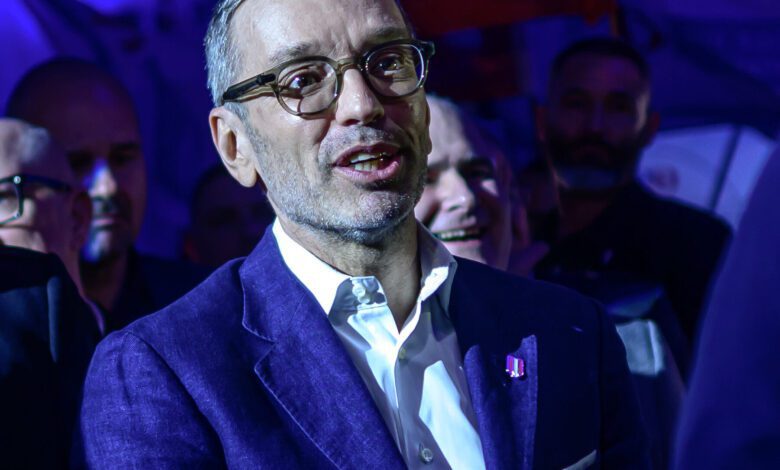
Austria’s Freedom Party won the largest share of votes in the September 29, 2024 parliamentary election, the first national-election victory for the far-right party. Its record result reshaped Austrian politics, although finishing first did not automatically give it the power to form a government.
The Freedom Party received 28.8 percent
Official results gave the Freedom Party, or FPÖ, 28.8 percent of the vote and 57 seats in the 183-member National Council. The governing conservative People’s Party, the ÖVP, fell to about 26.3 percent and 51 seats.
The centre-left Social Democrats received roughly 21 percent, while the liberal NEOS and the Greens also crossed the threshold for representation. No party came close to an outright majority.
Migration and prices drove the campaign
FPÖ leader Herbert Kickl campaigned for tighter asylum and immigration policies, greater national authority within the European Union and an agenda he described as putting Austrians first. The party also benefited from anger over inflation, housing costs and the outgoing coalition.
Its opponents warned that exclusionary language and pressure on independent institutions threatened liberal democracy. Voters could support the party for different reasons, but the program’s consequences required examination beyond campaign slogans.
The party carried a difficult historical legacy
The FPÖ was founded in the postwar period with early leadership that included former Nazis. It later moved between populist, nationalist and more conventional governing phases and had previously joined national coalitions.
Describing the party as far right reflects its ideology and international classification; it does not mean every voter holds identical views. Precision is important when covering a result supported by more than one in four voters.
Austria’s system made coalition partners decisive
The president appoints a chancellor capable of sustaining parliamentary government, and parties negotiate a coalition when no one has a majority. Other major parties initially resisted serving under Kickl.
That refusal was constitutionally legitimate, just as the FPÖ’s electoral victory was politically significant. Parliamentary government converts votes into seats and then requires a workable majority, rather than automatically awarding the chancellorship to the largest party.
The first coalition effort collapsed
President Alexander Van der Bellen first asked then-chancellor Karl Nehammer to explore a government without the FPÖ. Negotiations among the ÖVP, Social Democrats and NEOS broke down in January 2025, and Nehammer announced his departure.
Kickl was then asked to try. Talks between the FPÖ and ÖVP also failed, demonstrating that numerical compatibility did not resolve disagreements over leadership, ministries and policy.
A three-party government eventually took office
On March 3, 2025, Christian Stocker became chancellor at the head of an ÖVP-Social Democrat-NEOS coalition. It was Austria’s first three-party national government in the modern era.
The arrangement kept the election winner out of cabinet but did not erase its support. The FPÖ became the largest opposition force and could argue that established parties had combined against it.
The vote had wider European significance
Austria joined a broader pattern in which nationalist parties gained support over migration, distrust of institutions and economic insecurity. Yet national histories and electoral systems differ, making simple comparisons across Europe unreliable.
The result also tested whether mainstream parties could answer voter concerns without adopting policies that undermine asylum law, minority rights or independent checks on government.
Victory and power were not the same outcome
The FPÖ achieved its best national result and permanently altered the coalition landscape. It did not, however, enter the government formed five months later.
Both facts matter. Calling the election either an uncomplicated takeover or an irrelevant protest vote would mislead readers about how parliamentary democracy worked and how much political pressure the result continued to exert.